Viceroy Butterfly – Limenitis archippus
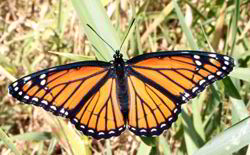
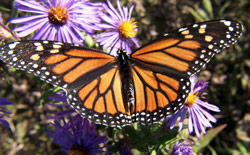
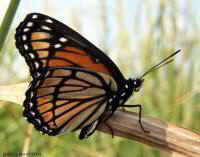
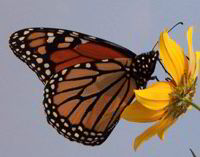
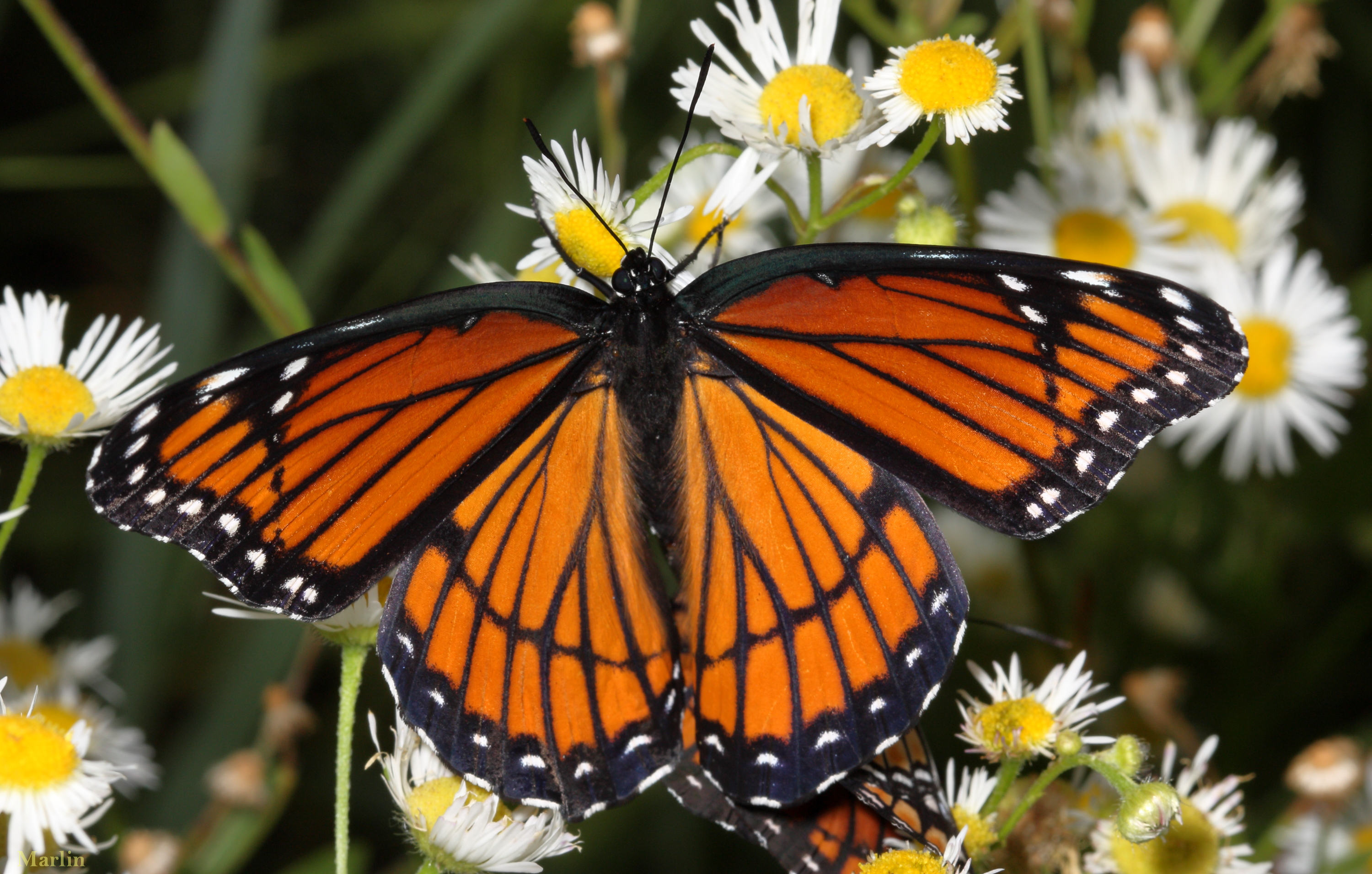 Live viceroy and monarch butterflies photographed at DuPage County, Illinois
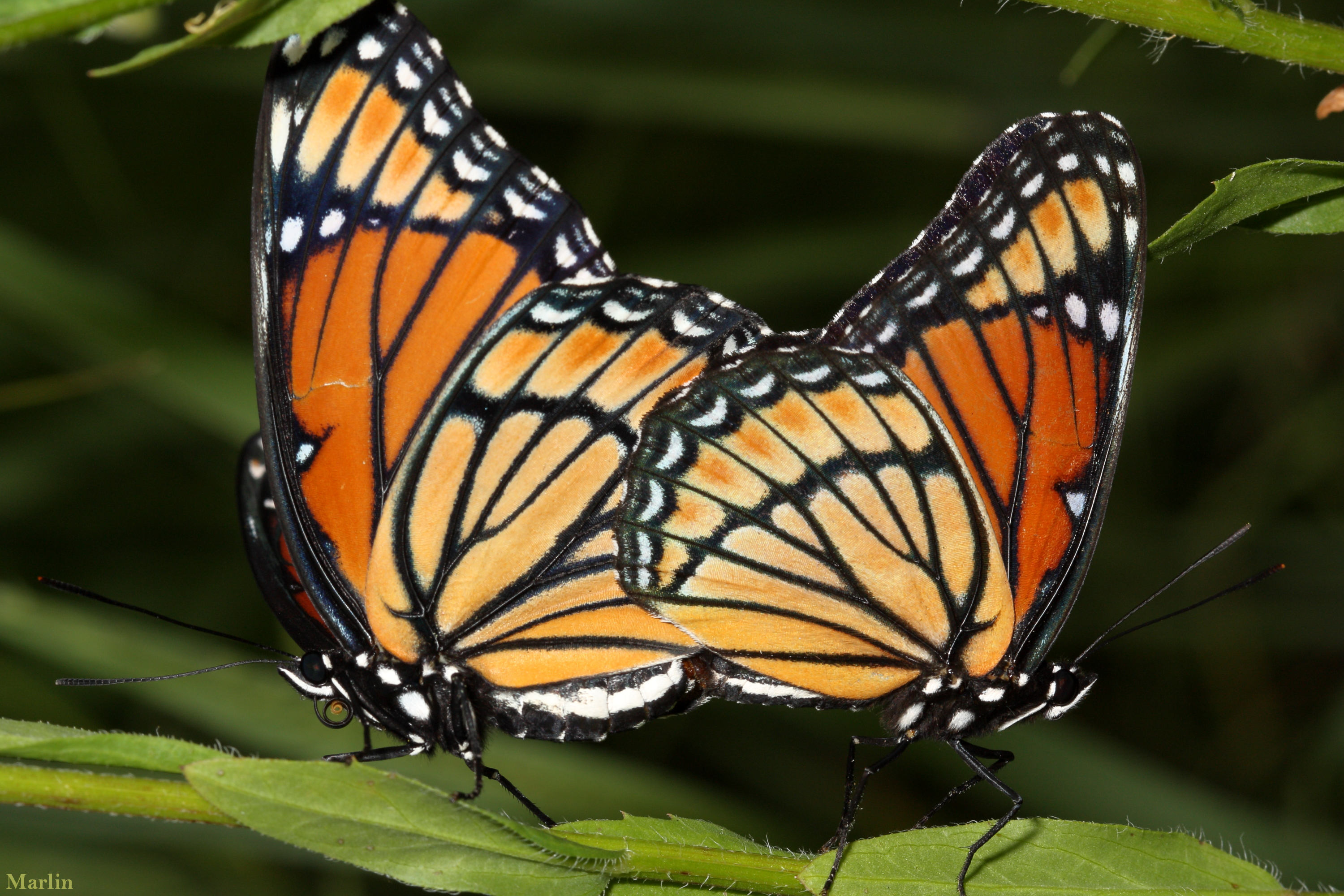 Male viceroys perch on vegetation and patrol a territory waiting for females. Copulation is accomplished tail-to-tail, with the much larger female “towing” the male around. I’ve seen viceroys flying in tandem with the female towing the male in a very rapid, straight-line flight across my field of view, a distance of many dozens of yards – they fly very well, connected.La semejanza del Virrey al monarca no es el resultado de una estrecha relacin gentica. Vienen de diferentes subfamilias y tienen diferentes h¡bitos.The resemblance of the viceroy to the monarch is not the result of a close genetic relationship. They come from different subfamilies and have different habits (the monarch famously migrates, the viceroy not so much).It is frequently noted that the Viceroy (a non-toxic butterfly) mimics the aposematic coloring of the supposedly toxic Monarch butterfly. However, recent research suggests this so-called Batesian mimicry may not be as simple as first thought. Viceroy caterpillars feed on trees and shrubs in the family Salicaceae, the willows (Salix), and polars (Populus), Salicylic acid, a precursor to acetylsalicylic acid (aspirin), is thus concentrated in their bodies, providing an extremely bitter meal for any would-be predator. Viceroy larvae are well-camouflaged as bird droppings, as are many moth caterpillars as well as adult moths
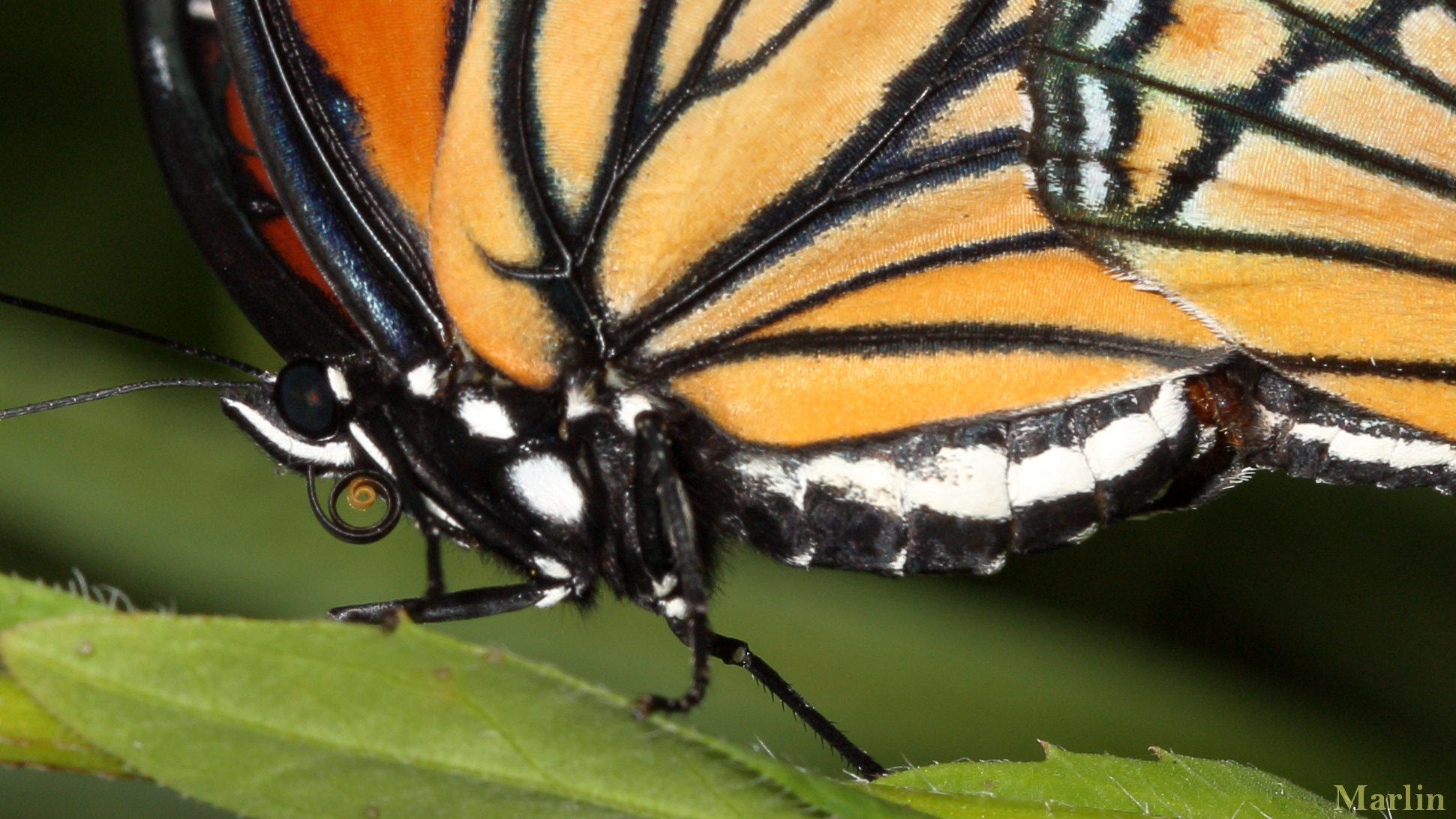 Limenitis, the genus name, comes from the Latin for “marsh”, but I often find viceroys in tall grass or weedy fields some distance from any water or swampy areas.
Viceroy compared to Monarch side-by-side