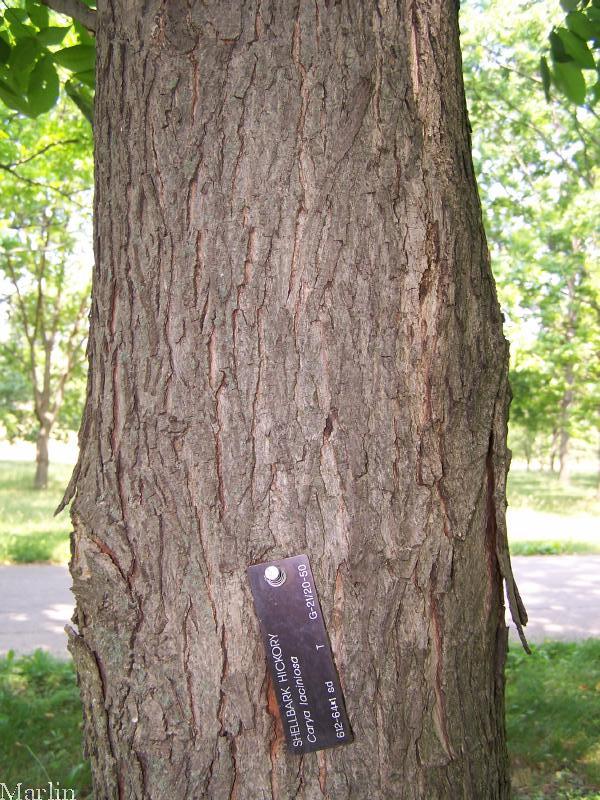
![]() | Shellbark Hickory - Carya laciniosa Walnut Family: Juglandaceae Slow growing and long-lived, it can attain 120 feet. Insects & Spiders Home | Tree Encyclopedia | Trees Index | Juglandaceae Index |
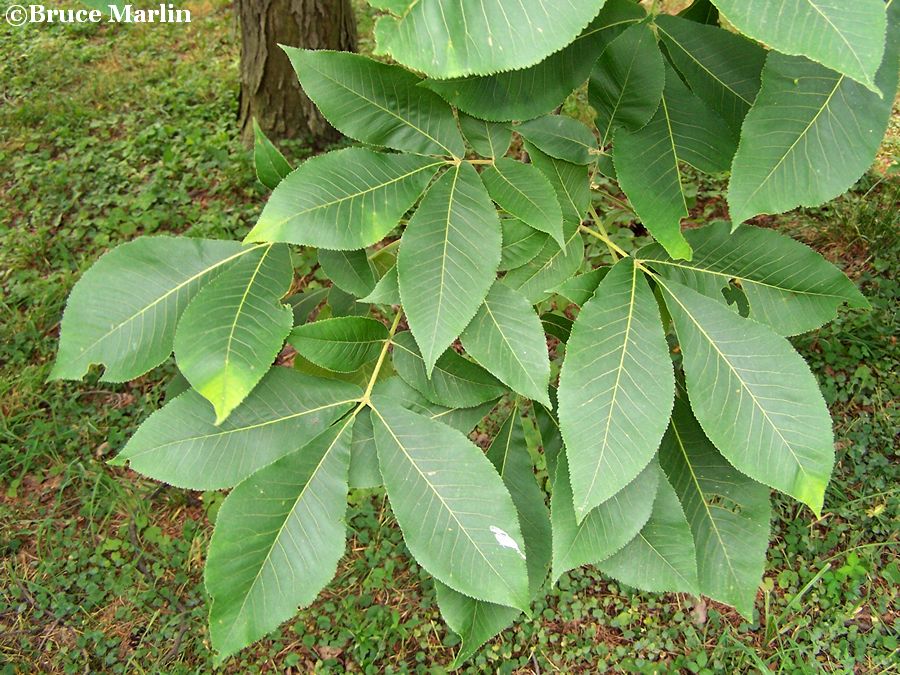
![]() Shellbark Hickory Leaves |
| Shellbark hickory is a slow-growing, long-lived tree, hard to transplant because of its long taproot, and subject to insect damage. The nuts, largest of all hickory nuts, are sweet and edible. Wildlife and people harvest most of them; those remaining produce seedling trees readily. The wood is hard, heavy, strong, and very flexible, making it a favored wood for tool handles. Shellbark hickory grows best on deep, fertile, moist soils. It does not do well in heavy clay soils but grows well on heavy loams or silt loams. Shellbark hickory requires moister situations than do pignut, mockernut, or shagbark hickories (Carya glabra, C. tomentosa, or C. ovata), although it is sometimes found on dry, sandy soils. Specific nutrient requirements are not known, but generally the hickories grow best on neutral or slightly alkaline soils. |
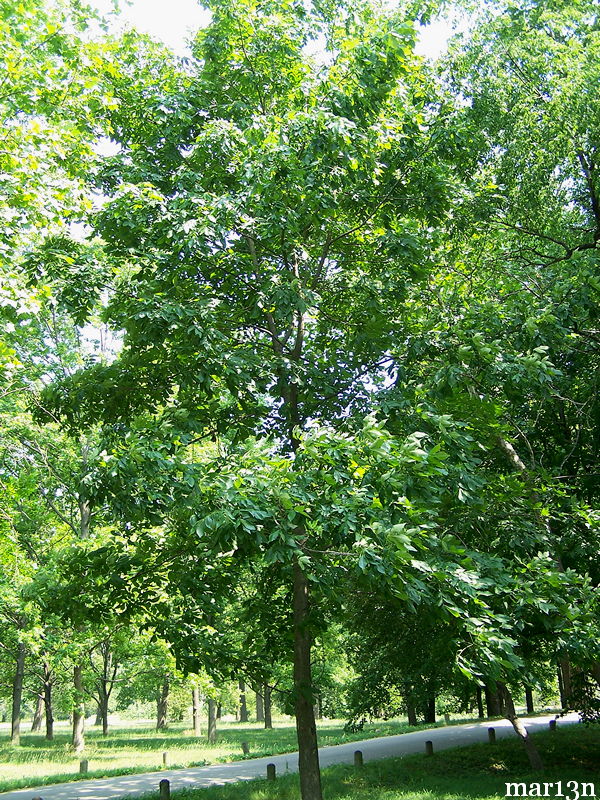
Shellbark Hickory is essentially a bottom-land species and is often found on river terraces and second bottoms. Land that is subject to shallow inundations for a few weeks early in the growing season is favorable for shellbark. However, the tree will grow on a wide range of topographic and physiographic sites. Shellbark hickory is monoecious, producing flowers from April to June after the leaves appear. The male flowers develop from the axils of leaves of the previous season or from inner scales of the terminal buds at the base of the current growth. The female flowers appear in short spikes or peduncles terminating in shoots of the current year. The pollen is wind disseminated. The fruit ripens from September to November. |
Seed is dispersed from September to December by gravity, birds, and animals. Squirrels and other rodents are the principal dispersal agents. Shellbark hickory requires moist soil for good germination and establishment. Germination is hypogeal. Seeds germinate from late April to early June. The seedlings rapidly develop a long taproot, but shoot growth is initially slow. Shellbark hickory seedlings grow faster in height than most of the other hickories Shellbark hickory nuts are used for food by ducks, quail, wild turkeys, squirrels, chipmunks, deer, foxes, raccoons, and white-footed mice. A few plantations of shellbark hickory have been established for nut production, but the nuts are difficult to crack even though the kernel is sweet. The wood is used for furniture, tool handles, sporting goods, veneer, fuelwood, and charcoal. (United States Department of Agriculture / Forest Service Agriculture Handbook 654, Silvics of Forest Trees of the United States, 1965, revised: December 1990) |
Insects & Spiders Home | Tree Pictures | Tree Index | Rosaceae Index | Juglandaceae Index | Oaks & Beech Index
Custom Search
|
© Red Planet Inc.