Suborder Sternorrhyncha
Aphids, Scales, Mealybugs
Jumping Plant Lice
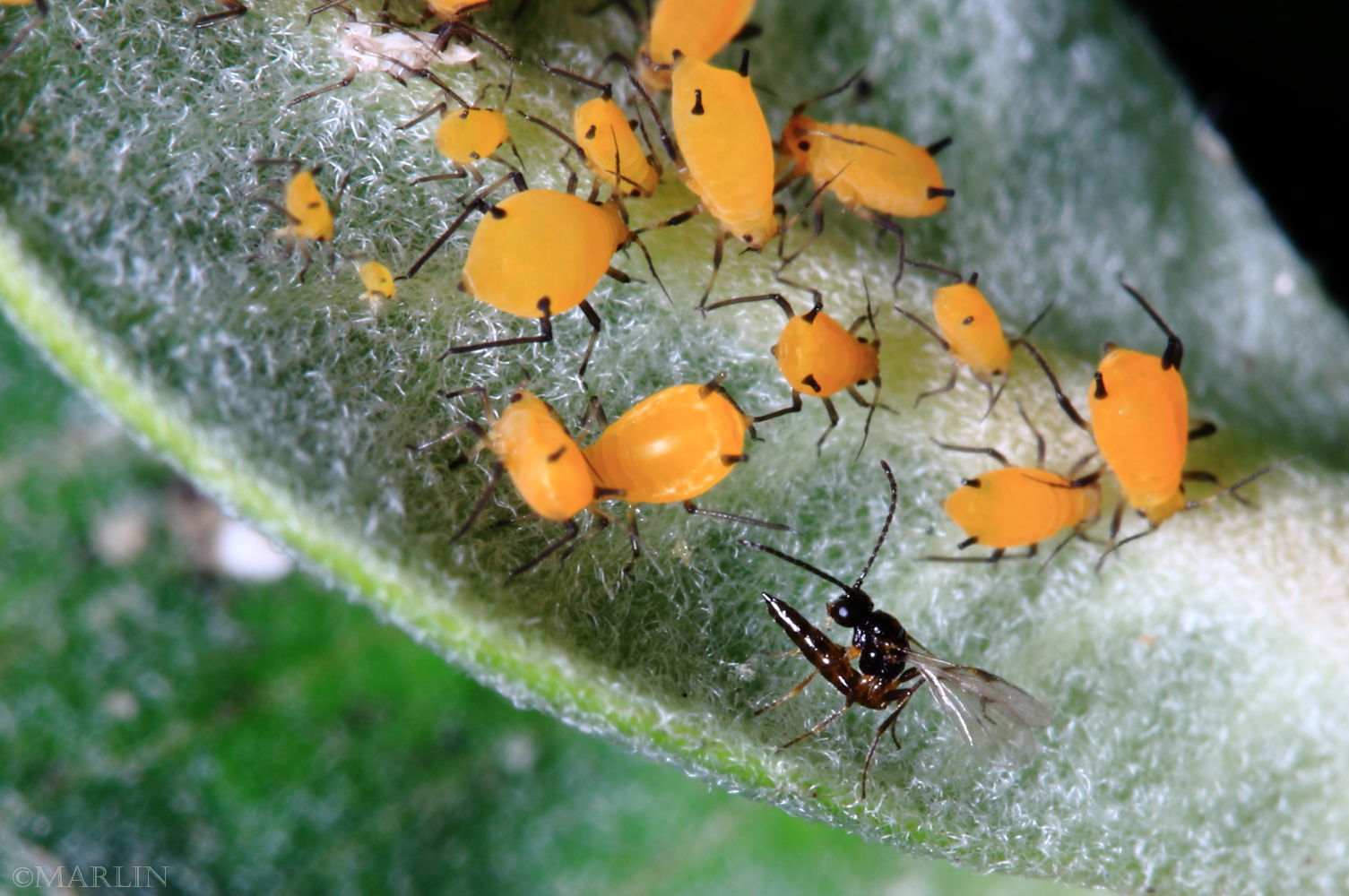
Tiny aphid mummy wasp (3mm) lays eggs on aphids
Aphids in the Suborder Sternorrhyncha are plant sap-processing machines.
They feed by inserting their hypodermic needle-like proboscis directly into a plant’s vascular system (phloem), which contains carbohydrate-laden sap under pressure. As a passive but very efficient process, sap flows into the insect’s digestive system. [1]
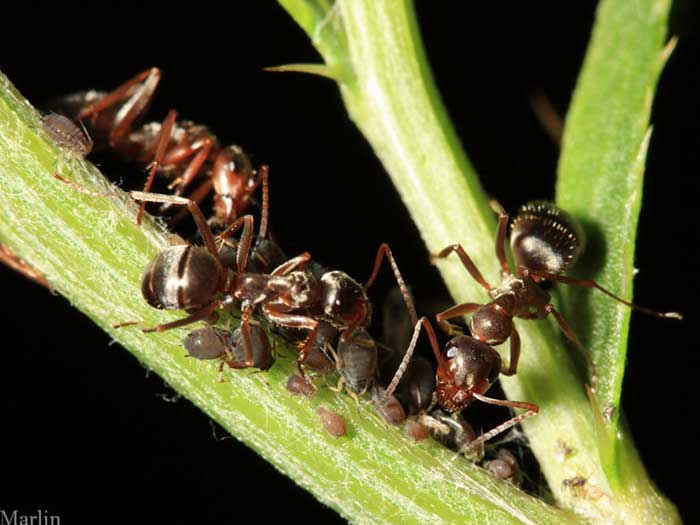 Herding aphids: ants tend an aphid farm
Sapsuckers must process a huge quantity of liquid, since the sap consists largely of water with only tiny amounts of nutrients.
The excess (called honeydew) is excreted so copiously it has managed to fuel a symbiosis with ants.
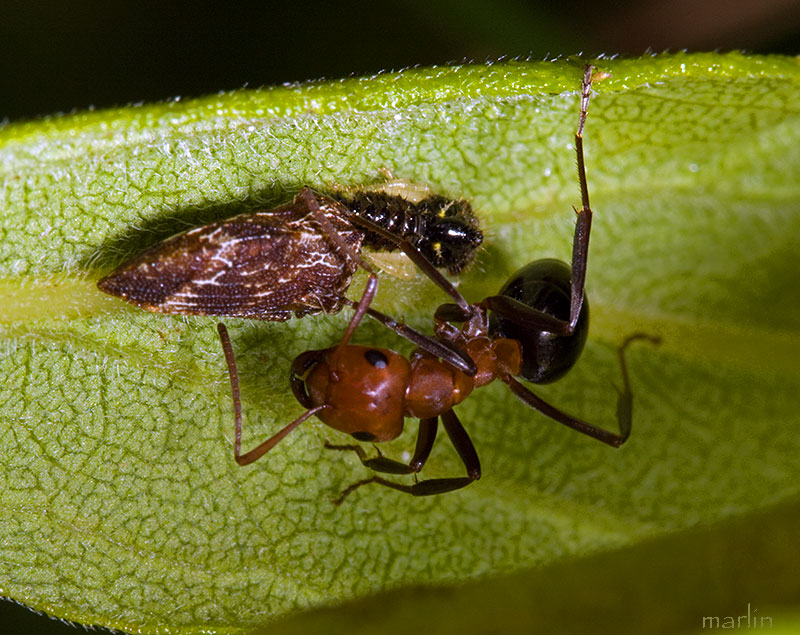 Allegheny Mound Ants tend hopper nymphs as well as aphids. The reward is the same: sugar-rich honeydew
In return for the honeydew, ants will carry aphids or hopper nymphs to more vulnerable (and hence more productive) areas of the plant, and protect their charges by killing aphid-predators such as lady beetle and lacewing larvae.
Mound ants will also harvest the resulting “excess” aphids as a bonus protein source. [1]
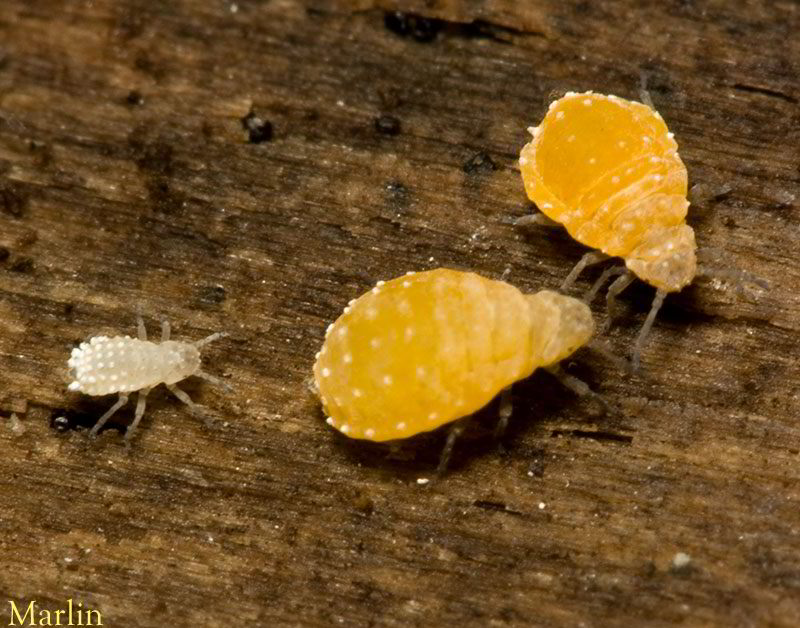 These are root aphids, 3mm to less than 1mm
Recent research suggests chemicals on ants’ feet tranquilize and subdue colonies of aphids, keeping them close by as a ready source of food.
Ants have been known to bite the wings off the aphids in order to stop them from flying. Chemicals produced in the glands of ants can also sabotage the growth of aphid wings.
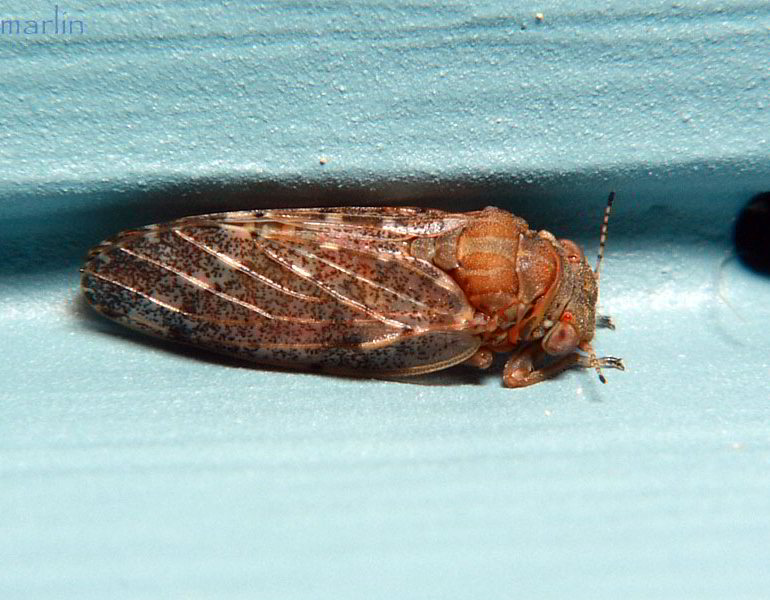 Jumping plant louse – Hackberry Psyllid
References
- Ingraham, John L., “March of the Microbes: Sighting the Unseen” Belknap Press, 2010
- University of California Statewide Integrated Pest Management Program, Aphids
Bugs Main | Bugs Index
Tree Encyclopedia
North American Insects & Spiders
Online since 2002