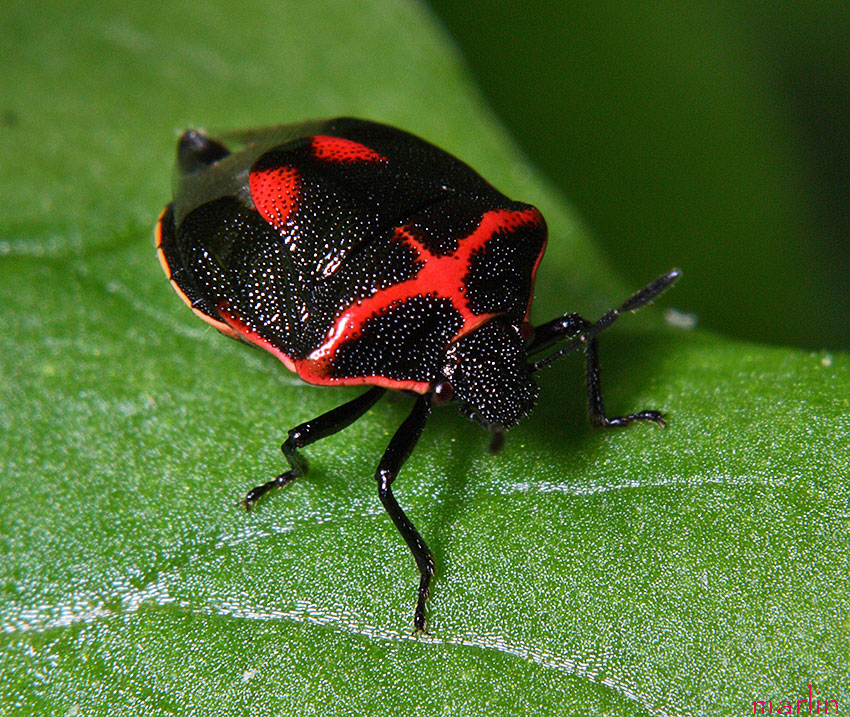
![]() | Twice-Stabbed Stink Bug - Cosmopepla lintneriana Family Pentatomidae (Stink bugs) Live stinkbugs photographed at northern Illinois Insects & Spiders | Bugs Main | Bugs Index | Assassin Bugs | Plant Bugs | Ambush Bugs |
![]() Stinkbugs have 2 large compound eyes and 2 smaller, simple eyes (ocelli). Size: 6mm |
| Like all true bugs, this insect is a plant feeder, injecting enzymes which break down plant tissues and cell walls, then vacuuming up the resulting nutritional slurry. Because twice-stabbed stinkbugs feed on a wide variety of plants, including milk thistle, echinacea, asparagus, oats, mint and goldenrod, they are found in a wide variety of habitats. They are active from May until September here in the American midwest. These colorful bugs are by far the most numerous stink bugs here in the western suburbs of Chicago. I find infestations of hundreds of individuals in very small areas of forest. The family name Pentatomidae comes from the Greek "pente" (five) + "tomos" (a section); perhaps a reference to the 5-segmented antennae, or perhaps a reference to the body, which when viewed from above appears to be divided into 5 large sections. The scutellum is the largest section. |
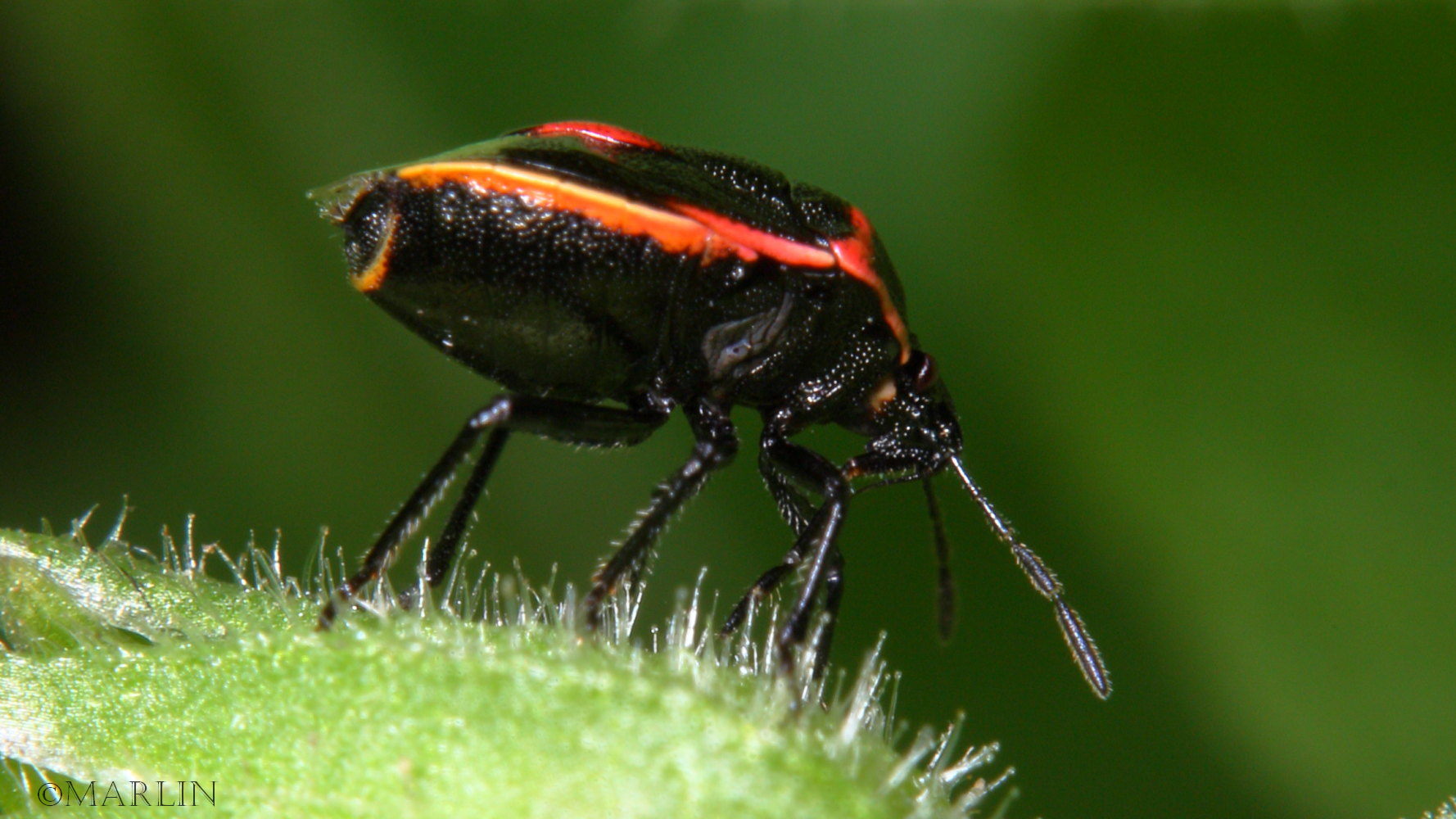
Stink bugs get their common name from the foul-smelling fluids they exude when disturbed. Both adults and nymphs have large glands that discharge underneath the body. Stinkbugs are shy, I can tell you - and they will fly off very quickly if you get in their face. Several species of insects that feed on peaches and other fruits early in the growing season cause a gnarling and distortion of the fruits called catfacing. Plant bugs and stink bugs, called catfacing insects, are largely responsible for this type of injury. They suck the sap from the fruit. If the peaches do not fall as a result of this attack, fruit development is inhibited in the area of the punctures. The surrounding healthy tissue continues to grow thereby causing a defect resembling a cat's face. |
References
|
| Helpful: You can hear the pronunciation of many scientific and taxonomic terms at howjsay.com |
![]() |
Hemiptera was first recognized by Linnaeus in the Systema Naturae of 1758. True Bugs species number almost 5,000 in North America, and 40,000 worldwide. Bugs have hypodermic needle-like mouthparts that allow them to extract fluids from plants and animals. Hemiptera Index Suborder Auchenorrhyncha - Cicadas & Planthoppers Suborder Sternorrhyncha - Aphids, scales, mealybugs, jumping plant lice |