Twice-Stabbed Stink Bug – Cosmopepla lintneriana
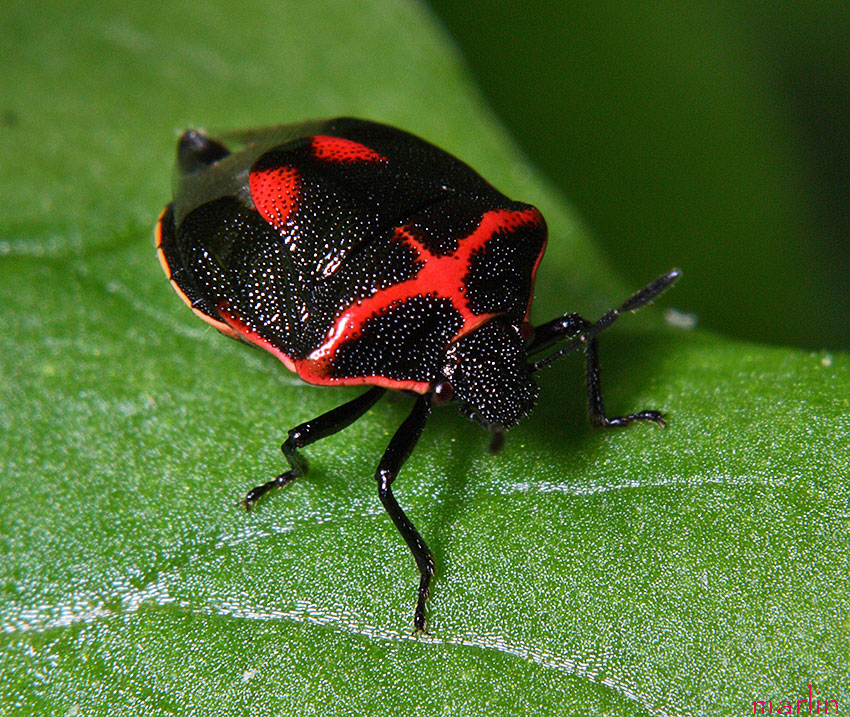 Stink bugs have 2 large compound eyes and 2 smaller, simple eyes (ocelli). Size: 6mm
Like all true bugs, this insect is a plant feeder, injecting enzymes which break down plant tissues and cell walls, then vacuuming up the resulting nutritional slurry. Because twice-stabbed stink bugs feed on a wide variety of plants, including milk thistle, echinacea, asparagus, oats, mint and goldenrod, they are found in a wide variety of habitats.
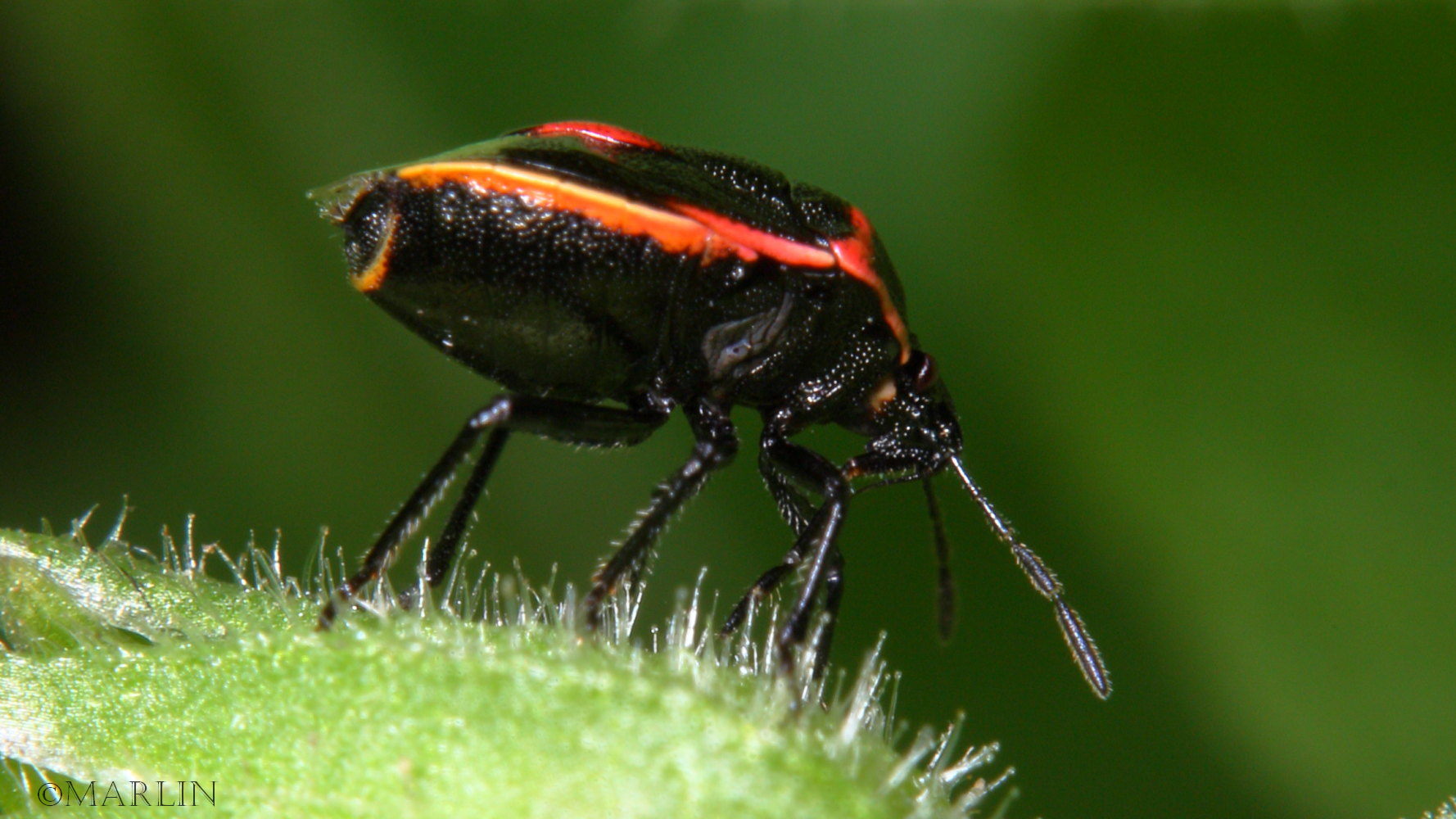
Stink bugs get their common name from the foul-smelling fluids they exude when disturbed. Both adults and nymphs have large glands that discharge underneath the body.

They are active from May until September here in the American midwest. These colorful bugs are by far the most numerous stink bugs here in the western suburbs of Chicago. I find infestations of hundreds of individuals in very small areas of forest.
