Weevils – Family Curculionidae
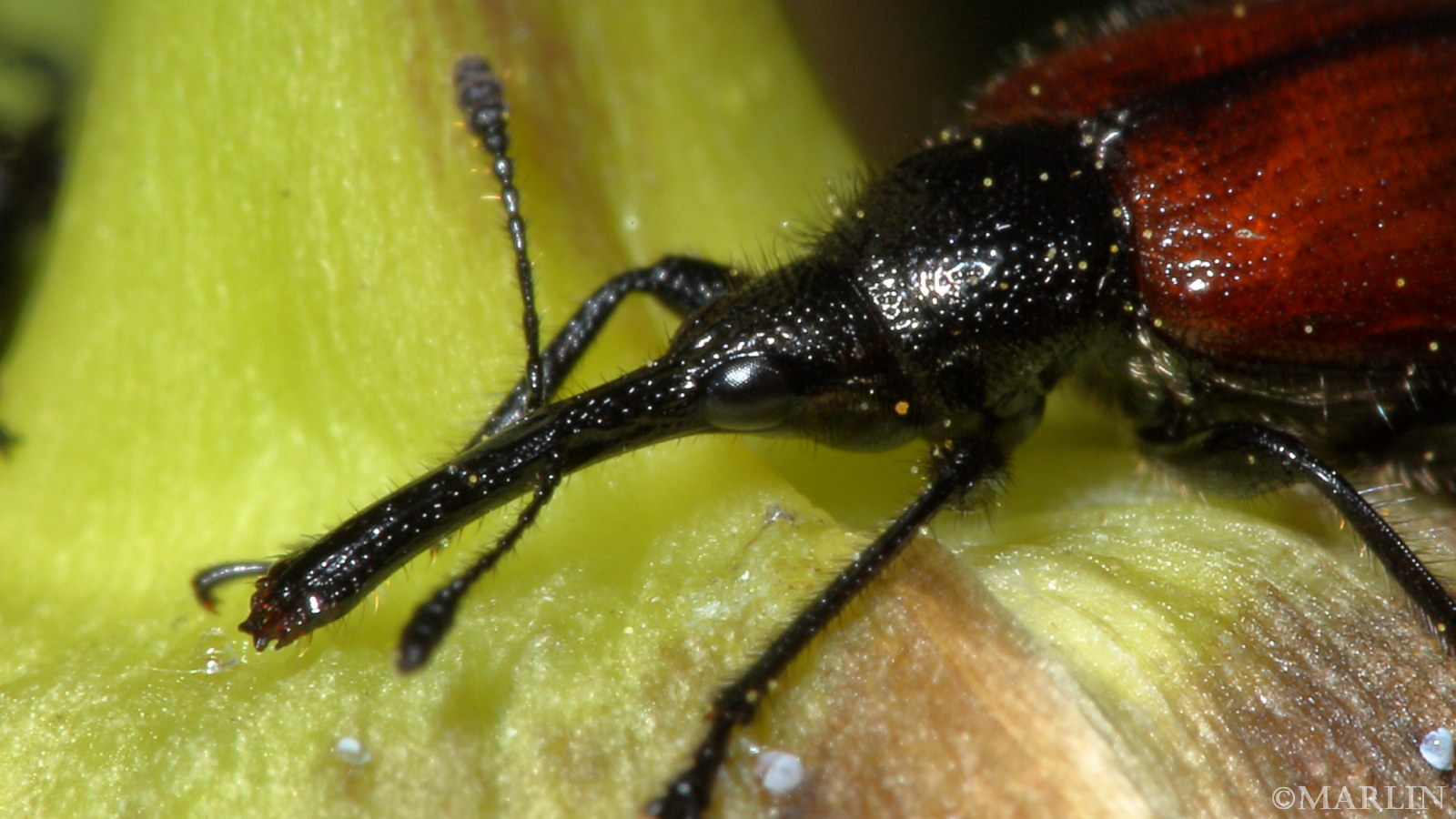
Insects in the subfamily Rhynchitinae are commonly known as “tooth-nosed snout weevils.” The weevil is sitting atop a clipped sunflower head. Read our article on the sunflower head-clipping weevil. Head-clipping weevils (family Attelabidae) are defined by an exaggerated rostrum. In the female, this rostrum functions as a precision saw: she grips a leaf or tender twig and methodically scores it with repeated sideways motions, severing vascular tissue rather than hacking outright. This controlled girdling causes the leaf or shoot to wilt without immediately detaching, creating a dying but still pliable substrate
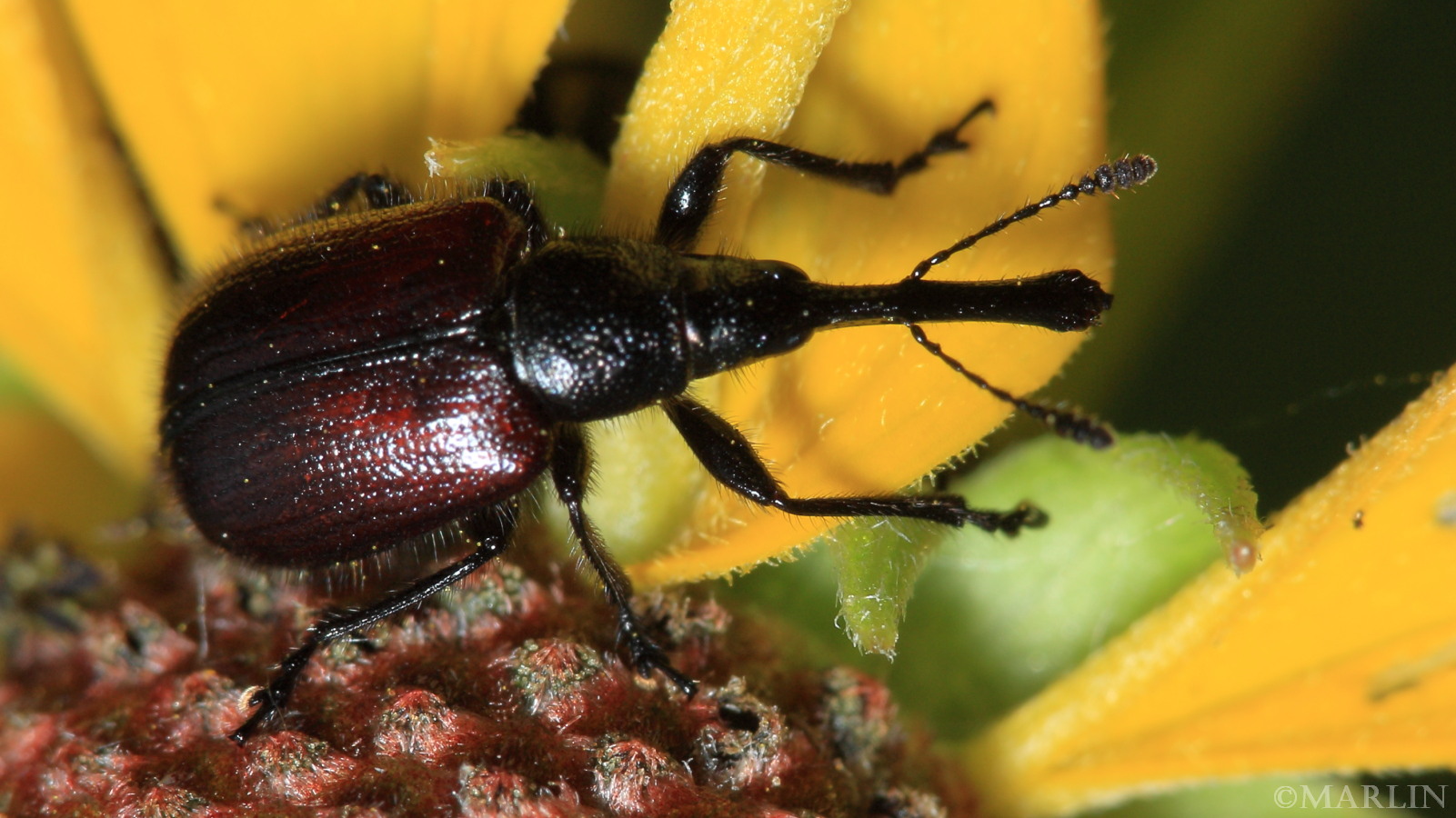 After cutting, she folds or rolls the leaf and deposits an egg inside, then often completes the clip so the structure drops to the ground. The larva develops safely within this pre-fabricated cradle, feeding on the decaying plant tissue. The “saw” is not a separate structure but a reinforced, serrate edge of the rostrum itself—an evolutionary specialization tuned for plant surgery rather than feeding, and one of the clearest examples of tool-like morphology in beetles.
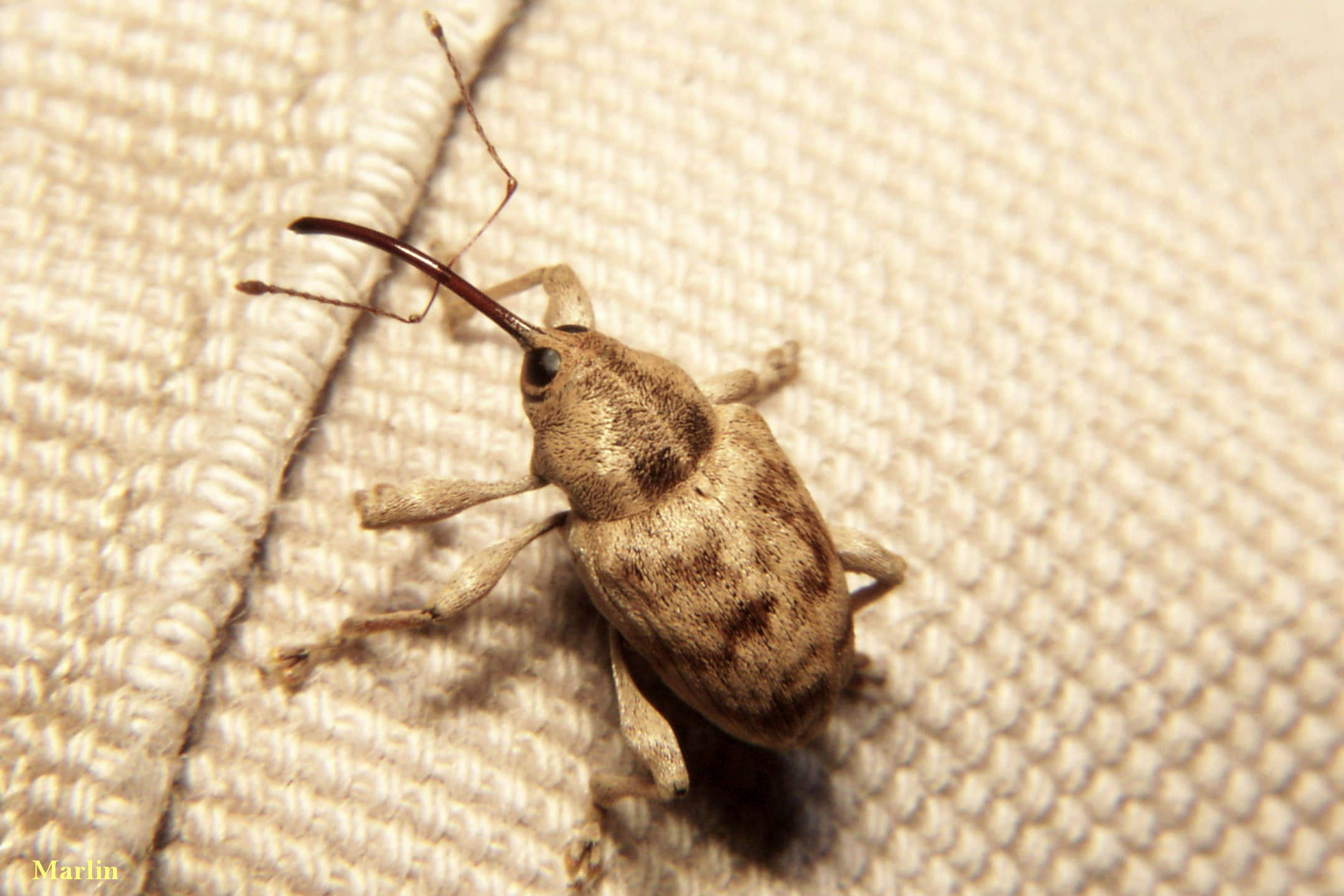 Curculio Acorn Weevil
There are over 35,000 species of weevil, with more than 2,500 species in the United States and Canada alone. All are strictly herbivorous. The bent antennae usually project from the middle of the snout. In the case of the acorn weevils, the snout can actually be longer than the body.
Acorn weevils have snouts with small, saw-like teeth at the very end. There are two types, or genera: the long-snouted acorn weevils (genus Curculio) and the short-snouted ones (genus Conotrachelus). The longsnouted acorn weevil’s snout may be equal to or greater than the length of its body. These specimens are, of course, the long-snouted variety.
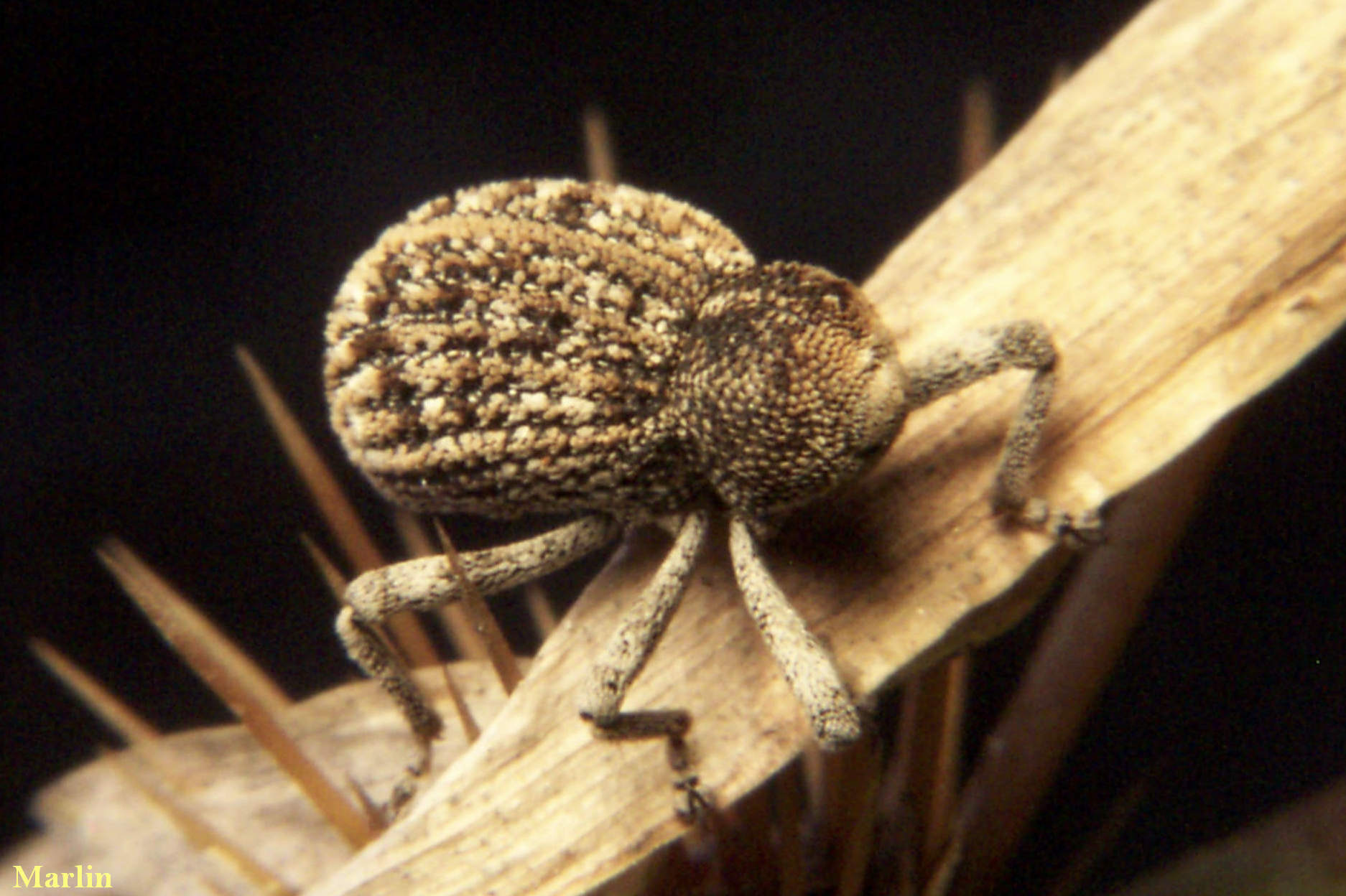 Grub-like acorn weevil larvae hatch from eggs a few days after they are laid. There may be one to several acorn weevil larvae in each acorn. Larvae typically go through five growth stages, or instars. Each instar ends with the molt or shedding of the old skin, providing the larva with more room to grow. After a few weeks, larvae chew their way out of the acorn, burrow into the soil to pupate, and eventually emerge as adults the next year.
Short-snouted larvae usually exit from a single hole that already exists in the acorn, but long-snouted larvae may chew their own exit hole through the acorn shell. Like larvae of the short-snouted acorn weevil, acorn moth larvae can feed only on damaged or sprouting acorns. The grayish female acorn moths lay eggs in damaged acorns, sometimes in the emergence holes of acorn weevil larvae. It’s easy to distinguish the acorn moth larva, a caterpillar, from acorn weevil larvae. The acorn moth larva has three pairs of legs near the head and is generally longer than the legless, fat larvae of acorn weevils. Larvae of the acorn moth feed on acorns and probably on the fungi that often grow in damaged acorns. They usually pupate inside the acorns.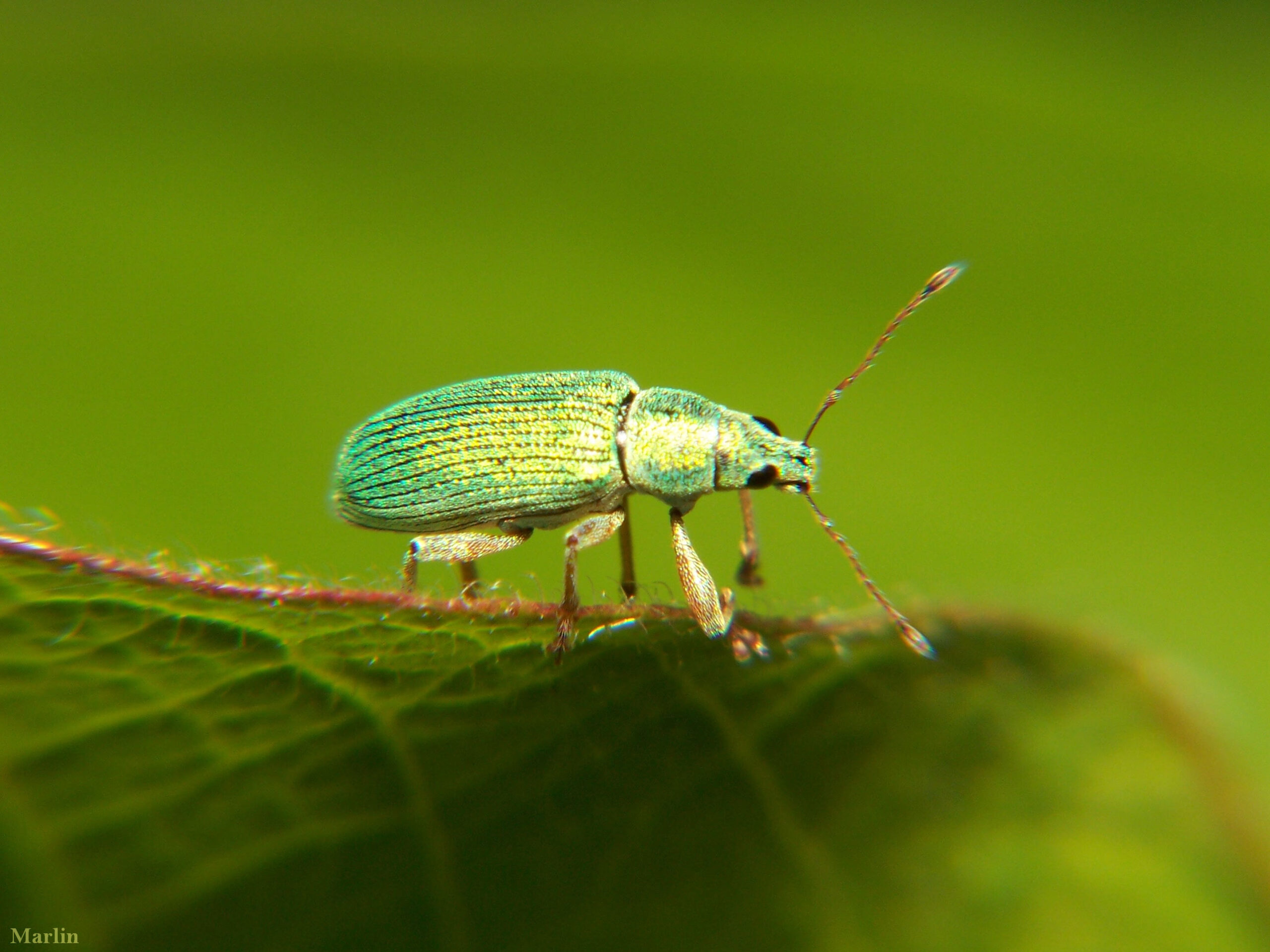 Green Immigrant Weevil
Weevils are among the most destructive insects on the planet. The Boll Weevil is certainly one of the most famous of all insects, devastating the U.S. cotton crop in the 1920s. Weevils are unified by the rostrum—the elongated snout that projects forward from the head and carries the mouthparts at its tip. This structure is not ornamental: it is a multi-purpose tool used for feeding, probing, and egg-laying. In many species the rostrum is rigid and tapered, allowing the adult—usually the female—to bore precise holes into plant tissue, seeds, buds, or wood. At the distal end, the mandibles act like cutting blades, scraping or sawing as the rostrum is twisted or levered into place.
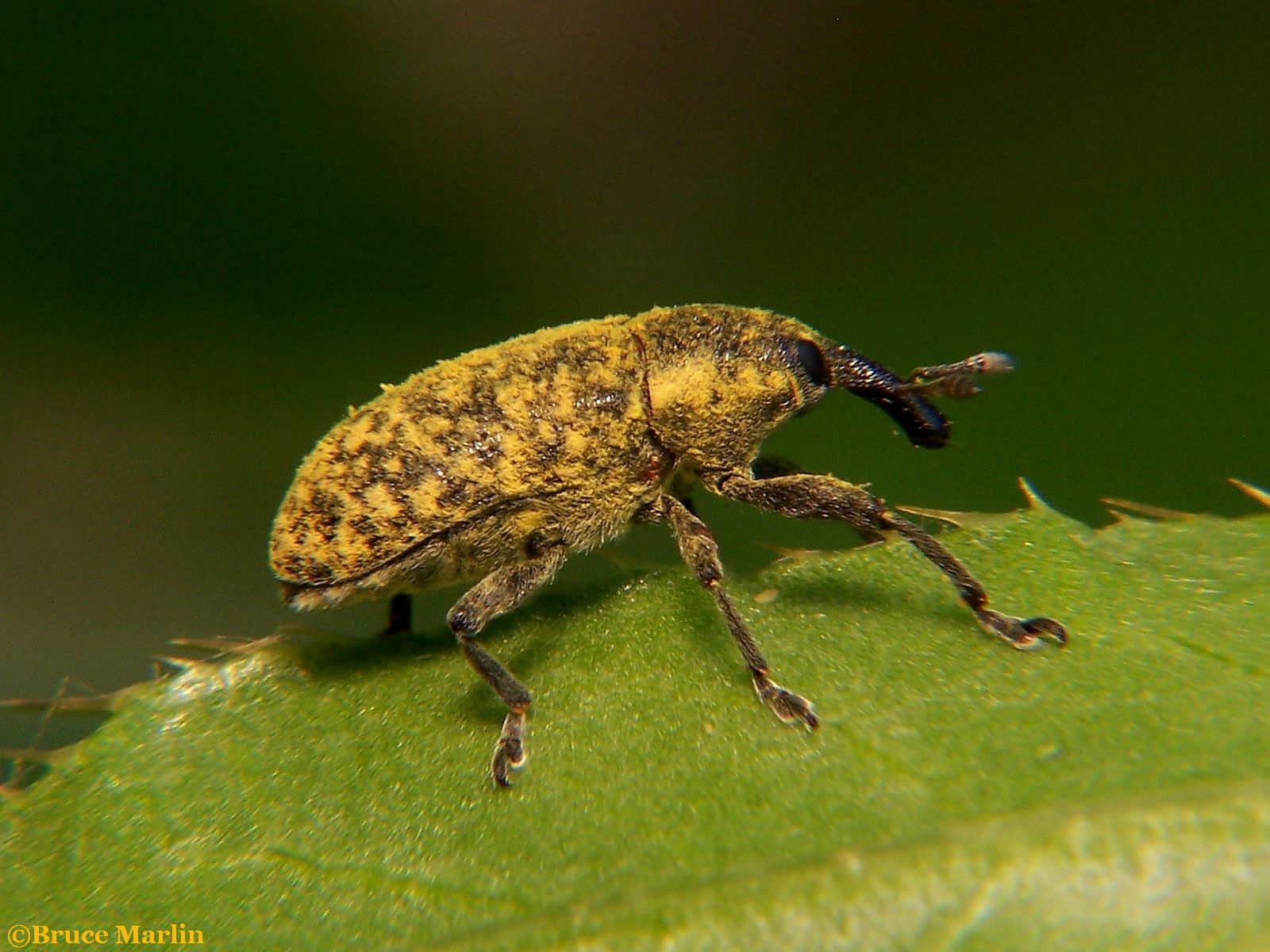 Unlike head-clipping weevils, most species do not sever plant parts wholesale; instead, the rostrum functions as a drill or chisel, creating access points where eggs are inserted or food tissues exposed. The length, curvature, and robustness of the rostrum vary dramatically among species and closely track their host plants and life strategies. Across the family, this snout represents one of the most extreme examples of evolutionary specialization in beetles—an integrated feeding and reproductive instrument that defines the group both anatomically and ecologically.
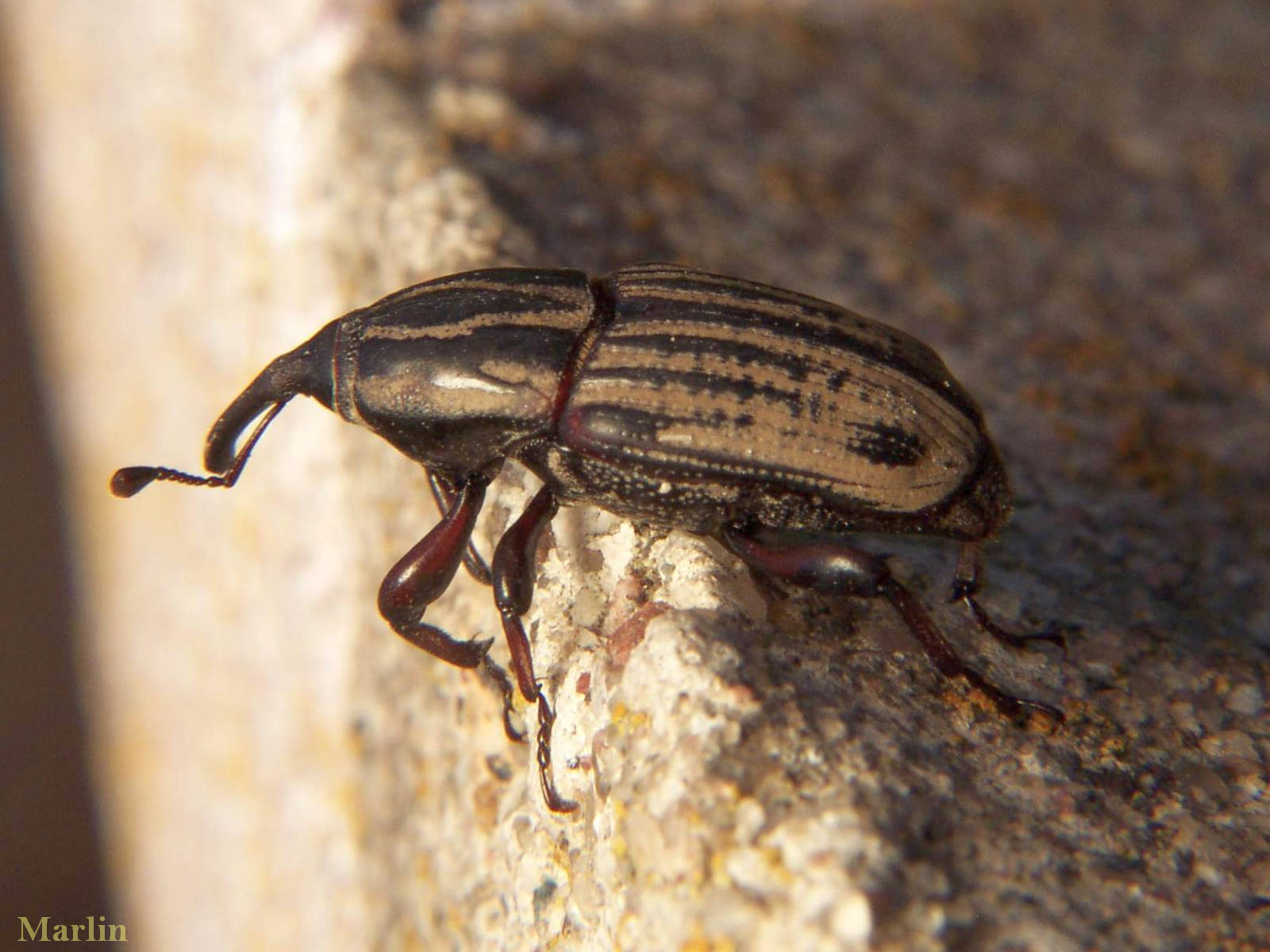 Sphenophorus australis
Beetles Main | Beetles Index | Longhorns | Leaf Beetles | Soldier | Blister | Lady | Scarab
Tree Encyclopedia / North American Insects & Spiders Online since 2002