Twisty Baby Black Locust – Robinia pseudoacacia ‘Lacy Lady’
Family: Fabaceae (Leguminosae)
Live specimens photographed at The Morton Arboretum at Lisle, Illinois
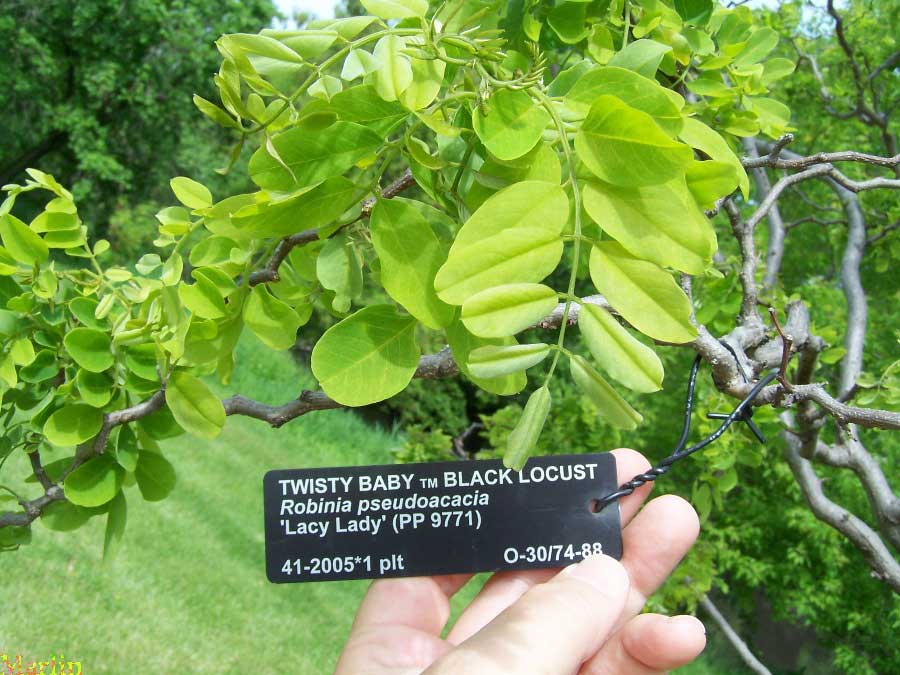 Black locust grows naturally on a wide range of sites but does best on rich moist limestone soils. It has escaped cultivation and become naturalized throughout eastern North America and parts of the West. Black locust is not a commercial timber species but is useful for many other purposes. Because it is a nitrogen fixer and has rapid juvenile growth, it is widely planted as an ornamental, for shelterbelts, and for land reclamation.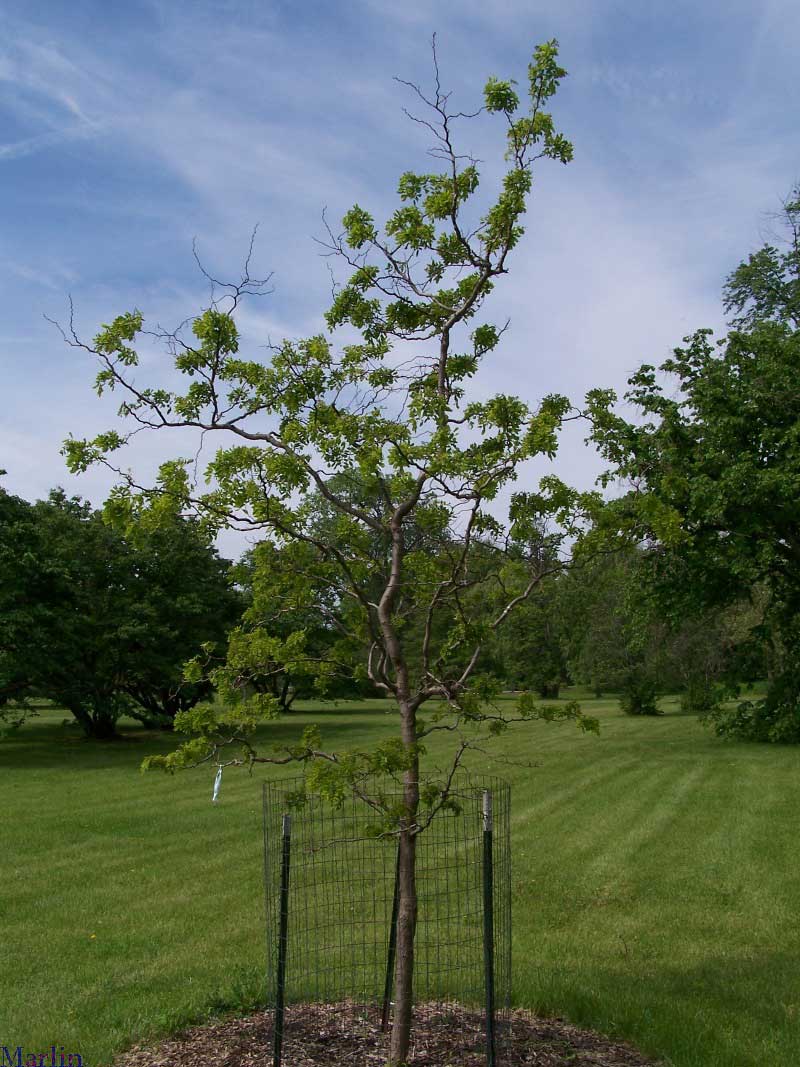
‘Twisty Baby’ is a horticultural selection, propagated by grafting, with contorted branches and leaves. What makes the tree especially appealing is the tightly growing leaf clusters that hang down, very much like wisteria blooms. Because black locusts produce new terminal growth all summer long, until leaf fall in autumn, the growing tips are always a fresh apple green color; the leaflets curl up, showing a greyish underside, and the mature leaves a deep, bluish green. The lovely multi-tone effect thus created lasts the entire summer. In winter, the twisted branches have great character as well.
The leading branches of this fast grower (45 cm per year, though some of the growth is downward) can be trained easily by the artistic gardener to a shape that will emphasize their contorted nature, especially when grown as a multi-stemmed specimen. It can reach a height exceeding 3 m, spreading almost as much. Black locusts bloom on mature trees, but ‘Twisty Baby’ does not bloom reliably. When it does, it produces hanging clusters of white, pea-like blooms with a sweet fragrance; understated, yet spectacular.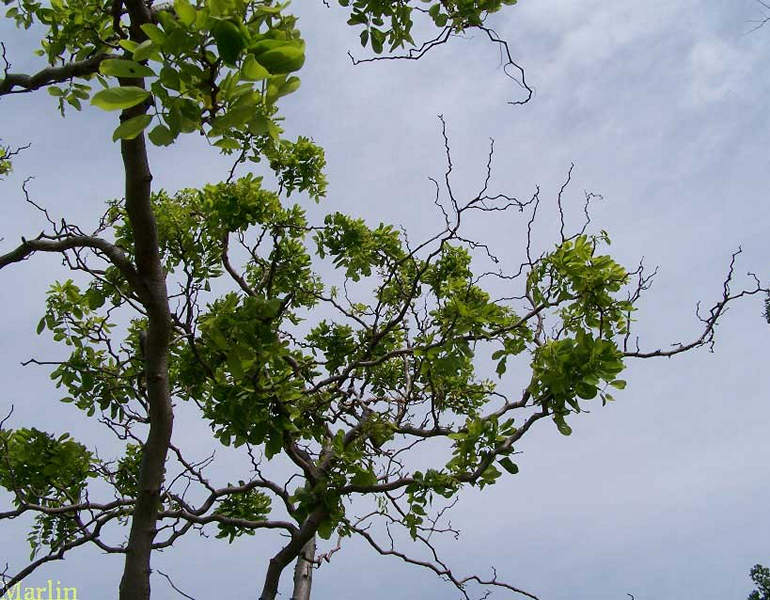 Damaging Agents- Black locust is severely damaged by insects and disease, probably more than any other eastern hardwood species. Ubiquitous attacks by the locust borer (Megacyllene robiniae) and by the heart rot fungi Phellinus rimosus or Polyporus robiniophilus make growing black locust for timber production impractical. Locust borer larvae construct feeding tunnels throughout the wood, and the holes serve as entry points for heart rot fungi that cause extensive wood decay.
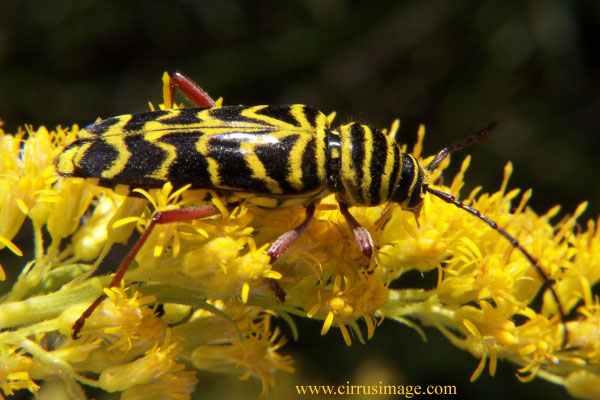 Locust Borer Beetle, Megacyllene robiniae
Locust borer attacks can begin at a young age and damage can be so extensive that trees are not suitable for fence posts. Many plantations planted in reclamation projects were seriously damaged, but more trees could be used if cut as soon as they reach post or mine-prop size. Slow-growing trees on poor sites are most susceptible to borer attack. On sites where tree vigor is low, repeated attacks often reduce black locust to sprout clumps. Damage to the sprouts is often as severe as in the original stem.
Tree Encyclopedia | Tree Index | Fabaceae Index | Birch | Oak Online since 2002