Widow Skimmer Dragonfly – Libellula luctuosa
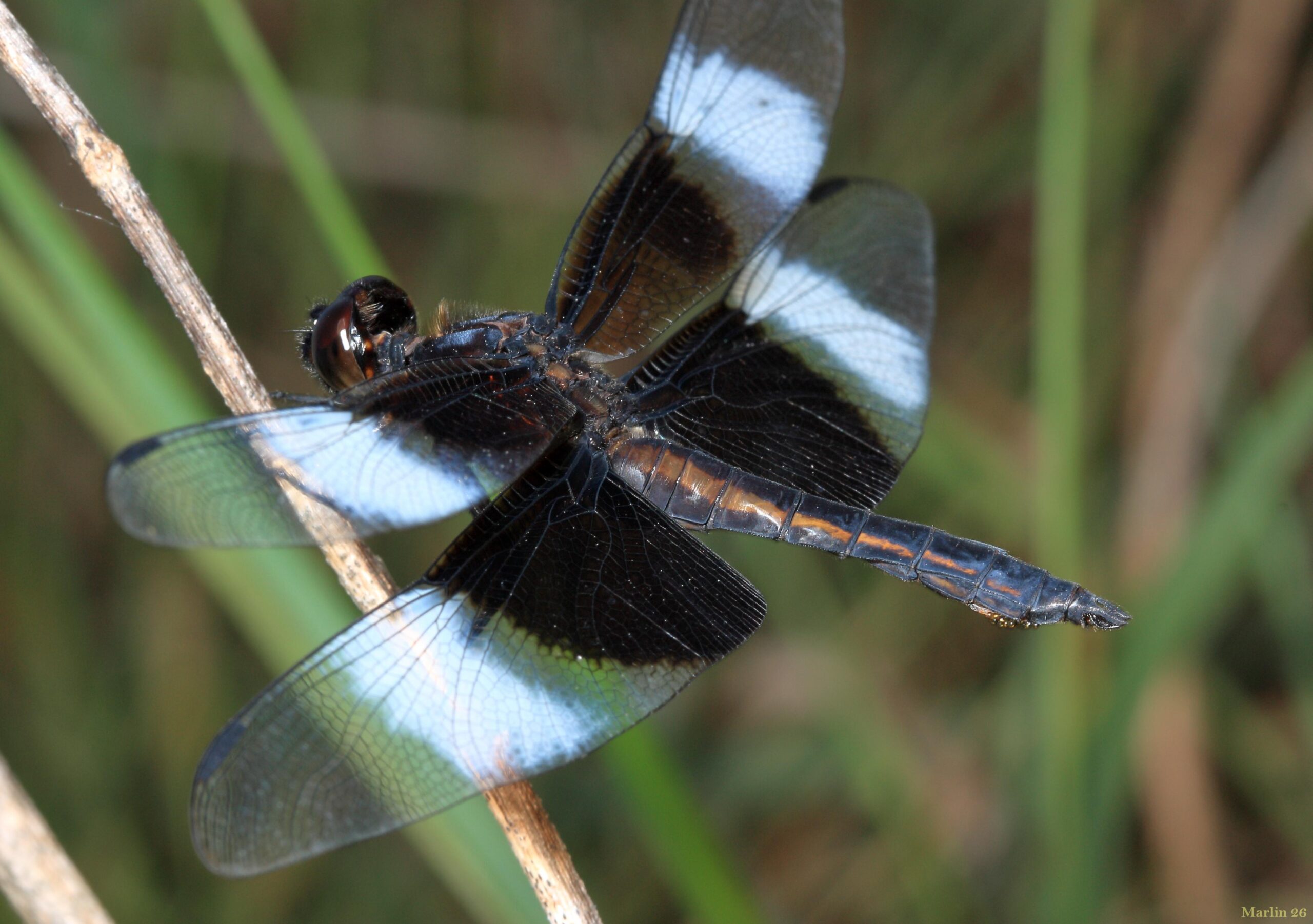
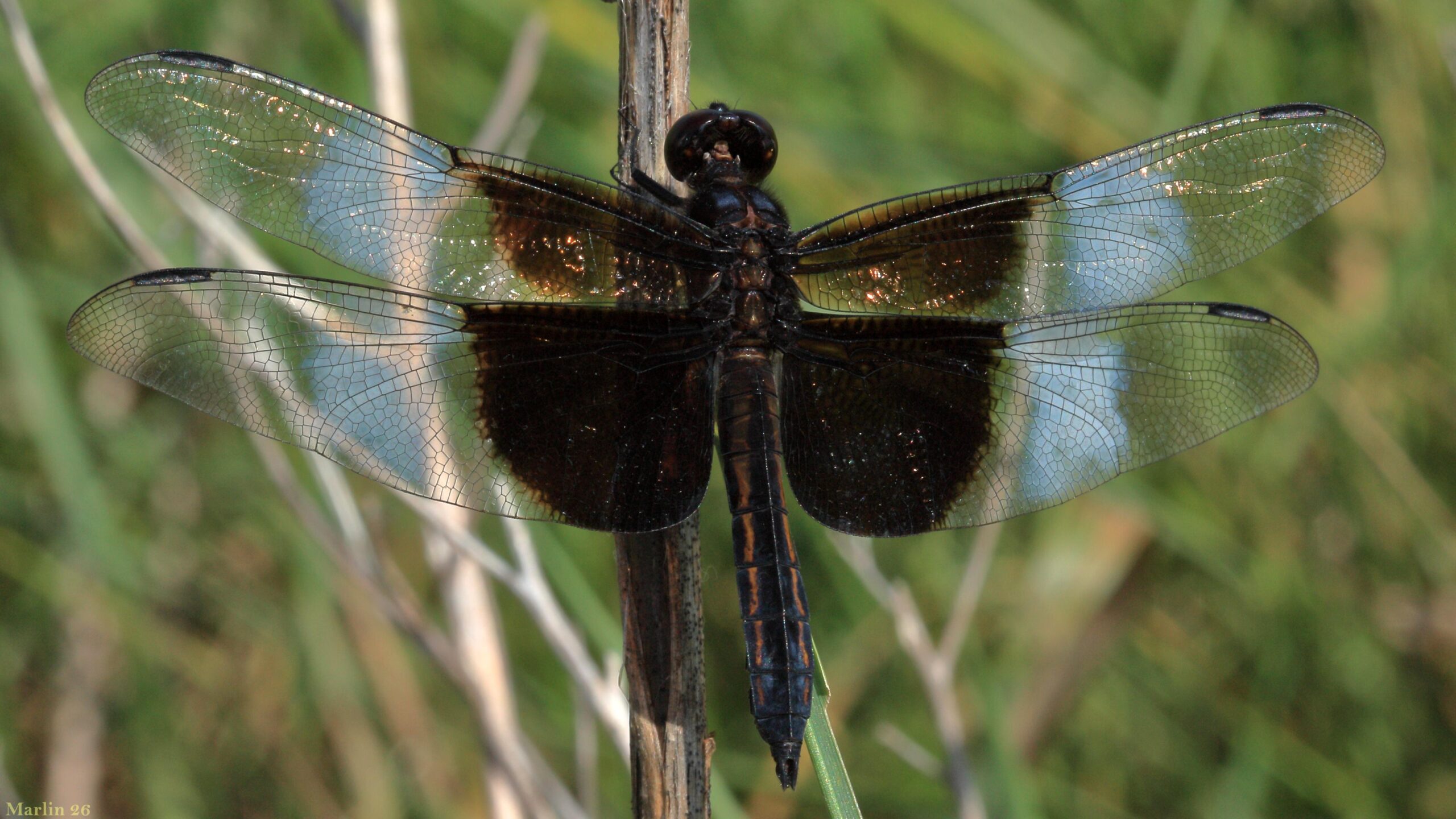
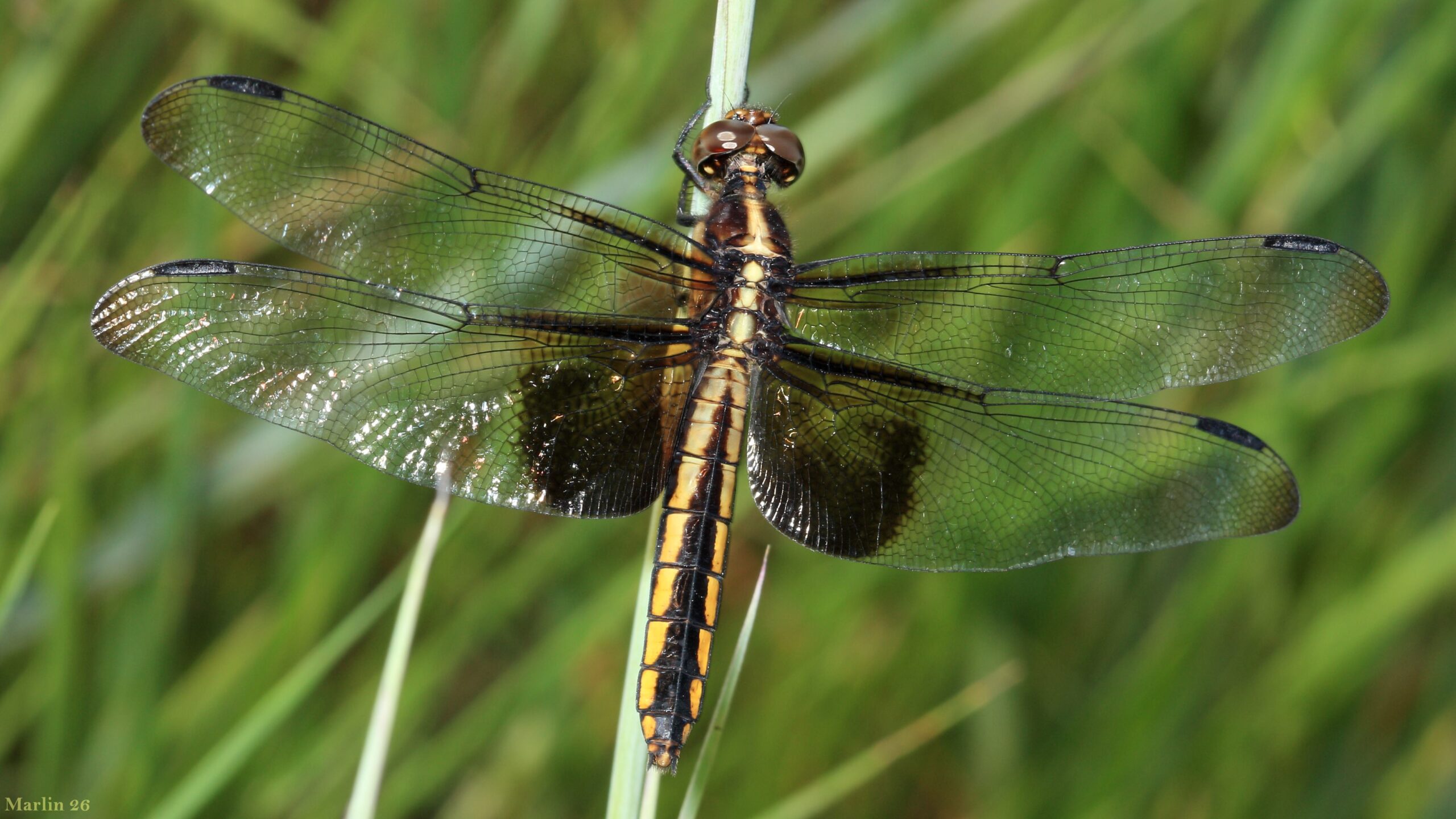 These photos were taken near the west branch of the DuPage River in Illinois. The widow skimmer is famous for its pruinosity – the white, waxy coating on the dragonfly’s wings and abdomen. Dragonflies have excellent eyesight. Their compound eyes have up to 30,000 facets, each of which is a separate light-sensing organ or ommatidium, arranged to give nearly a 360° field of vision.
 Much larger dragonfly species existed in the distant past than occur on earth today. The largest, found as a fossil, is an extinct Protodonata named Meganeura monyi from the Permian period, with a wingspan of 70-75 cm (27.5-29.5 in). This compares to 19 cm (7.5 in) for the largest modern species of odonates, the Hawaiian endemic dragonfly, Anax strenuus. The smallest modern species recorded is the libellulid dragonfly, Nannophya pygmaea from east Asia with a wingspan of only 20 mm, or about ¾ of an inch.
 Dragonflies are the world’s fastest insects and, although estimates of their speed vary wildly, most credible authorities say they are capable of reaching speeds of between 30 and 60 km/h (19 to 38 mph). A study showed that dragonflies can travel as much as 85 miles in one day.
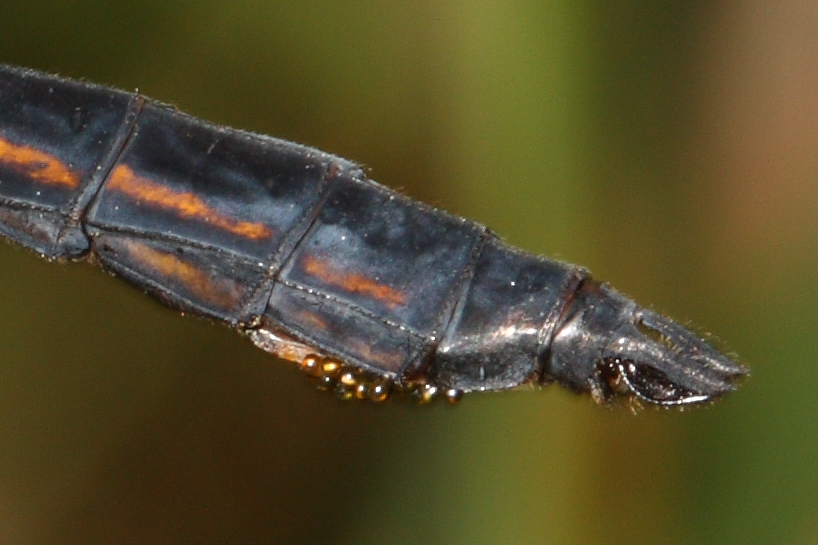
Mite parasites are hitchhiking on terminal abdominal segments
Odonata Index | Dragonflies | Damselflies | Odonata Main
Tree Encyclopedia / North American Insects & Spiders Online since 2002