Large Milkweed Bug – Oncopeltus fasciatus
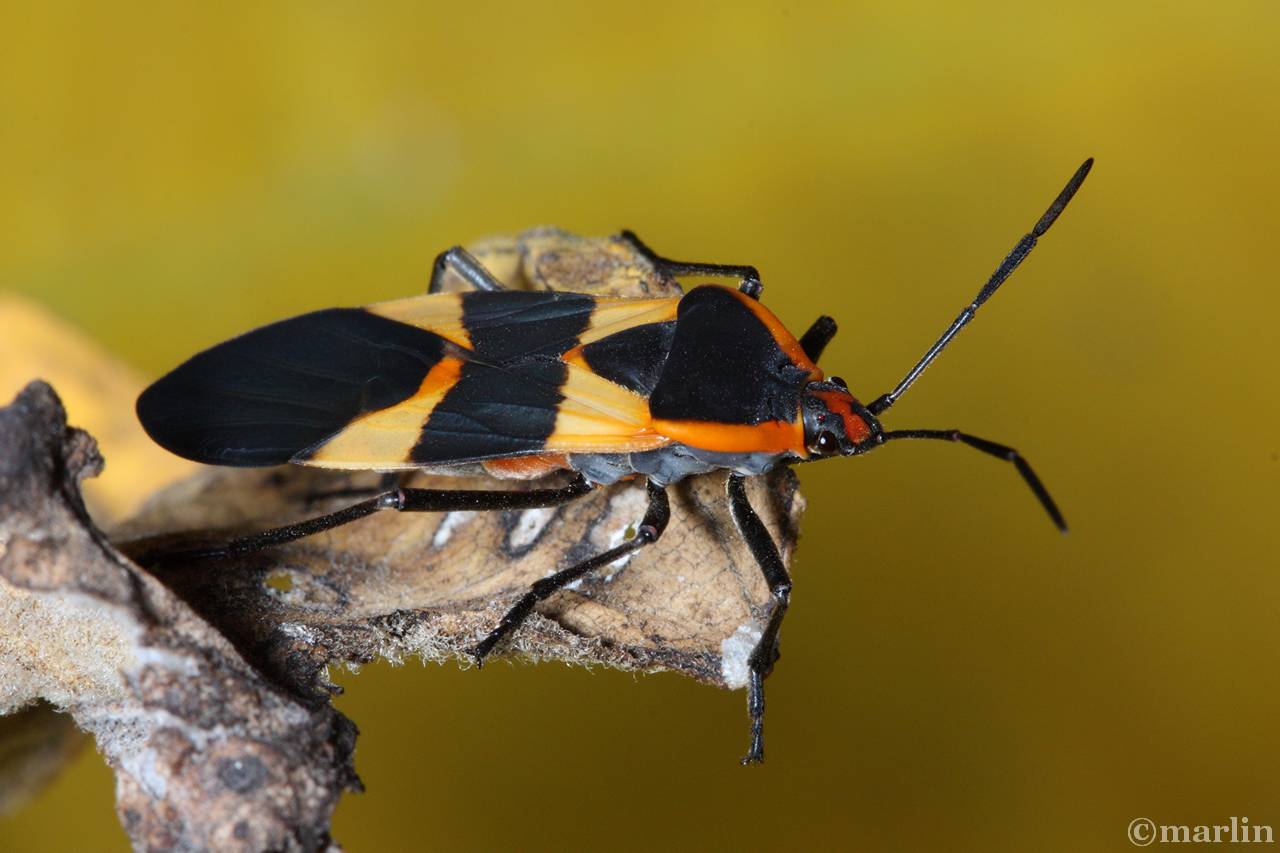 Family Lygaeidae – Seed Bugs
The large milkweed bug ranges east of the Rocky Mountains. They eat the seeds of milkweed plants, and occasionally suck juices from other plants, but appear to do no significant damage. I have them in my flower gardens by the thousands. They love butterfly bush (Asclepias incarnata) and congregate on the seed pods as soon as they start forming. They do no damage as far as I can tell.
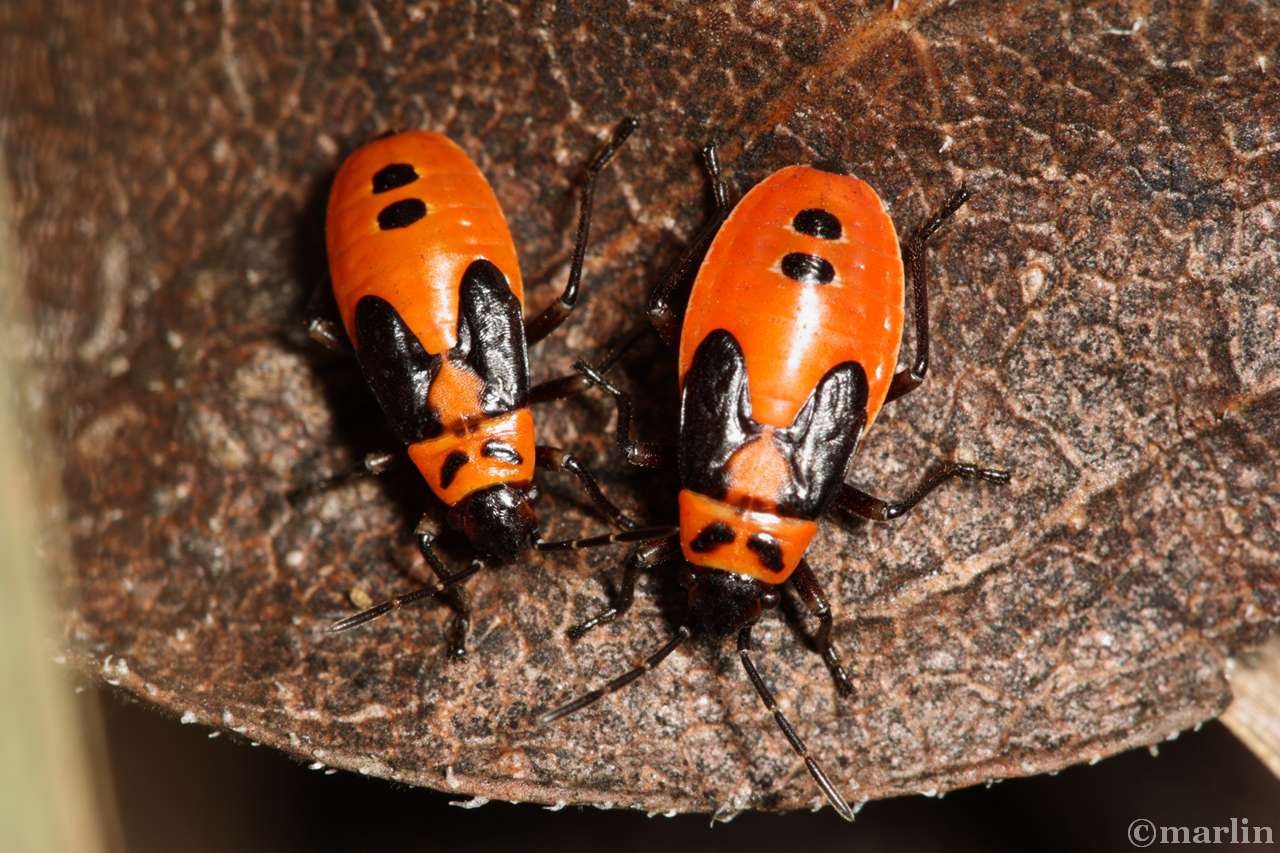
 Both small and large milkweed bugs have incomplete metamorphosis. The nymphs (immatures) look like the adults (meaning they have all the same body parts), except that they do not have full wings and their color pattern is different. Black wing pads appear early in their development. Nymphs undergo 5 instars (stages) while becoming an adult.
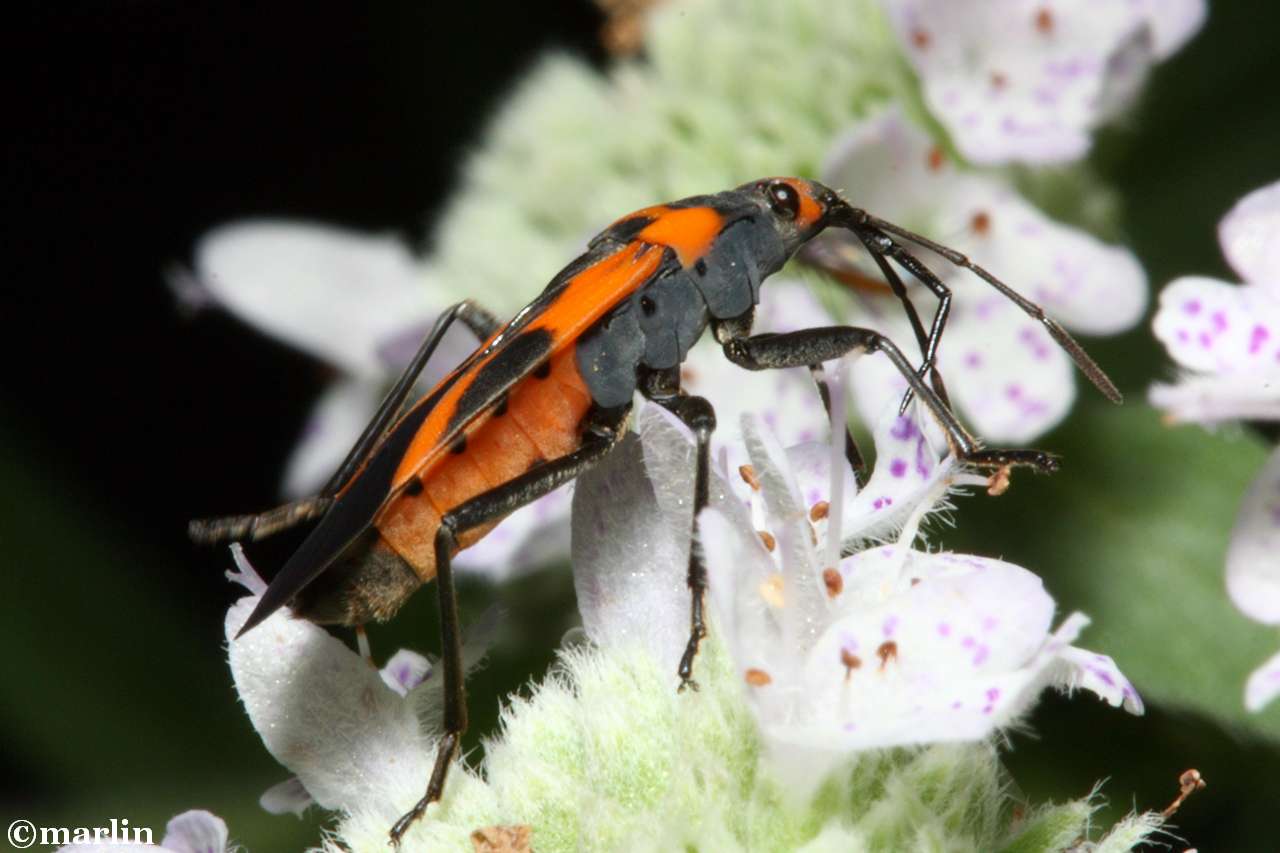 Milkweed bugs have few predators because they concentrate in their bodies toxic compounds found in the sap of milkweed plants. The bugs use their bright colors to advertise their bad taste. Inexperienced birds that taste their first milkweed bug are unlikely to try to eat another orange and black insect – colors hared by a wide range of insect, e.g., Monarch and Viceroy butterflies.
The bright orange abdomen really makes a great show when these bugs are flying – something they don’t do very often. They are very sedate creatures and afford great opportunities for the amateur macro photographer.
 The milkweed plant produces a milky white sap. These plants are large (3-4 feet high) with sprays of small white flowers in the summer. In the fall, seed pods develop which are 4 inches long and 1 1/2 inches wide. When the seeds ripen, the seed pods open up releasing the seeds which float on fluffy white parasols. Milkweed bugs can be found on seed pods piercing the wall of the pod to feed on seeds. Milkweed bugs are one of a small group of insects that can tolerate the toxic compounds in the plant.
Order Hemiptera: True Bugs number almost 5,000 species in North America, and 40,000 worldwide. They have mouthparts formed into a beak, adapted for sucking plant juices or the liquefied insides of their animal prey.
Bugs | Leaf Beetles | Soldier | Blister | Lady | Scarab
Tree Encyclopedia / North American Insects & Spiders is dedicated to providing family-friendly educational
resources for our friends around the world through large images and macro photographs of flora and fauna.
Online since 2002