Black Blister Beetle – Epicauta pennsylvanica
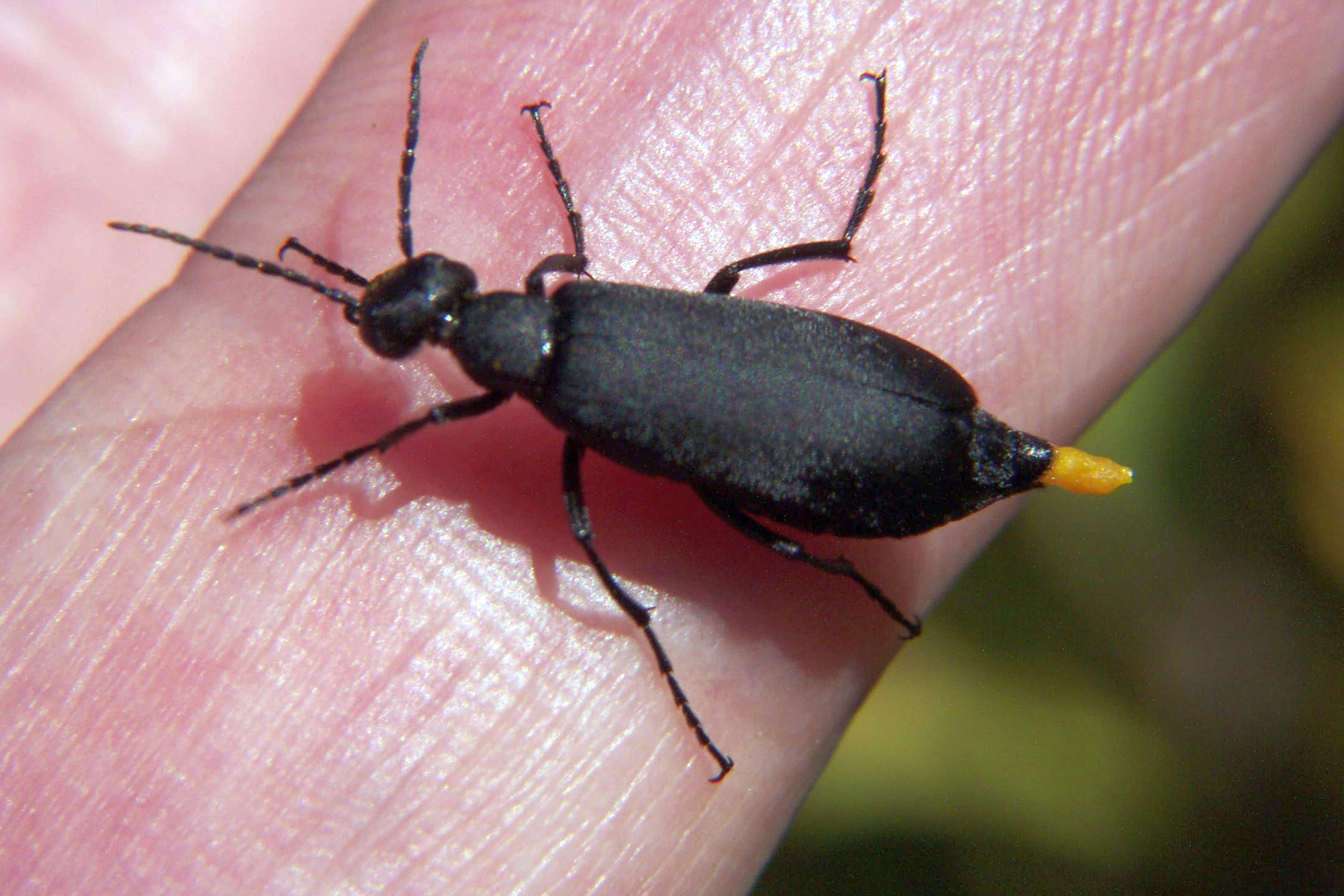 Epicauta pennsylvanica, the black blister beetle aka black aster bug, is a widespread species often seen in late summer. It feeds on pollen and nectar of a wide range of flowering plants. The matte black elytra and long, narrow body are distinctive among other dark beetles. This specimen is pooping pure pollen poop.
 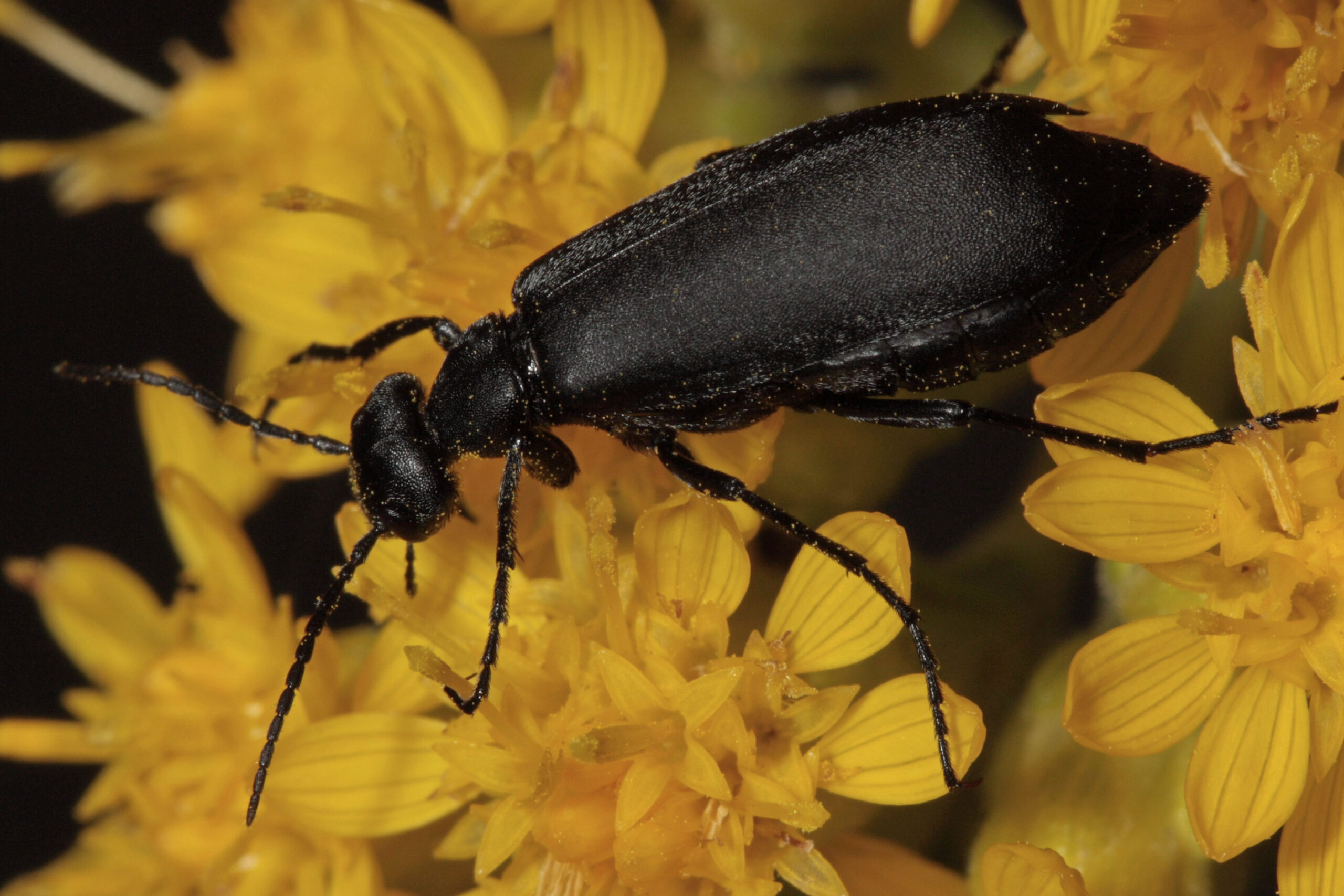 Blister beetles are soft-bodied beetles known for secreting cantharidin, a poisonous substance comparable to cyanide and strychnine in toxicity. The substance, stored in the insects’ blood, is very stable and remains toxic in dead beetles. Animals may be poisoned by ingesting beetles while grazing or eating harvested silage.
Cantharidin is absorbed through the intestine and can cause symptoms such as inflammation, colic, straining, elevated temperature, depression, increased heart rate and respiration, dehydration, sweating, and diarrhea. There is frequent urination during the first 24 hours after ingestion, accompanied by inflammation of the urinary tract. This irritation may also result in secondary infection and bleeding. Taken internally, as little as 10 milligrams can be fatal in humans.
The concentration of cantharidin in adult beetles depends primarily on the sex; males produce the chemical and only pass on small amounts to the females during mating.
Cantharidin amounts also depend on species; the striped blister beetle has approximately five times more catharidin than the black variety. There are other insects, including some beetles, flies, bugs that eat live or dead blister beetles to obtain the protective qualities of this chemical defense; these so-called cantharidinophilous insects have acquired immunity from the chemical and remain unharmed.
Male fire-colored beetles in the family Pyrochroidae are known to climb onto blister beetles and ingest the cantharidin exuded by the insect. Completely immune to the effects of the blistering agent, they use the chemical to attract females, who become the recipients of a cantharidin-laden sperm packet with which they coat their eggs.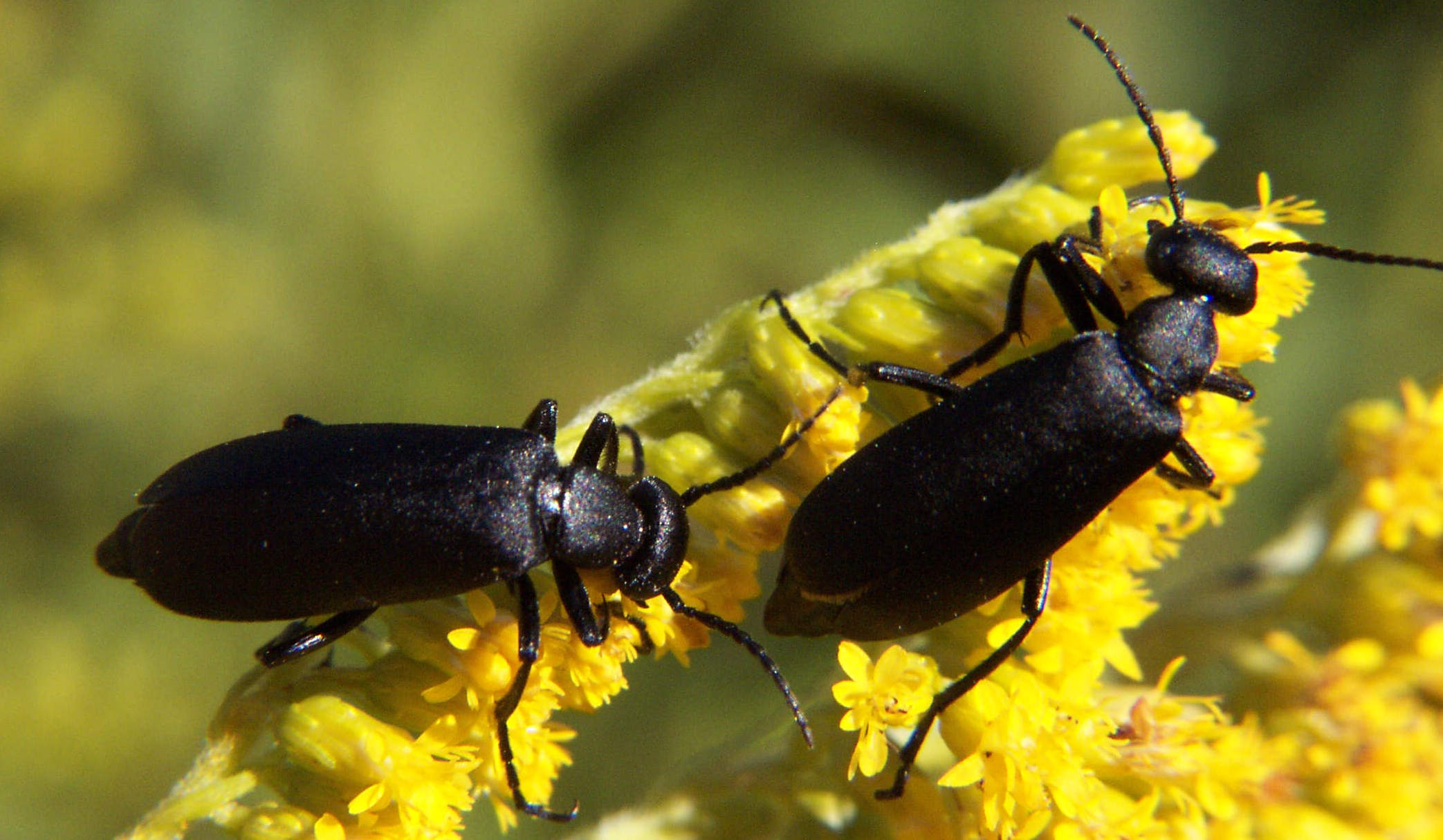 Black blister beetles are often observed on goldenrod, where they feed communally during late summer. If you find them, there will be LOTS of them.
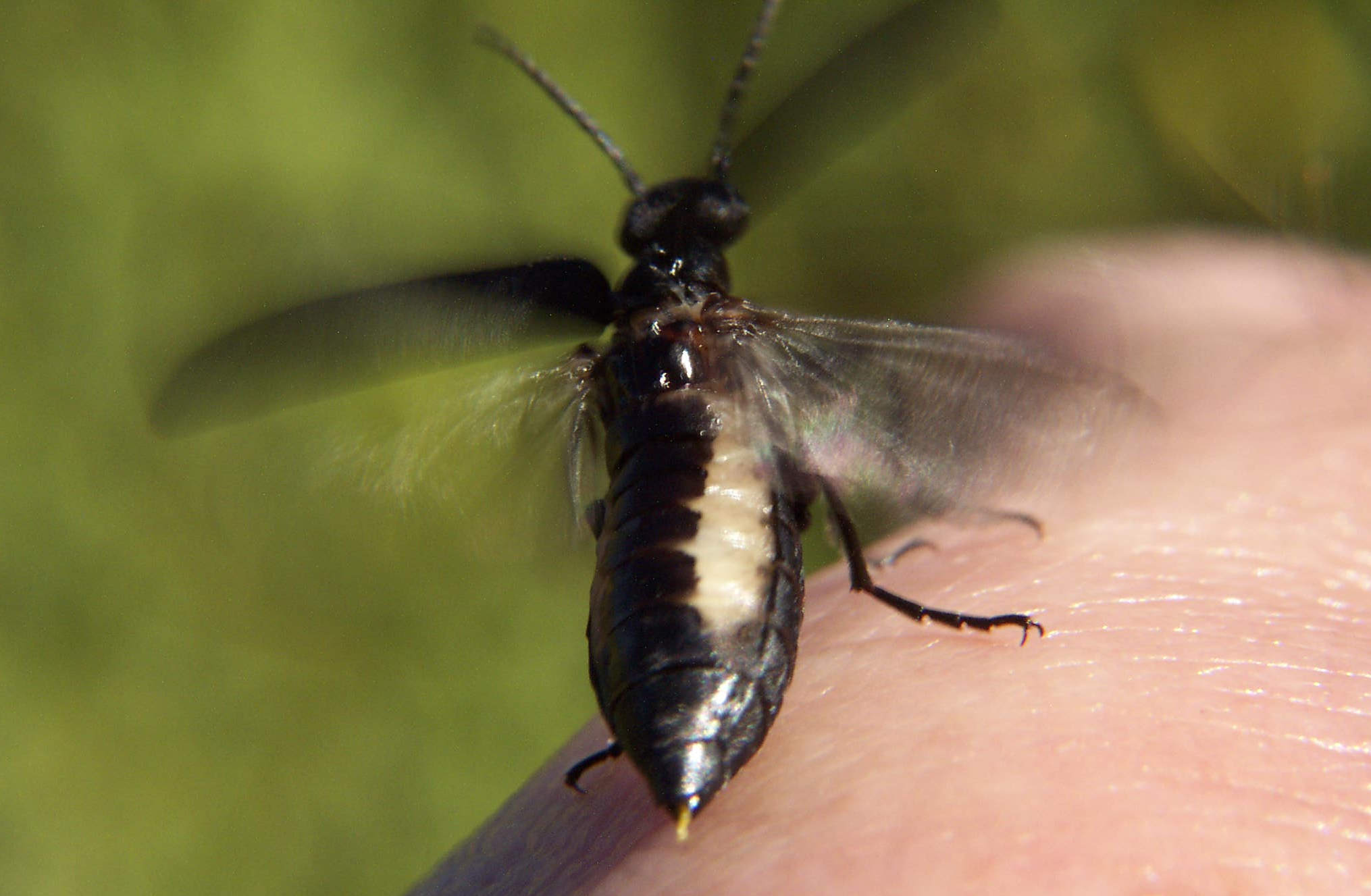 Flight begins with a quick lifting of the elytra (wing covers), followed by rapid deployment of the large, membranous hind wings. Like many beetles, Epicauta exposes most of the abdomen during flight, revealing pale segmental bands otherwise hidden at rest.
Female blister beetles lay clusters of eggs in the soil in late summer. The small, active larvae that hatch from these eggs crawl over the soil surface entering cracks in search for grasshopper egg pods. On finding a grasshopper egg mass, the larvae eats it, then becomes immobile and spends the rest of its larval time as legless grubs. The next summer they pupate and soon emerge as adults. Blister beetle populations follow closely the abundance of grasshoppers the year previous.
Beetles Main | Beetles Index | Longhorns | Leaf Beetles | Soldier | Blister | Lady | Scarab
