Northern Green-striped Grasshopper – Chortophaga viridifasciata
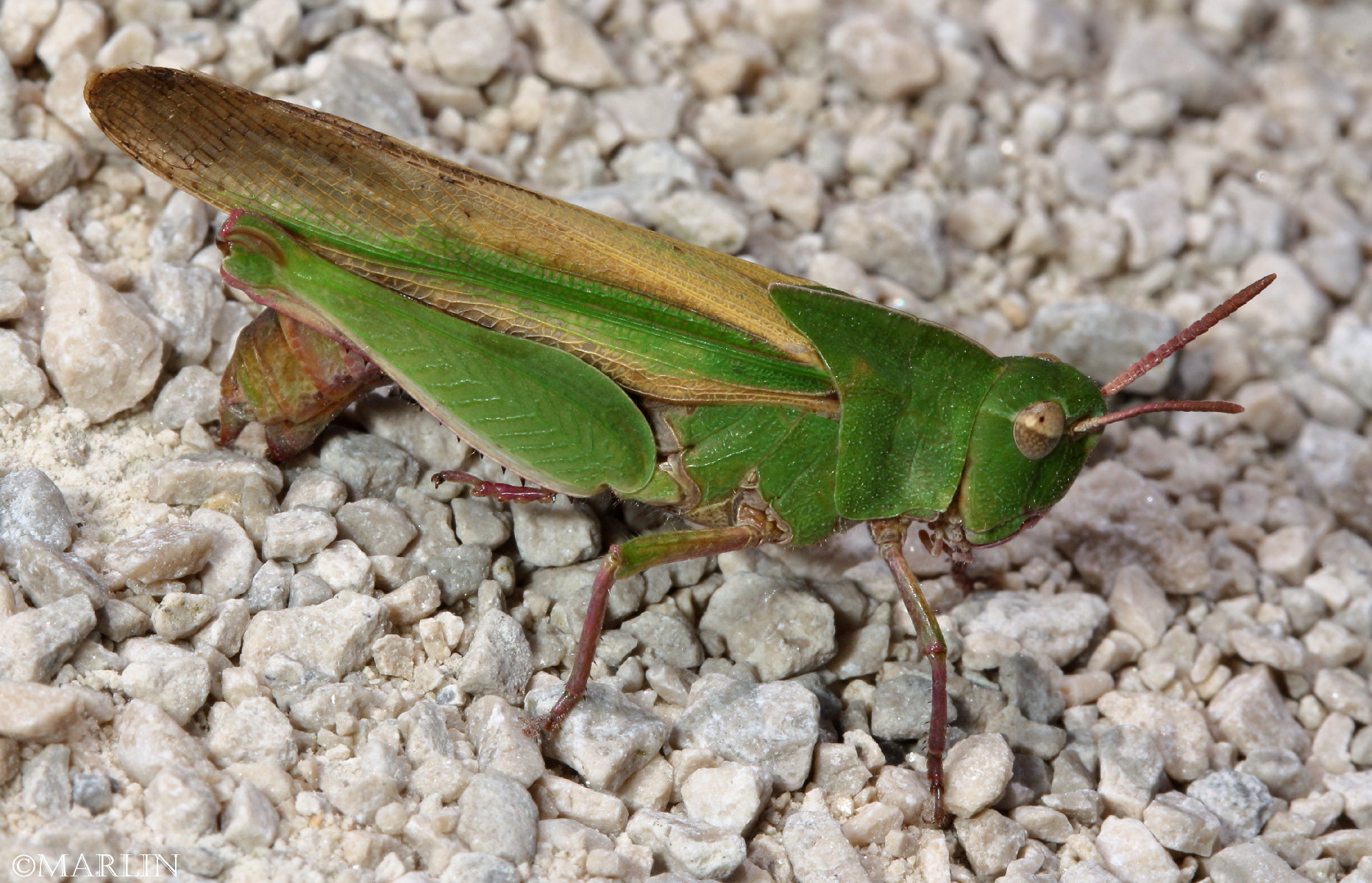
Order Orthoptera – Crickets, Grasshoppers & Katydids / Family Acrididae
Live adult female grasshopper photographed in the wild at DuPage County, Illinois, USA.
The green-striped grasshopper ranges from Newfoundland and Labrador to British Columbia in Canada, south all the way to Central America. Feeding mostly on grasses with a preference for succulent plants, the greenstriped hopper is normally found in such low numbers as to be economically insignificant as an agricultural pest [2].
Favored foods vary by location, but the greenstriped has cosmopolitan tastes in grasses, known to feed on Kentucky bluegrass, foxtail barley, western wheatgrass, quackgrass, little bluestem, junegrass, needleleaf sedge, Penn sedge, and forbs European sticktight and annual sowthistle [2].
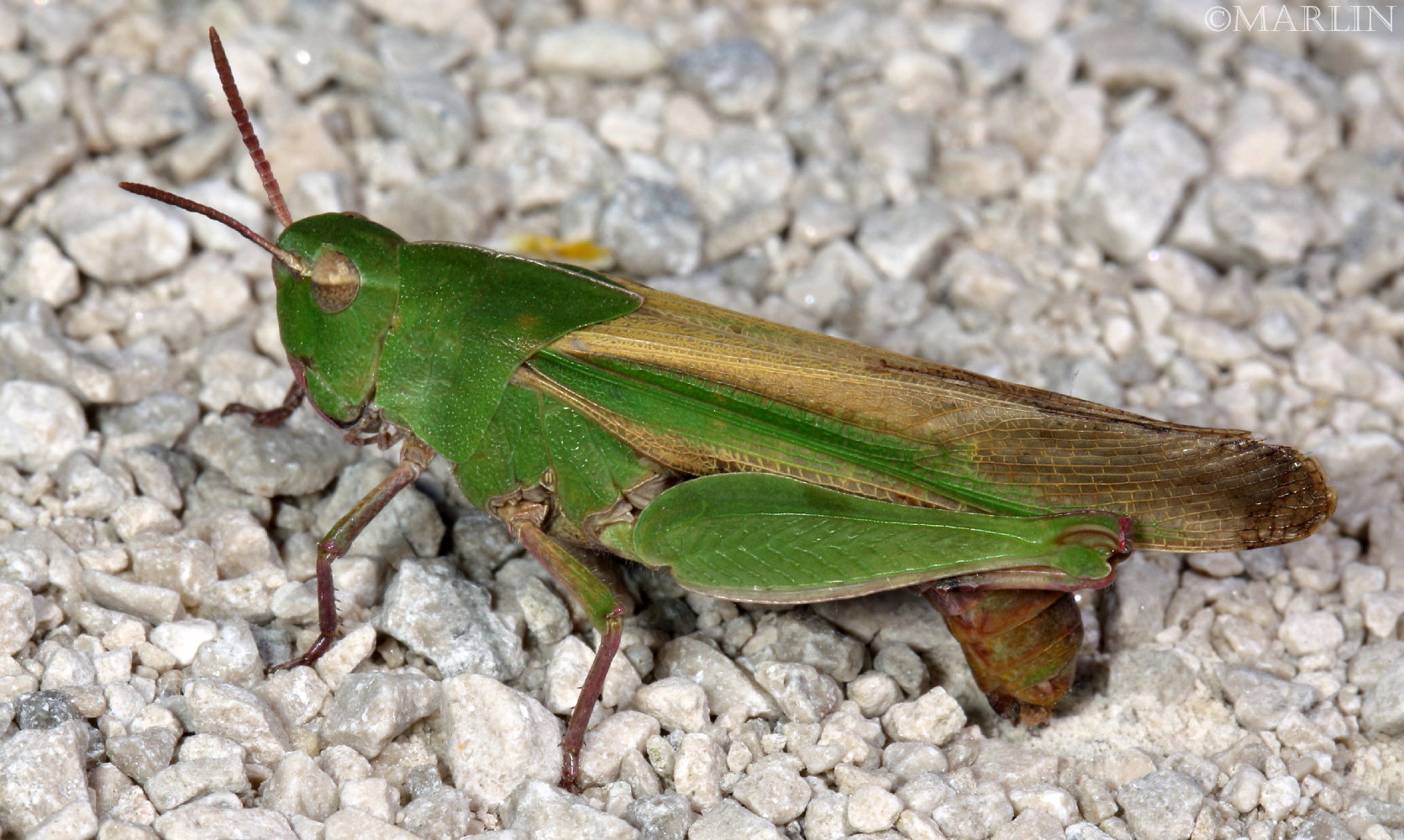 These grasshoppers are well-known for egg-laying in limestone scree and sand
Grasshoppers have antennae that are almost always shorter than the body, and short ovipositors. Those species that make noise usually do so by rubbing the hind femurs against the forewings or abdomen (stridulation), or by snapping the wings in flight. Tympana, if present, are on the sides of the first abdominal segment. The hind femora are typically long and strong, fitted for leaping. Generally they are winged, but hind wings are membranous while front wings (tegmina) are coriaceous and not used for flight.
Females have two pairs of valves ( triangles) at the end of the abdomen used to dig in sand when egg laying.
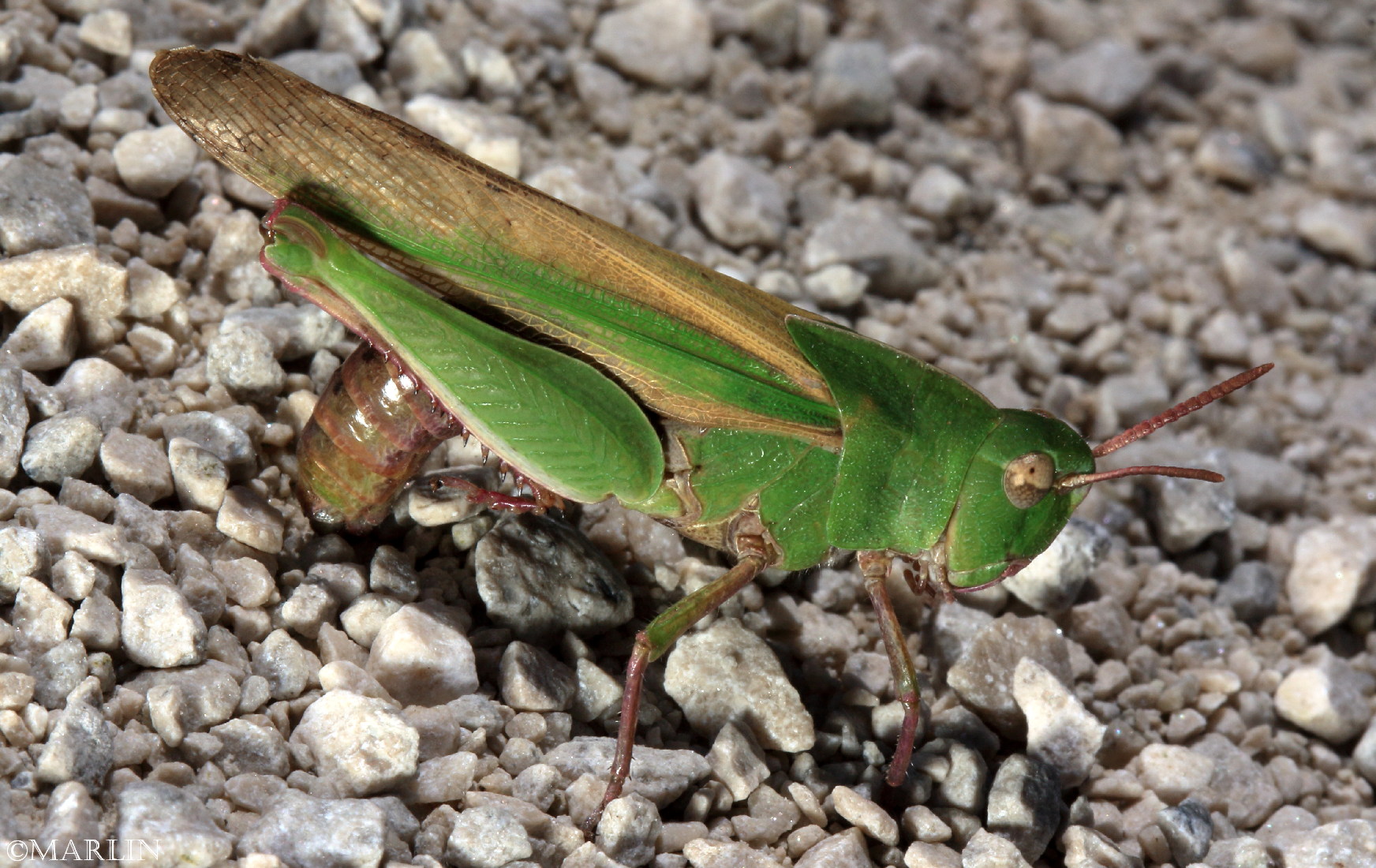 Females typically lay clutches of eggs either in the ground or on vegetation. Grasshoppers, crickets and katydids are all well-known for their jumping ability as well as the singing performed by the males (females are generally silent.) Grasshoppers are almost all active in the daytime, but crickets are nocturnal. Katydids are thought to be nocturnal, but I see an awful lot of them out and about when the sun is shining. There are few places on earth where the calls of these intriguing insects are not heard nearly constantly during the warm months.
The first fossil records of the order appear in the upper Carboniferous, or Pennsylvanian era, 310 – 290 million years ago.
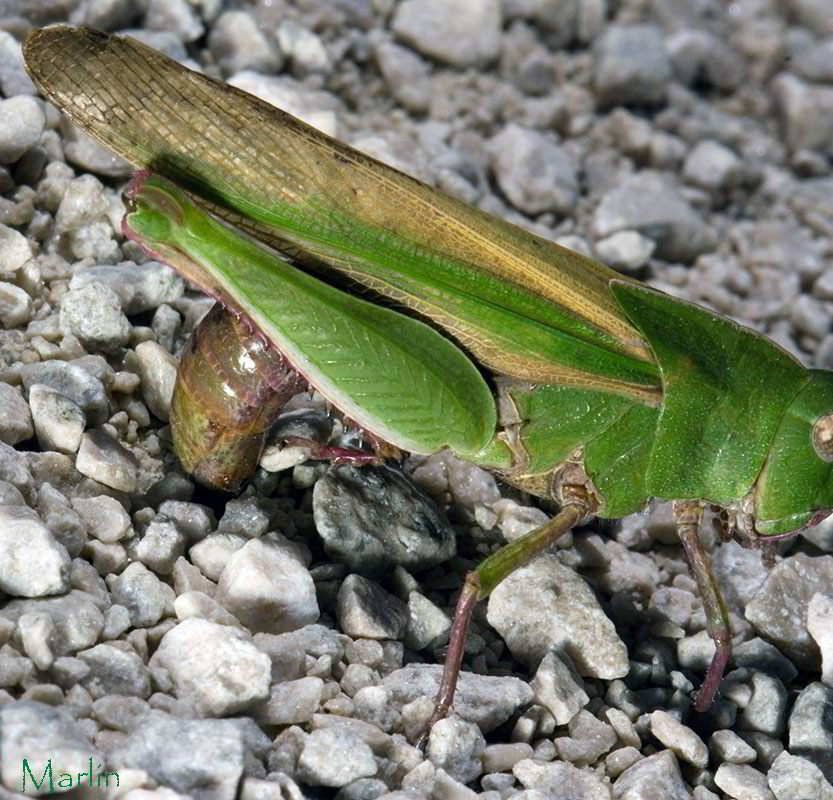 Close-up of abdomen and ovipositor buried in the limestone substrate
Order Orthoptera – Crickets, Grasshoppers & Katydids
There are more than 20,000 species in the order Orthoptera. These diverse insects are found worldwide, although their numbers are concentrated in the tropics.
Beetles Index | Longhorns | Leaf Beetles | Soldier | Blister | Lady | Scarab
Tree Encyclopedia / North American Insects & Spiders is dedicated to providing family-friendly educational
resources for our friends around the world through large images and macro photographs of flora and fauna.
Online since 2002