![]() |
Family Rosaceae - Hawthorns,
Apples, Pears, Cherries, Plums, Peach, Almond, Mountain-Ash and
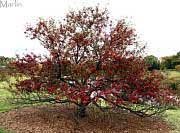
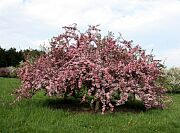
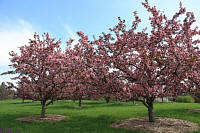
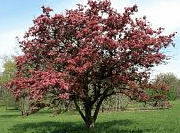
Whitebeams. The Rose family is a large assemblage of trees, shrubs and herbs encompassing many of our most familiar and valued fruits, the drupes and pomes. Please select a thumbnail for more and larger images and information on each species. [Cirrus Home] [Tree Encyclopedia] [Family Rosaceae Table of Contents] [Trees Alphabetic Table of Contents] |
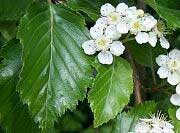
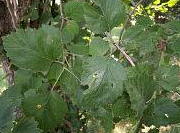
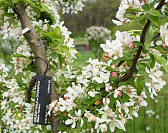
![]() Downy Hawthorn Crataegus mollis |
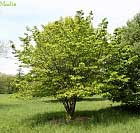
![]() Cockspur Hawthorn Crataegus crus-galli L. |
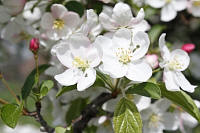
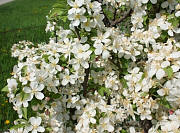
![]() Showy Cockspur Hawthorn C. crus-galli v. splendens |
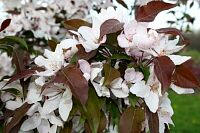
![]() Hooks Hawthorn Crataegus 'Hooks' |
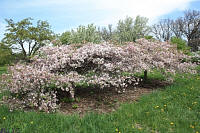
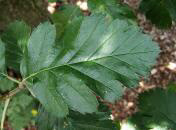
![]() Oakleaf Mountain-ash Sorbus x thuringiaca |
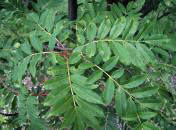
![]() American Mountain-Ash Sorbus americana |
![]() Chinese Mountain-ash Sorbus pohaushanensis |
![]() Mougeot Whitebeam Sorbus mougeotii |
|
The Rosaceae or rose family is a large family of plants, with about 3,000-4,000 species in 100-160 genera. Traditionally it has been divided into four subfamilies: Rosoideae, Spiraeoideae, Maloideae, and Amygdaloideae. These subfamilies are primarily diagnosed by the structure of the fruits, although this approach is not followed universally. Recent work has identified that the traditional four subfamilies are not all monophyletic, but the structure of the family is still awaiting complete resolution. |
|
|
![]() Sargent Cherry Prunus sargentii |
![]() Amur Mountain-ash Sorbus amurensis |
![]() Sand Pear Pyrus pyrifolia |
![]() Hupeh Mountain-ash Sorbus hupehensis |
![]() Swedish Whitebeam Sorbus intermedia |
![]() Japanese Mountain-ash Sorbus commixta |
![]() Callery Pear Pyrus calleryana |
![]() Amur Chokecherry Prunus maackii |
![]() Black Cherry Prunus serotina |
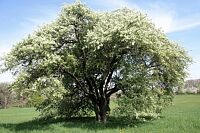
![]() Crabapple Malus flexilus |
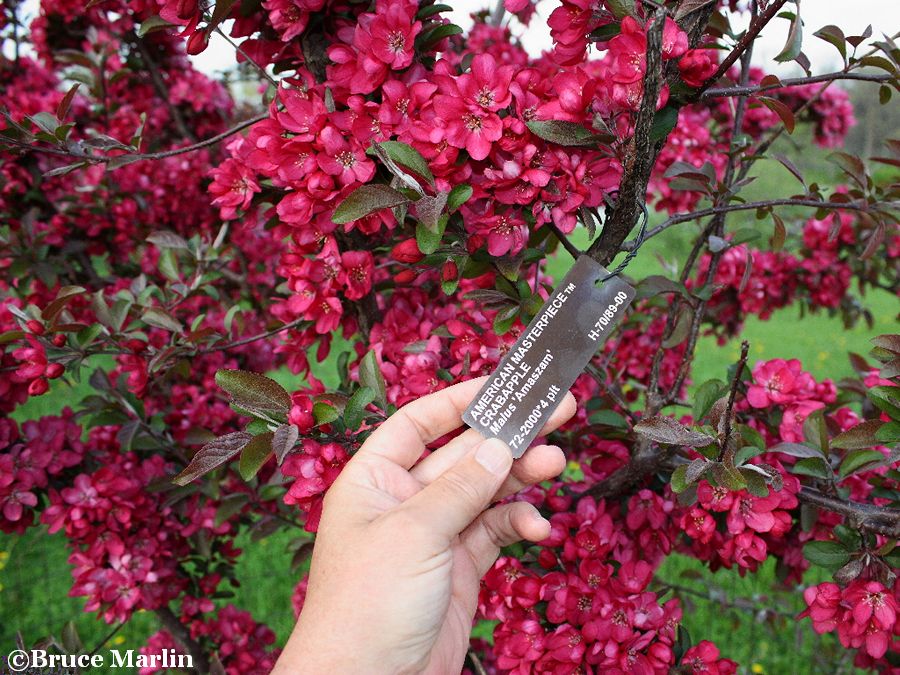
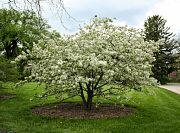
![]() American Masterpiece™ Crabapple Malus 'Amaszam' |
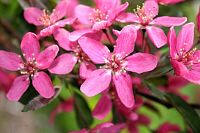
![]() Mary Potter Crabapple Malus 'Mary Potter' |
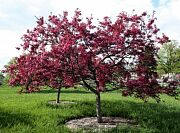
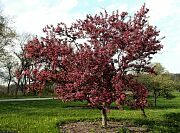
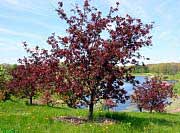
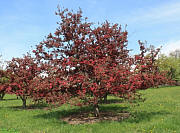
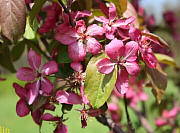
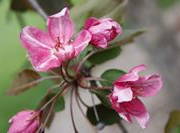
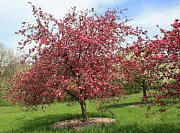
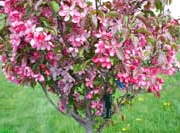
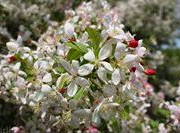
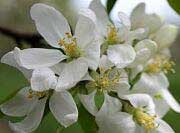
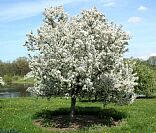
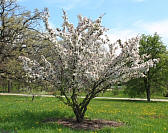
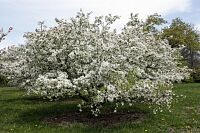
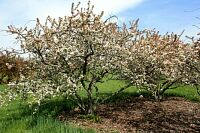
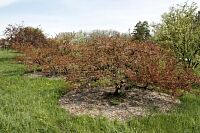
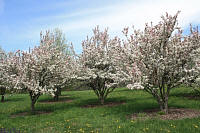
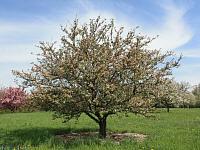
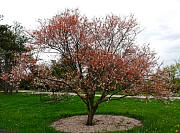
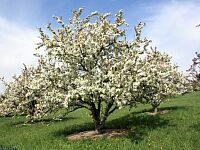
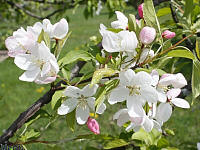
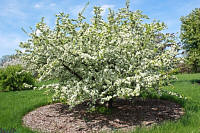
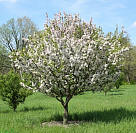
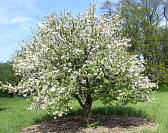
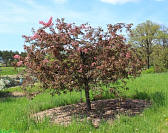
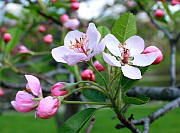
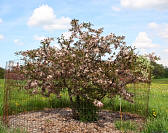
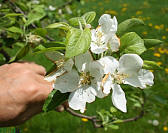
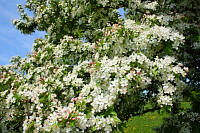
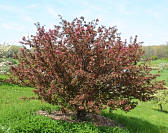
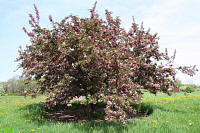
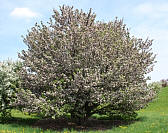
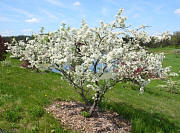
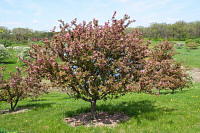
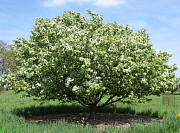
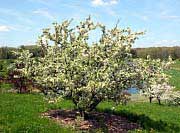
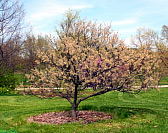
If you like trees, and flowering fruit trees, Crabapple Lake at the
Morton Arboretum is the place to
be in May.
|
The hill at Crabapple Lake at the Morton Arboretum is a natural treasure. Some (boneheaded editors on Wikipedia) might quibble about "cultivated" vs. "native" species, native species somehow being "more natural," although through all their bluster, they offer no convincing argument as to why that should be true. One such editor told me "A mown lawn surrounding a specimen was 'an obvious condition of cultivation - mown lawns do not exist in nature.'" Sniffily suggesting even if a specimen was growing naturally in its native land, if it were surrounded by (or even near evidence of) a mown lawn, that was not really natural. Hmm. I learned better than to argue with some of them. They have a favorite picture that's going into a taxobox no matter what anyone has to say about it. It ain't worth it! [/rant mode] |
![]() Strawberry Parfait Crabapple Malus 'Strawberry Parfait' |
![]() Rejoice Crabapple Malus 'Rejzam' |
![]() Ruby Luster Crabapple Malus 'Ruby Luster' |
![]() Sentinel Crabapple Malus 'Sentinel' |
![]() Professor Sprenger Crabapple Malus 'Professor Sprenger' |
![]() Ormiston Roy Crabapple Malus 'Ormiston Roy' |
![]() Bob White Crabapple Malus 'Bob White' |
|
|
|
|
Moral certainty is always a sign of cultural inferiority. The more uncivilized the man, the surer he is that he knows precisely what is right and what is wrong. All human progress, even in morals, has been the work of men who have doubted the current moral values, not of men who have whooped them up and tried to enforce them. The truly civilized man is always skeptical and tolerant, in this field as in all others. His culture is based on "I am not too sure." -- H.L. Mencken |