Japanese Yew – Taxus cuspidata ‘Pendula’
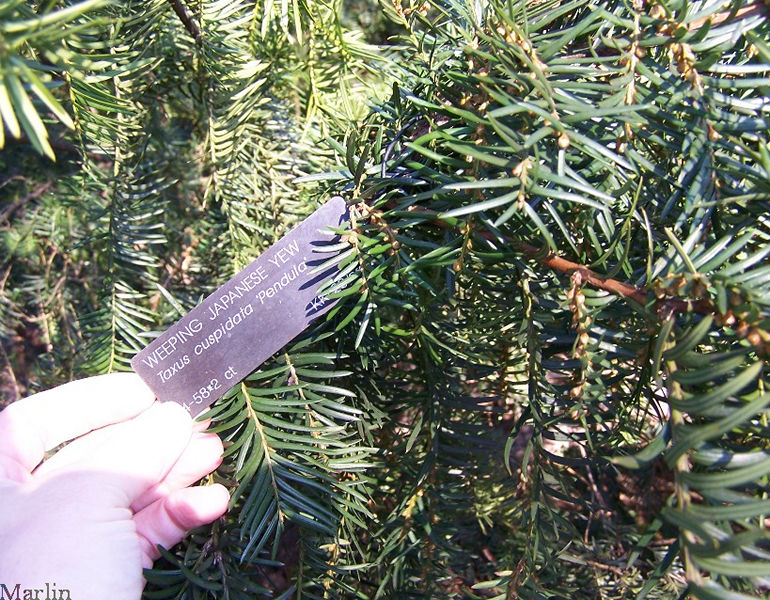
Family Taxaceae – Yews
Chinese: hong dou shan . This popular evergreen contains toxic alkaloids.
Japanese yew (Taxus cuspidata) is an outdoor ornamental that is winter-hardy across North America, into southern Canada. This shrub contains toxic quantities of the alkaloid taxine. Taxine is a complex mixture of alkaloids that is rapidly absorbed from the digestive tract and interferes with heart action. Leaves, twigs, and seeds are toxic. Only the red arils, the fleshy outer parts of the fruits, are considered nontoxic.
Cattle and horses became ill and died after ingesting the leaves and twigs of Japanese yew. In two cases in Ontario, several cattle died after gaining access to shrubs around houses or after being given hedge trimmings. [2]
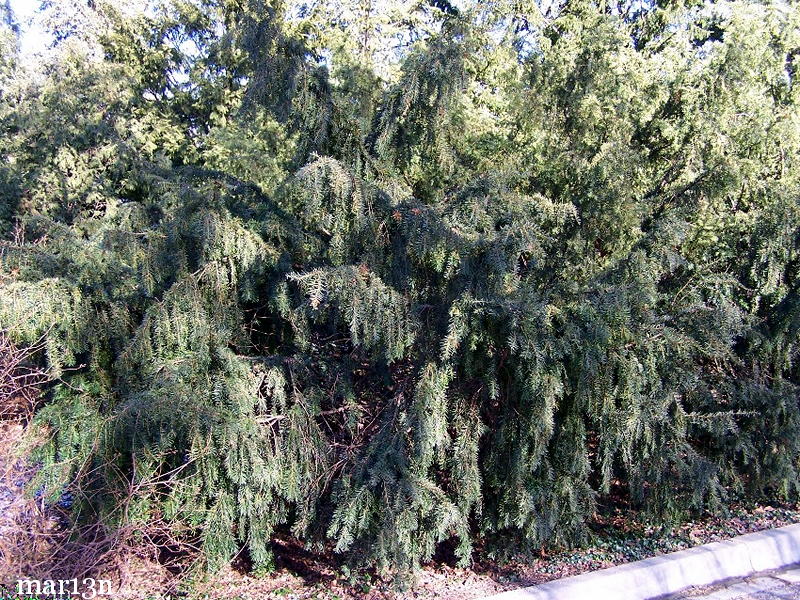
A common ornamental in Japan and North America (since its introduction to the U.S. in 1833), it is easily shaped into hedges and topiary. Considered the hardiest, fastest-growing and easiest to cultivate of all yews. In Japan, it was formerly valued for piles and foundations, cabinetry, finish carpentry, woodcarving, water tanks, pails, bathtubs, trays, chopsticks, clogs, and for bows.
Family Taxaceae – Yews
Trees Index | Pine Family | Beech, Oak | Nut Trees | Birch Family | Magnolias
Tree Encyclopedia / North American Insects & Spiders is dedicated to providing family-friendly educational
resources for our friends around the world through large images and macro photographs of flora and fauna.
Online since 2002