 |
Winged Elm – Ulmus alata Family Ulmaceae – Zelkova, Hackberry, Elm Also commonly called Wahoo elm, an excellent shade tree for home, park or street tree. |

Custom Search
|
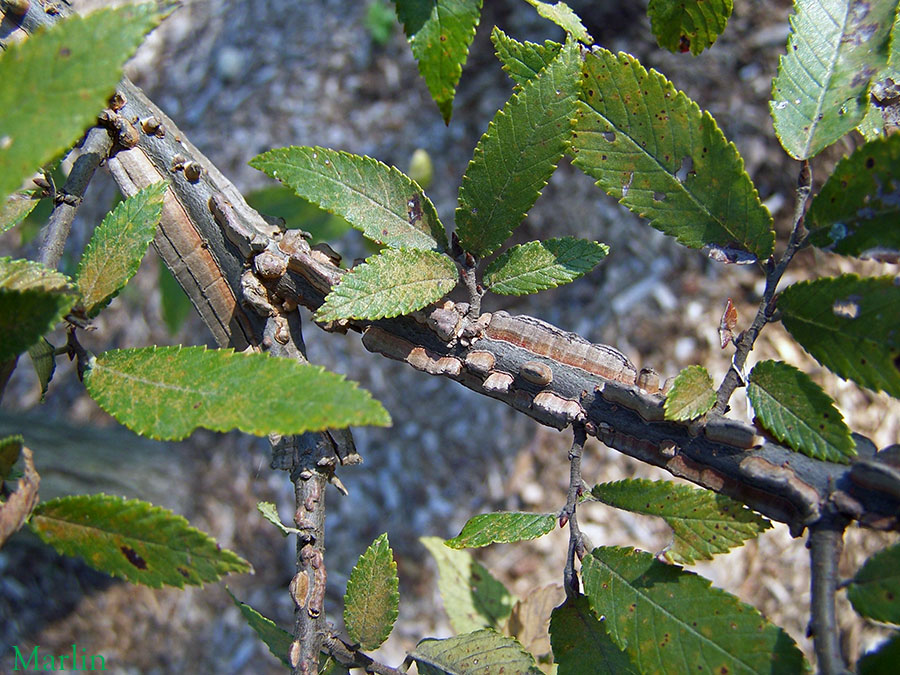
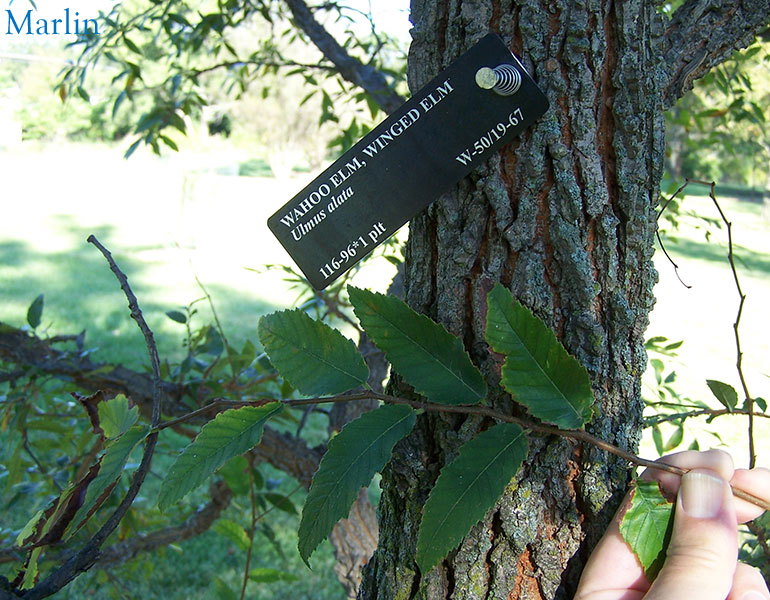
Wing-like growths are often irregular and may appear as warts or knots on one or both sides of the twigs. Leaves are simple, alternate, narrowly elliptical from 1" to 3½" long. Leaf margins are doubly serrate with a smooth upper surface and paler, hairy undersides. |
 |
|
Winged elm, also called corked elm or wahoo elm, can be distinguished from other elms by the woody, wing-like growths along the branchlets. They are often irregular and may appear as warty growths or knots on one or both sides of the twigs.
The wood is very flexible and springy but is also hard and resists splitting. It is categorized as a rock elm or hard elm and is used in flooring, boxes, crates, and furniture. The flexibility of the wood is particularly useful for rocking chairs or curved pieces. Winged elm is the wood of choice for hockey sticks, due to its resistance to splitting [1].
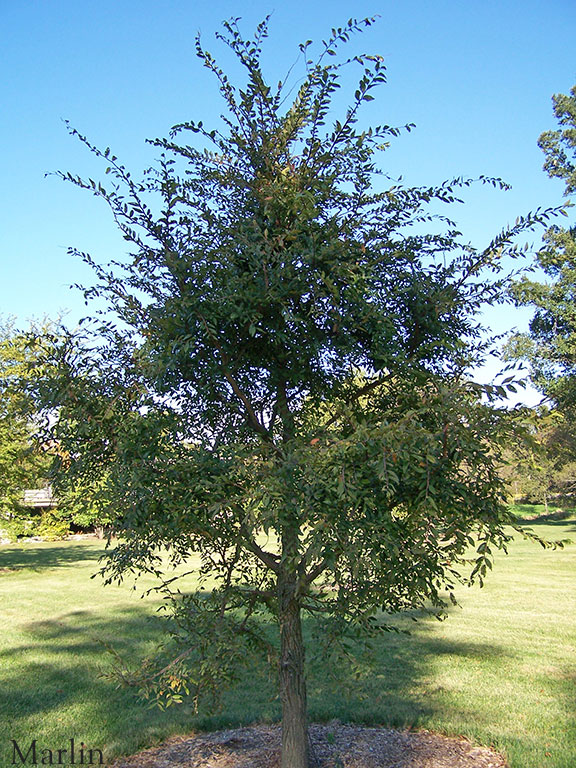
The winged elm gets its common name from the thin, corky ridges, or wings, usually found on the smaller branches. Generally, winged elms are scattered over the southern Ohio counties. The tree grows rapidly, but rarely exceeds 2 feet in trunk diameter and 50 feet in height. It forms a rather open, round-topped head.
This native American elm is sensitive to Dutch elm disease and elm yellows but is somewhat resistant to elm-leaf beetle, as are the other native American elms. The leaves are simple, alternate, 11/4—21/4 inches (3—53/4 cm) long, and half as wide. The foliage is smaller than those of any other elm native to Ohio. The leaf margin is coarsely and doubly serrate and minutely hairy. Foliage is thick, dark green, and smooth above and pale and softly downy below. Terminal buds are absent. Imbricate buds are reddish-brown, glabrous, and smaller than those of American elm. The bark is light brown tinged with red, and divided into irregular, flat ridges and fissures. Branches usually have two corky wings opposite each other on the stem. The flowers appear in early spring long before the leaves unfold. The fruit ripens in the spring about the time the leaves appear. The fruit is winged; tipped with two small, incurved awns or beaks; oblong; and reddish-brown in color. Samaras are 1/3 inch (8 mm) long with long, slender stalks at the base covered with white hairs. The wood of the winged elm is very similar to other elms: heavy, hard, strong, and difficult to split. The fibrous inner bark has been used commercially in the manufacture of high-strength baling twine [1][3]. |
References
|
| Tree Encyclopedia / North American Insects & Spiders is dedicated to providing scientific and educational resources for our users through use of large images and macro photographs of flora and fauna. |
|
Family Ulmaceae – Zelkovas, Hackberries and Elms
There are about 200 species of trees and shrubs in Ulmaceae. Elms fell victim to Dutch Elm disease during the 1950s; until that time, they were the premier shade tree along the streets of our American towns and cities. The Morton Arboretum in past years has bred and marketed five new elm varieties resistant to Dutch elm disease. Ulmaceae Index | Tree Encyclopedia | Trees Index |