 |
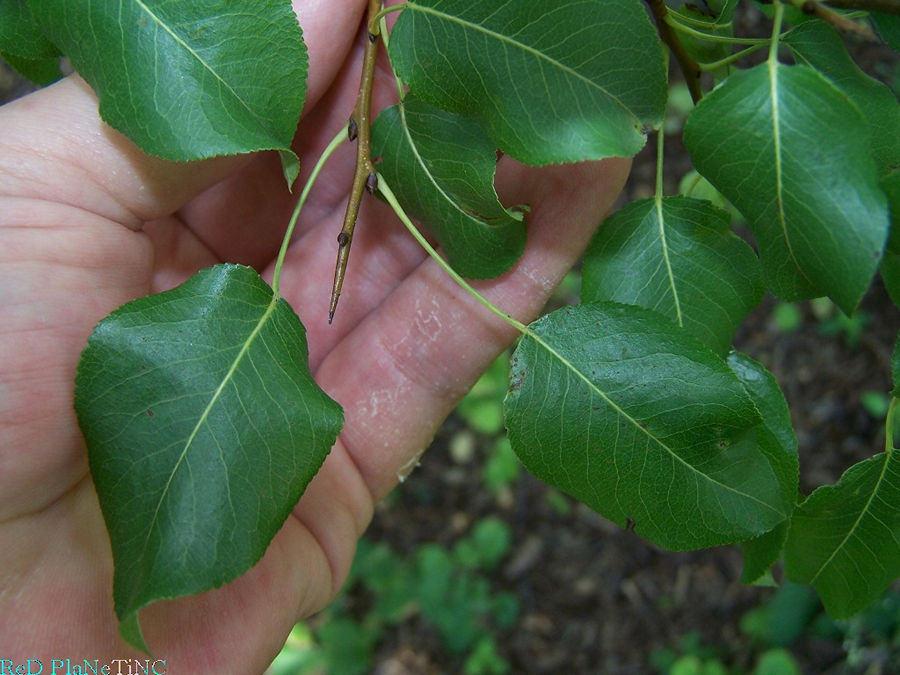
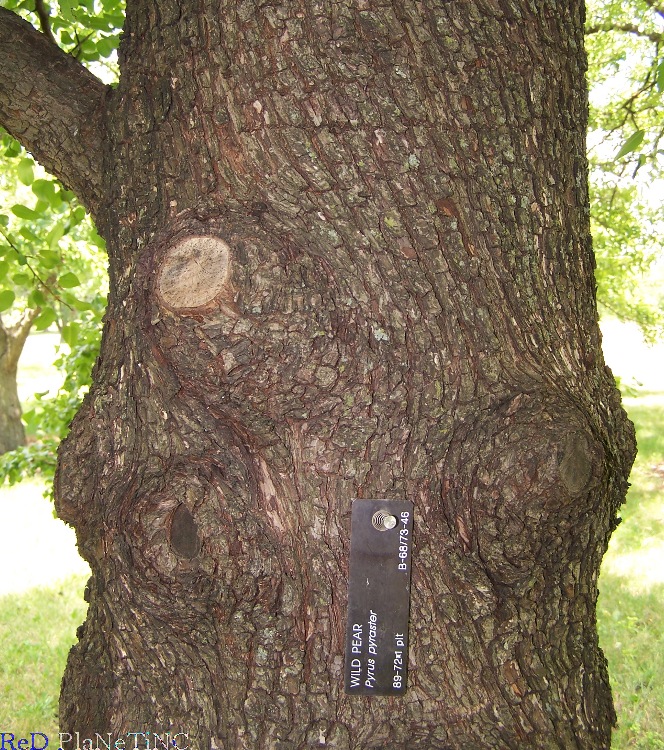
Wild Pear – Pyrus pyraster Family Rosaceae – Rose Family Wild pear trees have a remarkably slender form with a characteristic rising crown |

Custom Search
|
|
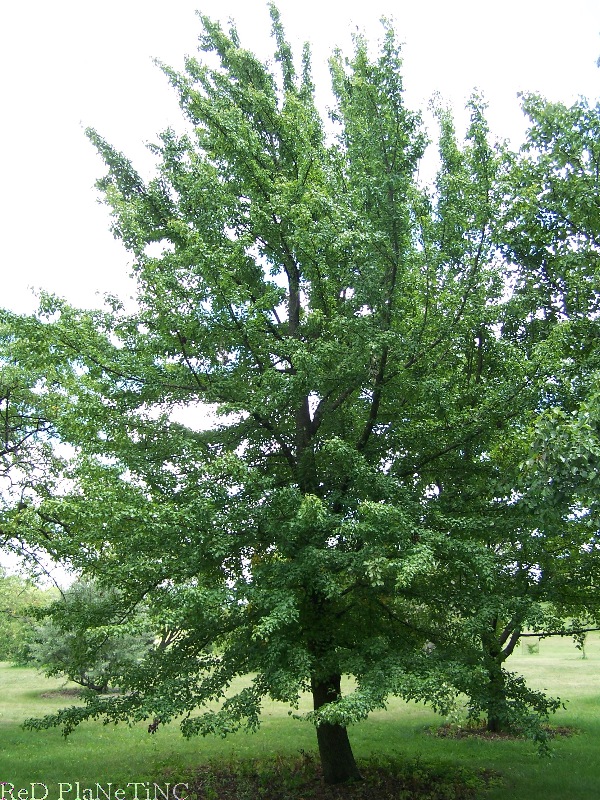
Under good growing conditions, wild pear trees have a remarkably slender form with a characteristic rising crown. In less favourable conditions they show other characteristic growth forms, such as one-sided or extremely low crowns. Trees can reach heights of 22 m with clean trunks up to 10 m, and diameters of 45-80 cm (maximum 130) at an age of 80-150 years (maximum 250).
Over 1,000 cultivars of common pear, P. communis, are known, and it is itself believed to be a hybrid originating in western Asia over 2,000 years ago. Common pear is naturalized throughout Europe and has been grown for its fruit for centuries. Many named cultivars were raised at Versailles, France, during the 17th century. [1] Wild cherry (Prunus avium [L.] L.), wild apple (Malus sylvestris [L.] Mill.), and wild pear (Pyrus pyraster [L.] Burgsd.) belong to the plant family Rosaceae. These insect-pollinated species are autochthonous in nearly all European countries, but with a very scattered occurrence. They are generally rare species in mixed hardwood forests. Prunus avium still exists in natural populations of limited size, e.g. in France, Italy and Germany, although most of the trees occur as single individuals or in small groups. Owing to their weak competitive ability, M. sylvestris and P. pyraster exist mostly at the edge of forests, in hedges on farmland or on very extreme sites where the stronger competitors do not survive either. Even there they occur only as single individuals or very few trees in small groups. All three wild fruit tree species are native to central, western and southern Europe. Pyrus pyraster does not occur naturally only in the north European countries. Malus sylvestris and P. avium were introduced into new areas where they can be grown. Nevertheless, the knowledge about autochthonous origin is often insufficient. Therefore, it is necessary to prepare a survey of the natural range in Europe and to improve the information about the occurrence of autochthonous stands, groups or individual trees of the pure species not contaminated by domesticated cultivars or originating from those. This should be done in close cooperation between research institutions. The results of such surveys can be shown in maps as, for example, the occurrence of M. sylvestris or of P. pyraster in northern Germany. Each occurrence was registered by its geographical data and additional information was assessed. In comparison with other tree species, one can also assume that these tree species migrated into southern refugia during the different glacial periods, e.g. into areas south of the Alps. There are also several closely related species, e.g. Pyrus nivalis in southeastern Europe or Pyrus amygdaliformis, which occurs only in southern Europe (e.g. Mtitlea and Slovenia). Malus sylvestris has a great intraspecific variability where several varieties can be differentiated. The intraspecific variability should be maintained by suitable conservation methods.(2) Pear has fine-grained wood pink to yellow in tone. It is prized for woodwind instruments and its veneer is used for fine furniture. Pear has one of the finest of textures of the fruitwoods, and was often used in making instruments such as lutes, recorders and – because of its hardness – the jacks of harpsichords.
The three minor noble hardwood species are important from an ecological as well as from an economical point of view. They are growing in mixed hardwood forests, often at the margins of forest stands due to competition for light. In mixed hardwood stands with beech as a major component thinning usually favours the minor Noble Hardwood species in order to prevent heavy competition and to reach sufficient size for an economically interesting utilization.
The cultivation of the pear extends to the remotest antiquity. Traces of it have been found in the Swiss lake-dwellings; it is mentioned in the oldest Greek writings, and was cultivated by the Romans. The word "pear" or its equivalent occurs in all the Celtic languages, while in Slavonic and other dialects different appellations, but still referring to the same thing, are found—a diversity and multiplicity of nomenclature which led Alphonse de Candolle to infer a very ancient cultivation of the tree from the shores of the Caspian to those of the Atlantic. A certain race of pears, with white down on the under surface of their leaves, is supposed to have originated from P. nivalis, and their fruit is chiefly used in France in the manufacture of Perry (see Cider). Other small-fruited pears, distinguished by their precocity and apple-like fruit, may be referred to P. cordata, a species found wild in western France, and in Devonshire and Cornwall. Pears have been cultivated in China for approximately 3000 years. — from Wikipedia
|
References:
|
|
Family Rosaceae – Rose Family; Fruit Trees Containing Hawthorns, Apples, Pears, Cherries, Plums, Peach, Almond, Mountain-Ash and Whitebeam. Rosaceae is a large family of plants with about 3,000 species in ~100 genera. Crabapple and other fruit trees provide some of our most outstanding flowering ornamentals, as well as food for birds and other wildlife. Tree Encyclopedia | Tree Index | Fruit Tree Index |