
 |
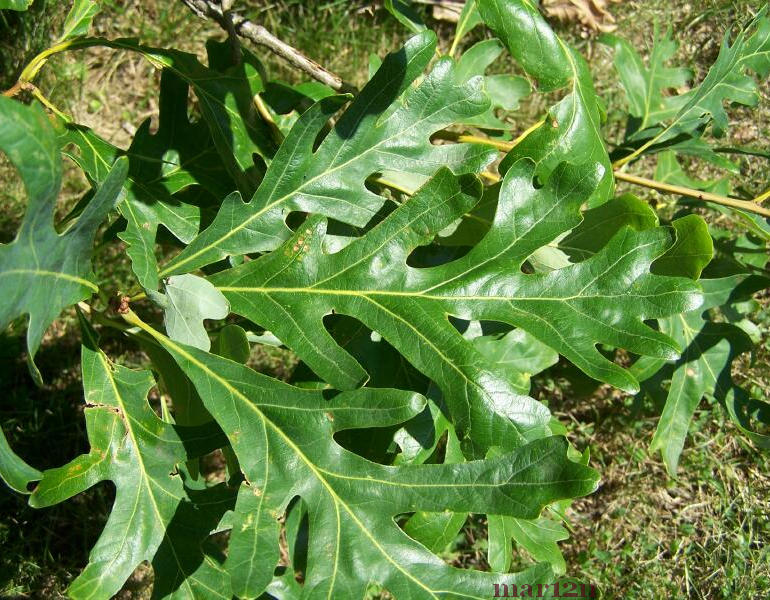
White Oak – Quercus alba L. Family Fagaceae: Oaks & Beeches White oak is an outstanding tree among trees and is widespread across eastern North America. |

Custom Search
|
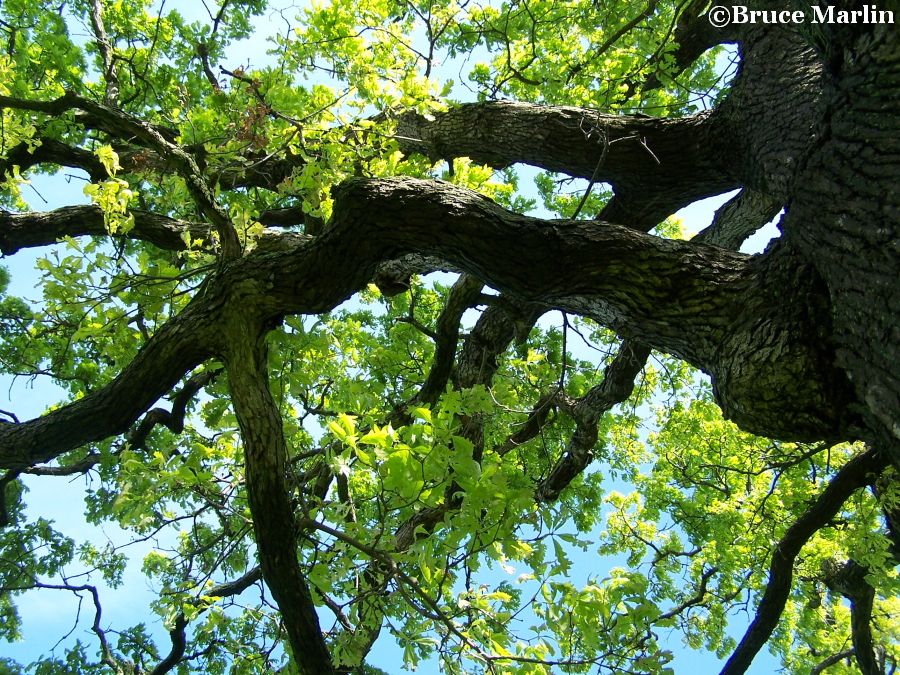 |
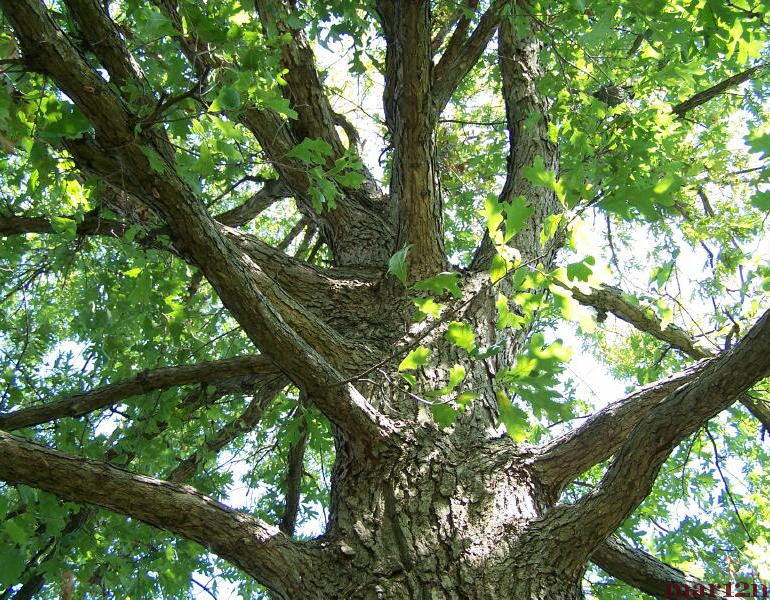
| White oak grows under a wide variety of climatic conditions, and a great variety of soil types. It is a large, long-lived tree often 80 to 100 feet in height and 36 to 48 inches in trunk diameter. Individual trees 150 feet high, 96 inches diameter and 600 years old have been recorded. In the open, white oak is characterized by a short stocky bole with a wide spreading rugged crown. In the forest, white oaks develop a tall straight trunk with a compact crown.
White oak usually becomes dominant in the stand because of its ability to persist for long periods of time in the understory, its ability to respond well after release, and its great longevity. When associated with other oaks and hickory in the central and southern hardwood forests, white oak is considered a climax tree. On sites in the north, it is usually succeeded by sugar maple. |
 |
|
There are about four hundred species in the oak genus (Quercus) worldwide. Oak trees are majestic beauties and symbols of strength in many cultures. The oak is the national tree of not only the United States, but of England and Germany as well. |
|
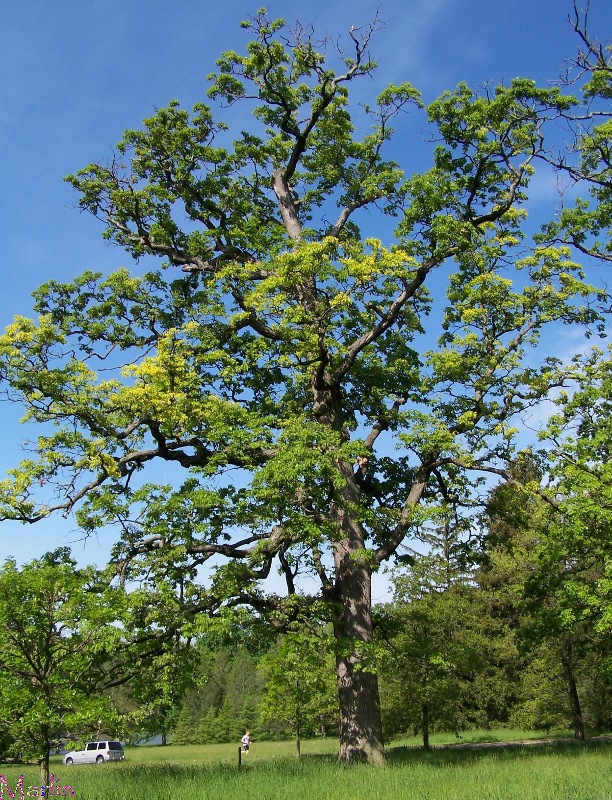
This White Oak at The Morton Arboretum is Illinois' Millennium Landmark Tree. |
|
Acorns are a valuable though inconsistent source of wildlife food. More than 180 different kinds of birds and mammals use oak acorns as food; among them are squirrels, blue jays, crows, redheaded woodpeckers, deer, turkey, quail, mice, chipmunks, ducks, and raccoons. White oak twigs and foliage are browsed by deer especially in clearcuts less than 6 years old. White oak is sometimes planted as an ornamental tree because of its broad round crown, dense foliage, and purplish-red to violet purple fall coloration. It is less favored than red oak because it is difficult to transplant and has a slow growth rate. — United States Department of Agriculture NRCS Plant Fact Sheet Since the early 1990s, oak and tanoak (Lithocarpus densiflorus) have been dying in the coastal counties of California [1]. Since then, Phytophthora ramorum has been expanding its range in coastal California, killing millions of trees. This epidemic has caused damage to public and private property, economic impact on nursery, gardening and logging industries, and increased the cost of implementing regulatory activities. Many are worried that large-scale tree mortality will have profound long-term environmental consequences, by changing the structure of plant and microbial communities, altering landscape ecological structure and function, and increasing forest-fire hazards. Phytophthora ramorum is known to infect over one hundred species of forest shrubs and trees. On oak and tanoak trees, P. ramorum causes bleeding bole cankers that can lead to relatively rapid mortality; hence sudden oak death. Other hosts such as California bay laurel (Umbellularia californica) suffer mild leaf-blight or twig-dieback symptoms and are major sources of inoculum for infection of oaks and tanoaks. There is no evidence for sporulation of this pathogen from true oak species [2]. A recent collaboration of scientists from all over the world published a study [2] of the spread of invasives, using Phytophthora ramorum to illustrate how shortfalls in their understanding of how cryptic infection spread can render management applications inappropriate. The risk of spread is enhanced by the pathogen's generalist nature and survival. Additionally, the extent of cryptic infection is unknown due to limited surveying resources and access to private land. The scientists used epidemiological modeling to estimate dispersal and life-cycle parameters of P. ramorum and forecast the distribution of infection and speed of the epidemic front in Humboldt County [2]. |
References
|
| Tree Encyclopedia / North American Insects & Spiders is dedicated to providing scientific and educational resources for our users through use of large images and macro photographs of flora and fauna. |
|
|
Trees live longer than any other organism on earth, and trees are the largest organisms on the planet. Trees have been living on Earth for more than 370 million years, and today can be found almost everywhere from the Arctic Circle to the Sahara Desert. Tree Encyclopedia | Trees Index | Elm Index | Fruit Trees |
