
 |
White Birch Tree – Betula sp. Family Betulaceae – Alder, Birch, Hornbeam Common names: Paper Birch, Canoe Birch, Silver Birch, White Birch, Bouleau blanc. |

Custom Search
|
|
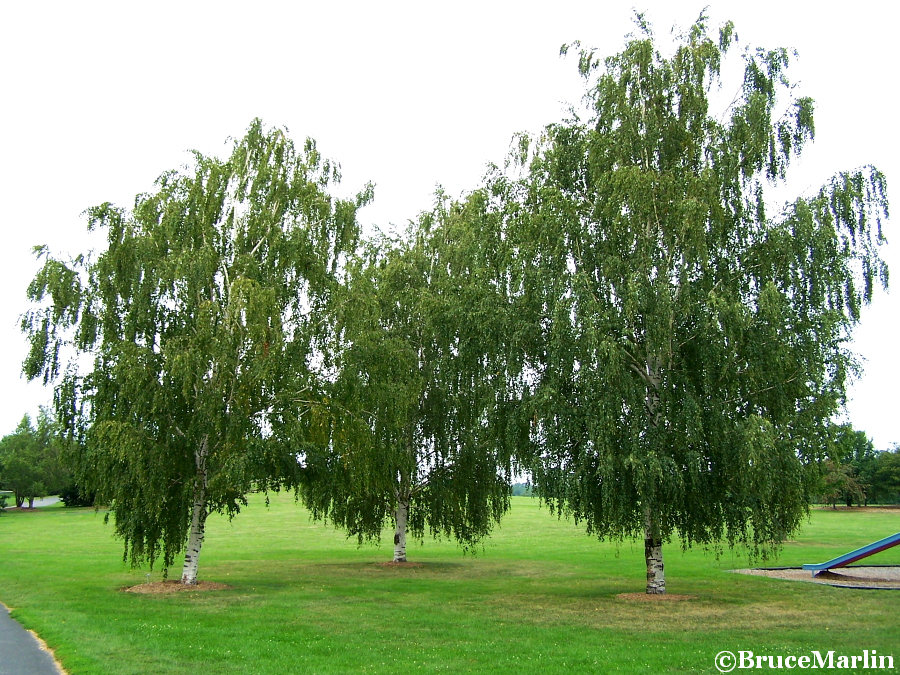
Asian white birch is native to Korea, Japan, and northern China. It is a deciduous, monoecious tree with white bark, growing as tall as 20 m. White Birch grows in climates ranging from boreal to humid and tolerates wide variations in precipitation. Its northern limit of growth is arctic Canada and Alaska, in boreal spruce woodlands, in mountain and sub alpine forests of the western United States, the Great Plains, and in deciduous forests of the Northeast and Great Lakes states. |
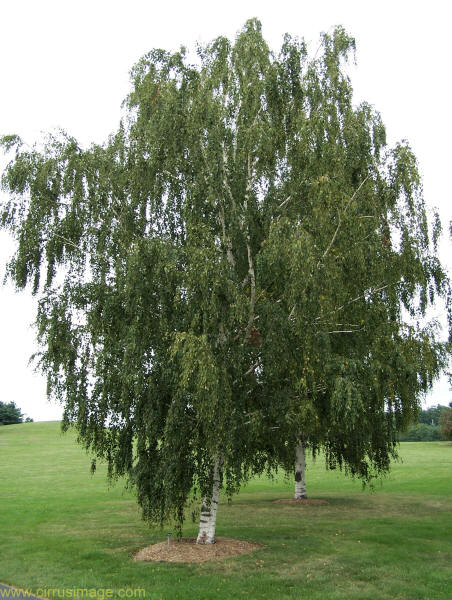 White Birch Trees |
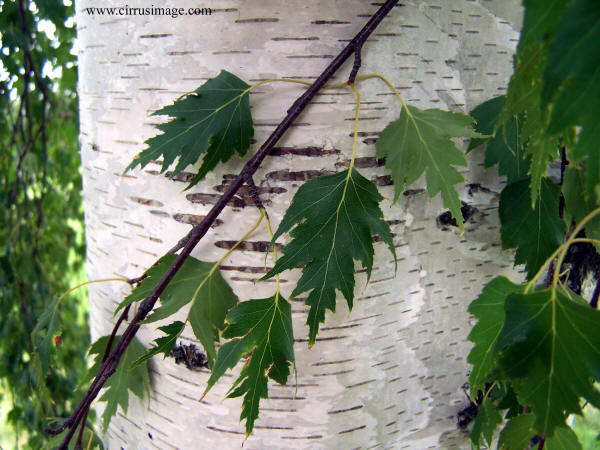
The tree is particularly shade-intolerant. Where it occurs in old-growth forests, it is restricted to sunny glades and openings. Birches are often the first trees to repopulate logged, disturbed or burned acreage. Where such populations exist, they often crowd out other species, and form pure stands of silvery-white barked trees. In this habit, they are quite like the Black Walnut; walnuts are generally among the first trees sprouting in disturbed places of the woodlots and bottomlands of the American Midwest. . Aboriginal Native Americans used birch bark to make canoes, rattles, torches, many types of containers, and also used it in construction of their dwellings. Lightweight and flexible, the bark could be cut and bent to make containers of any desired shape. Trays, dishes, storage boxes, buckets and cooking pots were made of birch bark. The edges of the container were sewn together with plant fibers. If the edges were sealed with pine pitch or spruce resin, the container could be used to carry water or hung over a fire to cook a soup or stew. Birch bark cutouts or stencils often were used to decorate containers, and also provided patterns for Native American beadwork. The white outer bark layer made a good substitute for the paper that it resembles, and drawings could be made on it with a piece of charcoal. Birch bark burns easily. Birch is used as a food plant by the larvae of a large number of Lepidoptera species, see List of Lepidoptera which feed on Birches. |
|
Bark for canoe construction was best gathered during a winter thaw or just when the sap started to flow in the spring. A tree of the desired size, with bark up to nine layers thick, was felled and trimmed, and the bark was cut and stripped off in one piece. The wooden frame of the canoe was of northern white cedar. The birch bark, with the brown, inner layer of the bark turned to the outside, formed the skin. Seams were sewn with split roots of spruce or tamarack, then waterproofed with spruce resin. Our modern canvas and fiberglass canoes are patterned after the Native American birch bark canoe. Smaller pieces of birch bark were used in making dwellings called wigwams. |
 |
| References 1. USDA, Natural Resources Conservation Service, Plants Profile Betula platyphylla Sukaczev var. japonica 2. World Health Organization, Medicinal Plants in the Republic of Korea, Betula platyphylla var. japonica 3. Eun Mi Ju et al., “Antioxidant and anticancer activity of extract from Betula platyphylla var. japonica,†Life Sciences 74, no. 8 (January 2004) |
| Tree Encyclopedia / North American Insects & Spiders is dedicated to providing scientific and educational resources for our users through use of large images and macro photographs of flora and fauna. |
|
|
Family Betulaceae – Alder, Birch, Hornbeam |
