 |
Water Locust Tree – Gleditsia aquatica Family: Fabaceae (Leguminosae) USDA Hardiness Zone: 3 / Habitat: River swamps and slough margins |

Custom Search
|
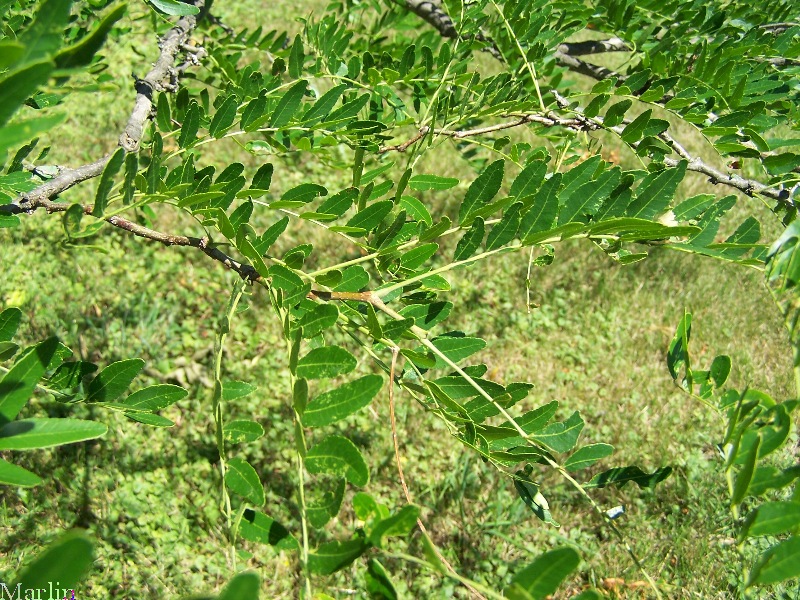
Summer: The pinnately compound leaves (one large stem with many small leaflets) allow filtered sunlight, making an attractive canopy that is practical for growing grass or other plants below. Fall: Color in the fall is variable but is usually a shade of yellow and can be very nice. The large seedpods ripen and become a maintenance consideration for most of the fall and winter months. Wildlife cherishes the sweet pods from which the tree gets its name. The thorny specimen (Gleditsia triacanthos) from which this variety arose is one of the thorniest trees found. Thorns can protrude directly from the trunk and be a foot or more in length. Crews have been busy two decades at the University of Illinois at Urbana-Champaign taking down diseased honeylocust trees that were once planted to replace the declining American elms.
The native thorny species is found in Illinois, on either side of the Mississippi River from Nebraska to Texas and from Pennsylvania to Alabama. Fence rows and pastures are common locations.
|
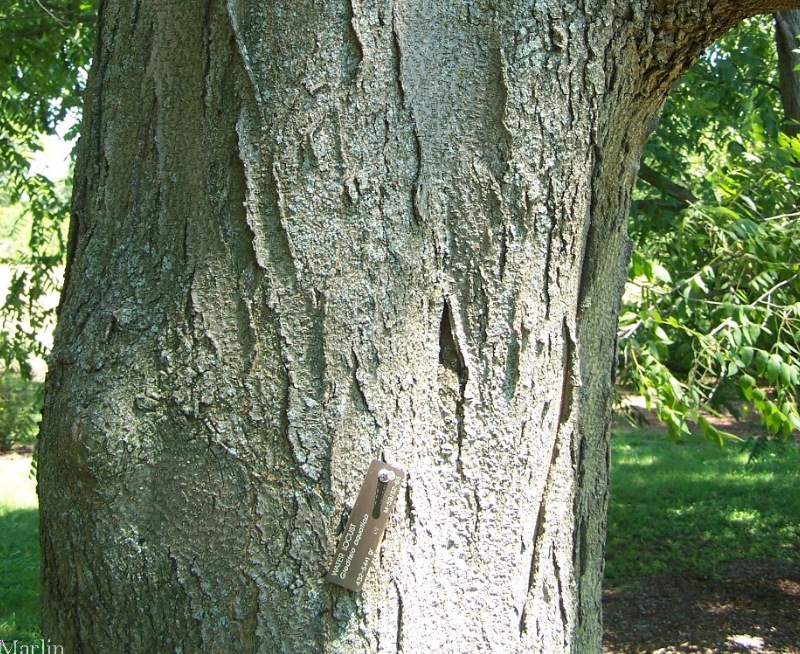
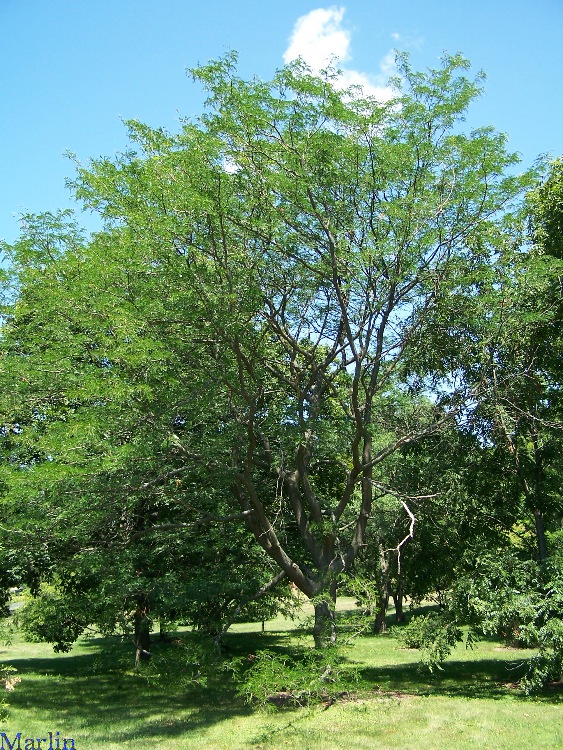
Gleditsia aquatica is distinguished from common honey locust in that the pods are only about 5 cm in length and with 3 or fewer seeds.
Leaf: alternate, pinnately or bipinnately compound with 14 to 20 oval to elliptical leaflets each 3/4 to 1 inch long, overall leaf 6 to 8 inches long. |
| References 1. Colorado State University, "Sunburst Honeylocust (Gleditsia triacanthos ‘Sunburst’)" 2. Sunburst Honey Locust, Morton Arboretum acc. 366-56*1, photos by Bruce Marlin |
| Tree Encyclopedia / North American Insects & Spiders is dedicated to providing scientific and educational resources for our users through use of large images and macro photographs of flora and fauna. |
 |
Family: Fabaceae (Leguminosae) |