 |
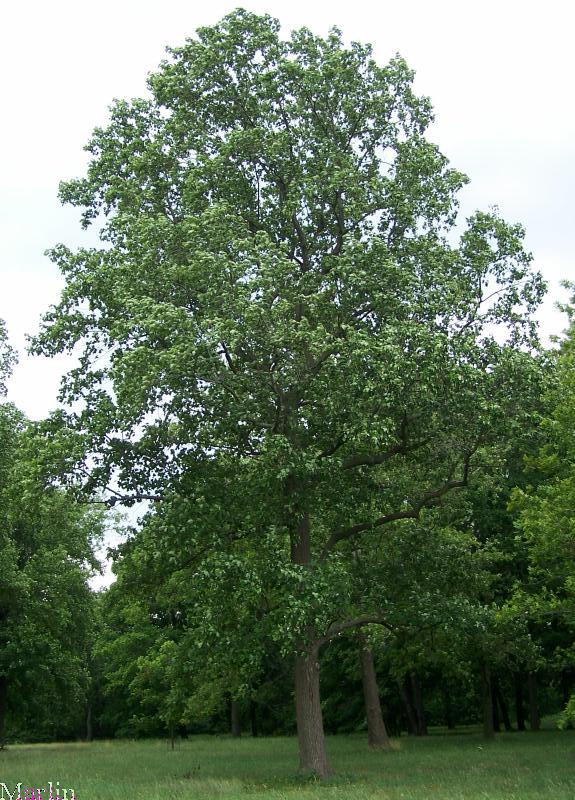
Tuliptree – Liriodendron tulipifera Magnoliaceae – Magnolia family Also commonly called Yellow Poplar. Height: up to 200 feet / USDA Hardiness Zones: 4-8 Magnolia Index | Tree Encyclopedia | Trees Index | Juglandaceae | Pinaceae |
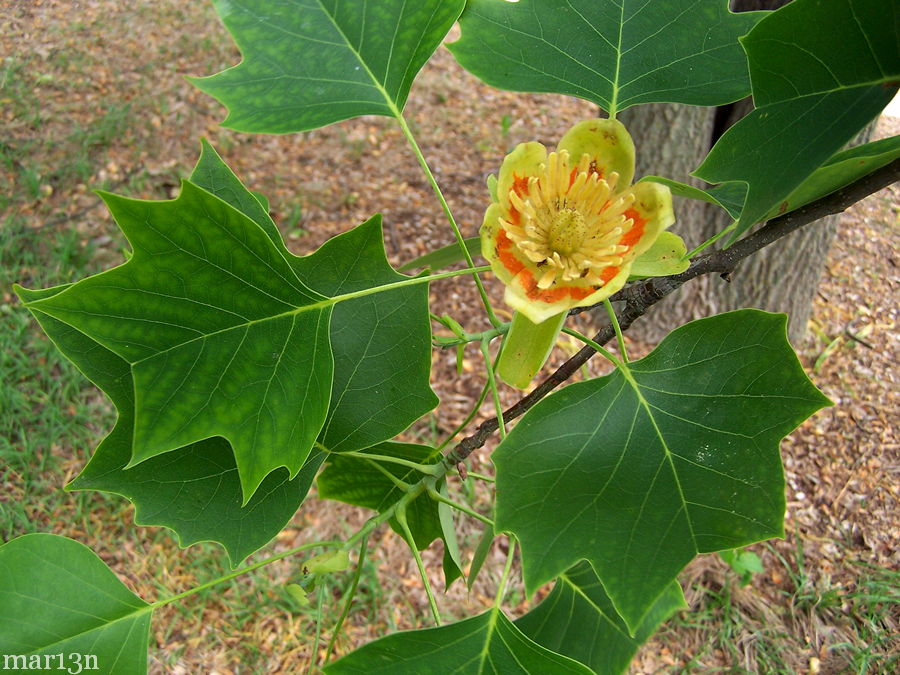
| Tuliptree, also commonly known as yellow poplar, tulip-poplar, white-poplar, and whitewood, is one of the most attractive and tallest of eastern hardwoods. It is fast growing and may reach 300 years of age on deep, rich, well-drained soils of forest coves and lower mountain slopes. The wood has high commercial value because of its versatility and as a substitute for increasingly scarce softwoods in furniture and framing construction. Yellow-poplar is also valued as a honey tree, a source of wildlife food, and a shade tree for large areas.
Tulip tree thrives on many soil types with various physical properties, chemical composition, and parent material. Within the major portion of the range of tulip tree, these soils fall in soil orders Inceptisols and Ultisols. Exceptionally good growth has been observed on alluvial soils bordering streams, on loam soils of mountain coves, on talus slopes below cliffs and bluffs, and on well-watered, gravelly soils. In general, where yellow-poplar grows naturally and well, the soils are moderately moist, well drained, and loose textured; it rarely does well in very wet or very dry situations. |
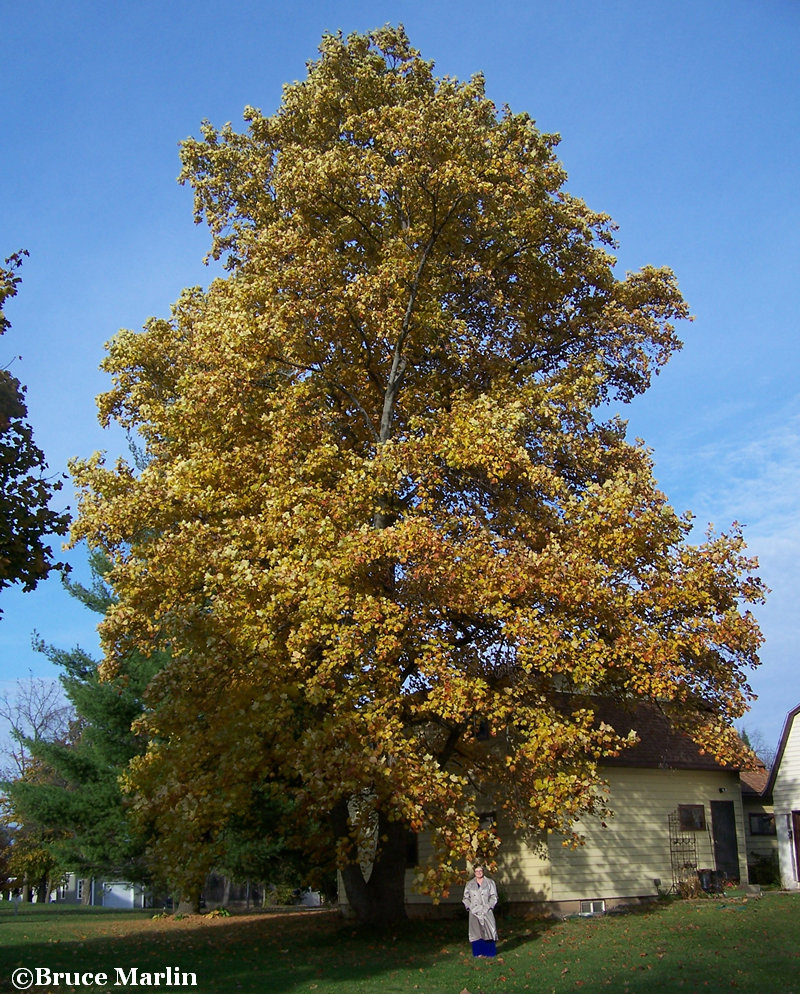
| This massive, 85-foot tuliptree resides in Brooklyn, Wisconsin. What an amazing tree! |
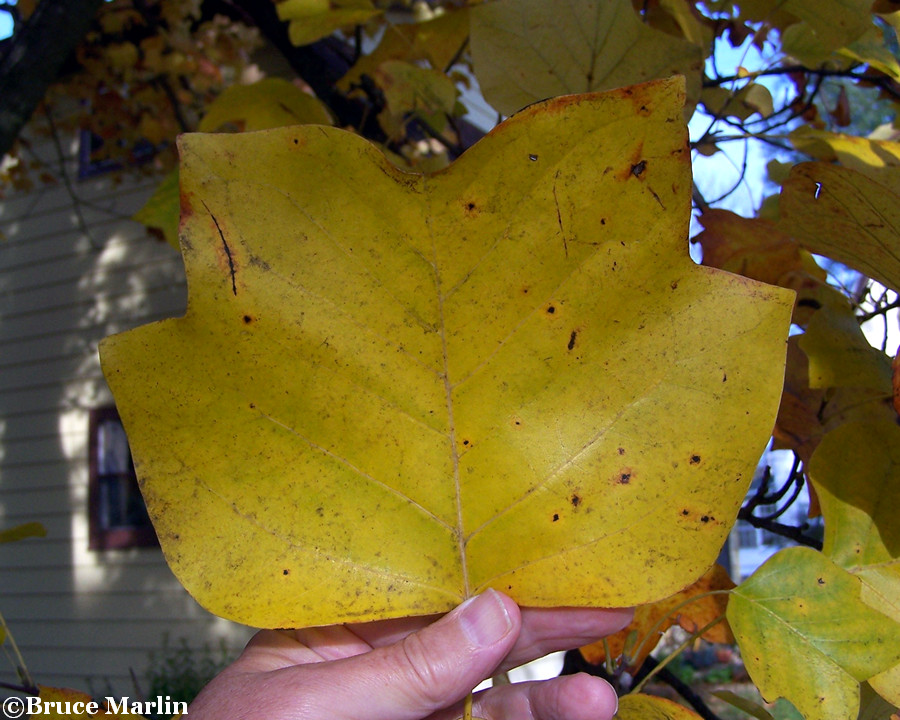 Tuliptree gets its name from its leaves which in silhouette look like a tulip flower |
References
|

| Tree Encyclopedia / North American Insects & Spiders is dedicated to providing scientific and educational resources for our users through use of large images and macro photographs of flora and fauna. |
|
Tree Encyclopedia |