Sweet Birch – Betula lenta
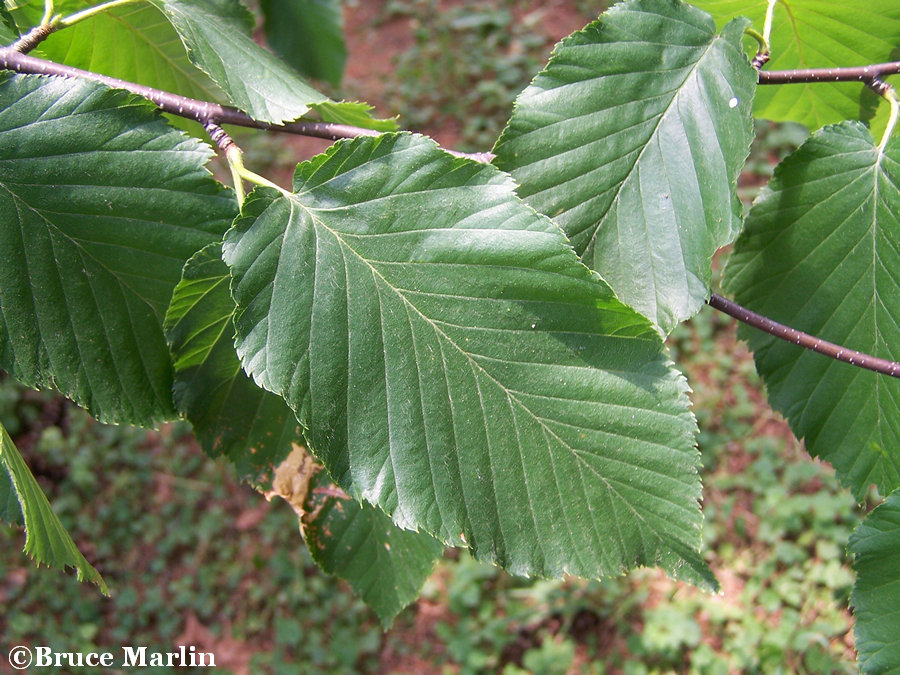
Sweet birch, also commonly referred to as black birch or cherry birch, was at one time the only source of oil of wintergreen. It is the aroma of wintergreen emanating from crushed leaves and broken twigs to which this birch owes its common name, sweet birch. Height: to 80 feet. Sweet Birch is long-lived as birches go, known to reach over 250 years.
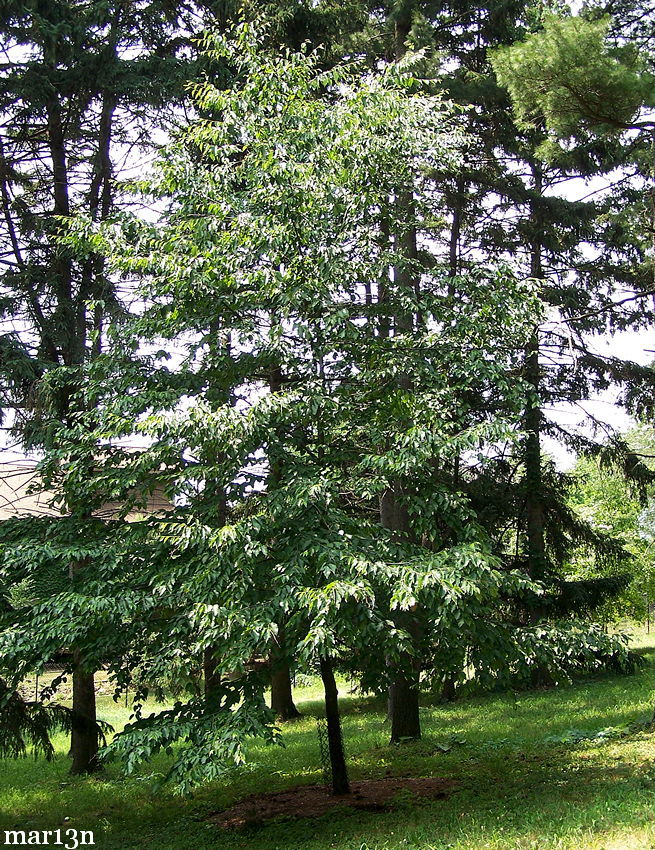 Sweet Birch, from seed, is 22 years old
The specific name, lenta, is derived from the tough yet flexible twigs that characterize the species. The wood is also unique. When exposed to air it darkens to a color resembling mahogany and, in times past, was used as an inexpensive substitute for the more valued tropical wood.
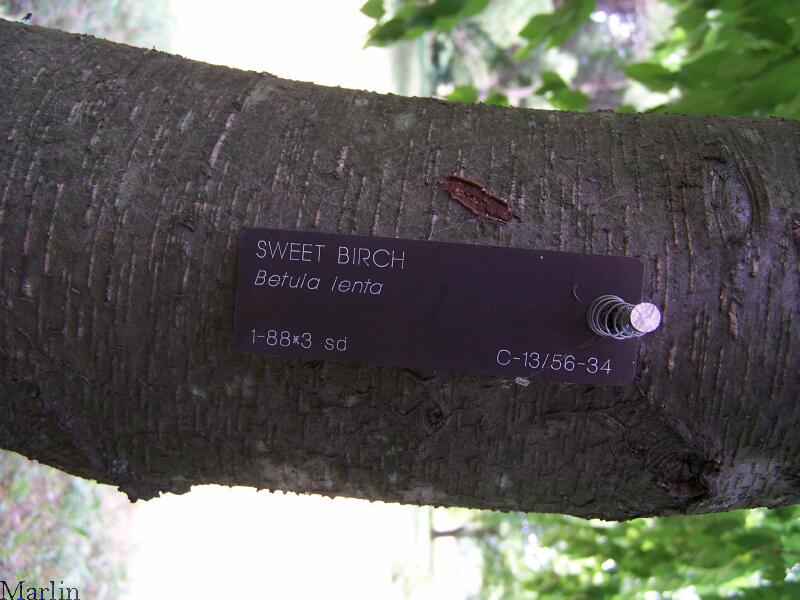
Sweet birch is primarily a tree of the northeastern United States. It grows from southern Maine westward in southern Quebec, New Hampshire, Vermont, New York, and southeastern Ontario to eastern Ohio; and south in Pennsylvania through the Appalachian Mountains. Forest survey data indicate that sweet birch is most abundant in Massachusetts, Connecticut, New York, and Pennsylvania [2].
Flowering and Fruiting- Sweet birch flowers are monoecious and borne in catkins. Staminate catkins are formed in late summer or autumn and open in the spring after elongating to about 20 mm (0.75 in). Pistillate catkins appear with the leaves and are borne terminally on short, spurlike branches. Flowers open in April and May. Seeds ripen from about mid-August through mid-September and are contained in erect strobili.
Seed fall is during mid-September through November. Seed dispersal is normally by wind and seeds may be blown some distance over crusted snow.
References
1. Sweet birch, Morton Arboretum acc. 1-88-3 photos by Bruce Marlin
2. United States Department of Agriculture NRCS Plant Fact Sheet, Sweet birch
Tree Encyclopedia | Tree Index
North American Insects & Spiders
Online since 2002