|
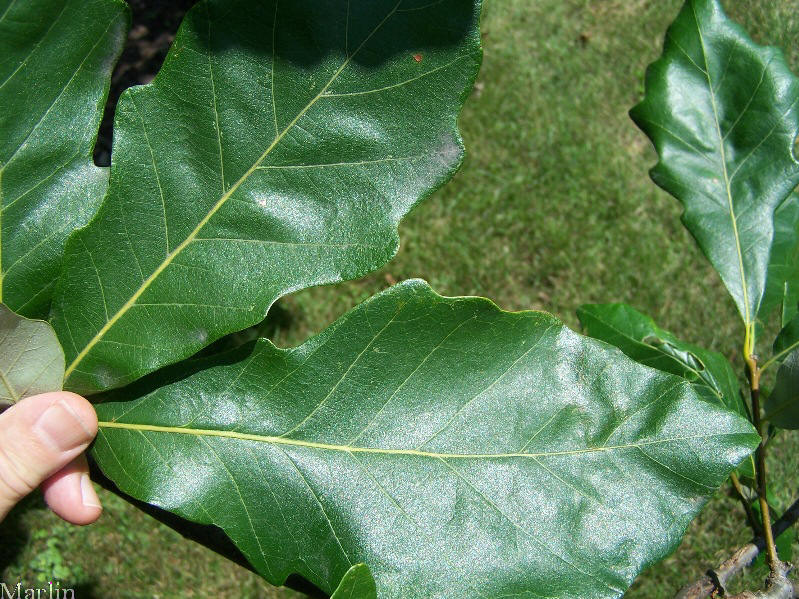
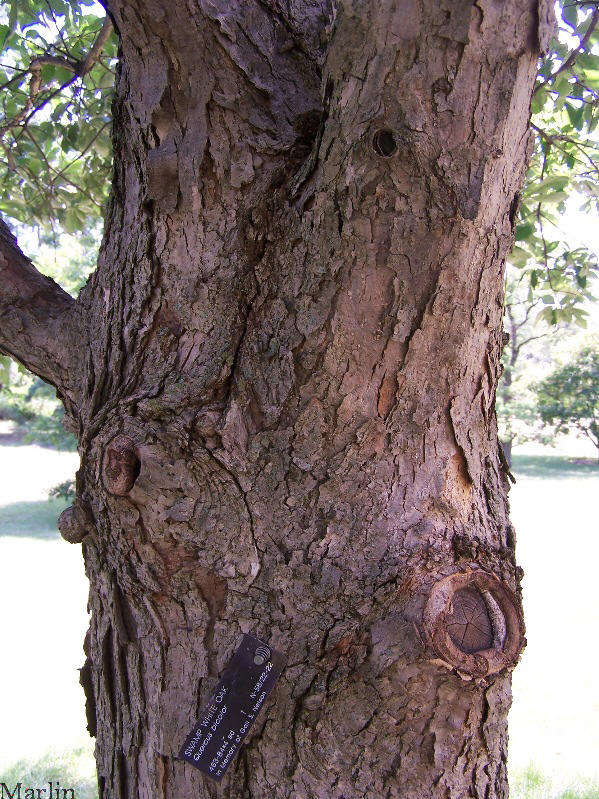
Swamp White Oak - Quercus bicolor
Family: Fagaceae - Beeches, Chinkapins and Oaks
Swamp white oak is a medium-sized tree of the north central and
northeastern mixed forests. It is found in lowlands, along edges of
streams, and in swamps subject to flooding. It is rapid growing and long
lived, reaching 300 to 350 years. The hard strong wood is commercially
valuable and is usually cut and sold as white oak. Many kinds of
wildlife eat the acorns, particularly ducks.
|
|
|
 |
Throughout its range, swamp white oak is typically found on
hydromorphic soils. These may be mineral soils that are
imperfectly to poorly drained, as evidenced by high water
tables and the presence of glei subsurface layers, or both;
organic soils ranging from mucks (well decomposed) to peats
(poorly decomposed) in which high water levels have favored
organic accumulation; or alluvial soils underlain by a glei
layer. These kinds of soils are associated with lands that
are periodically inundated, such as broad stream valleys,
low-lying fields, and the margins of lakes, ponds, or
sloughs. Swamp white oak is not found where flooding is
permanent.
The tree is classed as intermediate in tolerance to shade,
and seedlings become established under moderate shade.
Lowland forests in which swamp white oak grows are
characterized by instability and successional uncertainty
because of the variable effects of flooding, together with
the presence of saturated soils. Swamp white oak may achieve
dominance on the better drained lowland soils together with
basswood, northern red oak (Quercus rubra), American beech
(Fagus grandifolia), and sugar maple (Acer saccharum). Once
established, it is able to compete effectively with American
elm, green ash, and black willow. Limited current evidence
indicates clearcutting to be an adequate silvicultural
system, particularly on the better sites (2,8).
In forest stands swamp white oak has a straight bole with
ascending branches and a narrow crown. However, open-grown
trees are generally poorly formed and often have persistent
lower
branches. |

This specimen was started from seed 23 years ago. It is about 30
feet tall.

An oak "hedgehog" gall on a white oak leaf. This growth is induced
by a small cynipid gall wasp whose larva develops inside.
|
|
Several insects attack oak
trees. They are usually not important but may become
epidemic and kill weakened trees. Economically, the most
important are the wood borers. These may damage the wood
of standing trees and cause log and lumber defects.
White oak is attacked by several leaf eaters including
the gypsy moth (Lymantria dispar), orange-striped
oakworm (Anisota senatoria), variable oakleaf
caterpillar (Heterocampa manteo), several oak leaf tiers
and walking stick. The Cynipid wasps cause galls to
develop on the leaves, in the acorn or on the cup.
White oak also hosts various scale
insects, gall-forming insects, and twig
pruners, but most of these are of minor
importance. White oak acorns are commonly
attacked by insects, in some cases affecting
half the total acorn crop. Weevils of the
genera Curculio and Conotrachelus cause most
acorn damage. Light acorn crops usually are
more heavily infested than heavy ones. Two
moths damage acorns, the filbert worm
(Melissopus latiferreanus) and Valentinia
glandulella.
|

This swamp white is approximately 40 years old.
|
|
|
|

|
Windthrow may be a problem especially in
recently thinned stands. (In forestry, windthrow refers to
trees uprooted by wind, or to other phenomena that cause
uprooting. When tree bole breakage occurs instead of
uprooting it is called windsnap.) Disease and insects affecting swamp
white oak are essentially the same as those found on white
oak. Oak anthracnose can be damaging to individual trees but
is generally not fatal. Swamp white oak is susceptible to
the oak wilt fungus (Ceratocystis fagacearum) and in
Illinois Phomopsis canker and oniothyrium dieback were found
on this oak. In addition, an titleernaria fungus was found on
blighted petioles.
The acorns are sweet, like others in the white oak group,
and are eaten by squirrels and other rodents. In a study in
Wisconsin, swamp white oak acorns were found to make up 27
percent of the diet of wild ducks. Several nongame bird
species include these acorns in their diet.
(United States Department of Agriculture
NRCS Plant Fact Sheet)
|
|
|