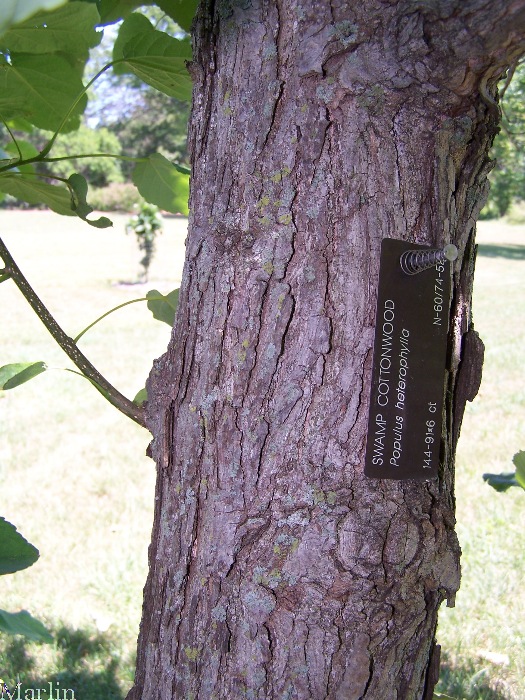
Swamp Cottonwood – Populus heterophylla
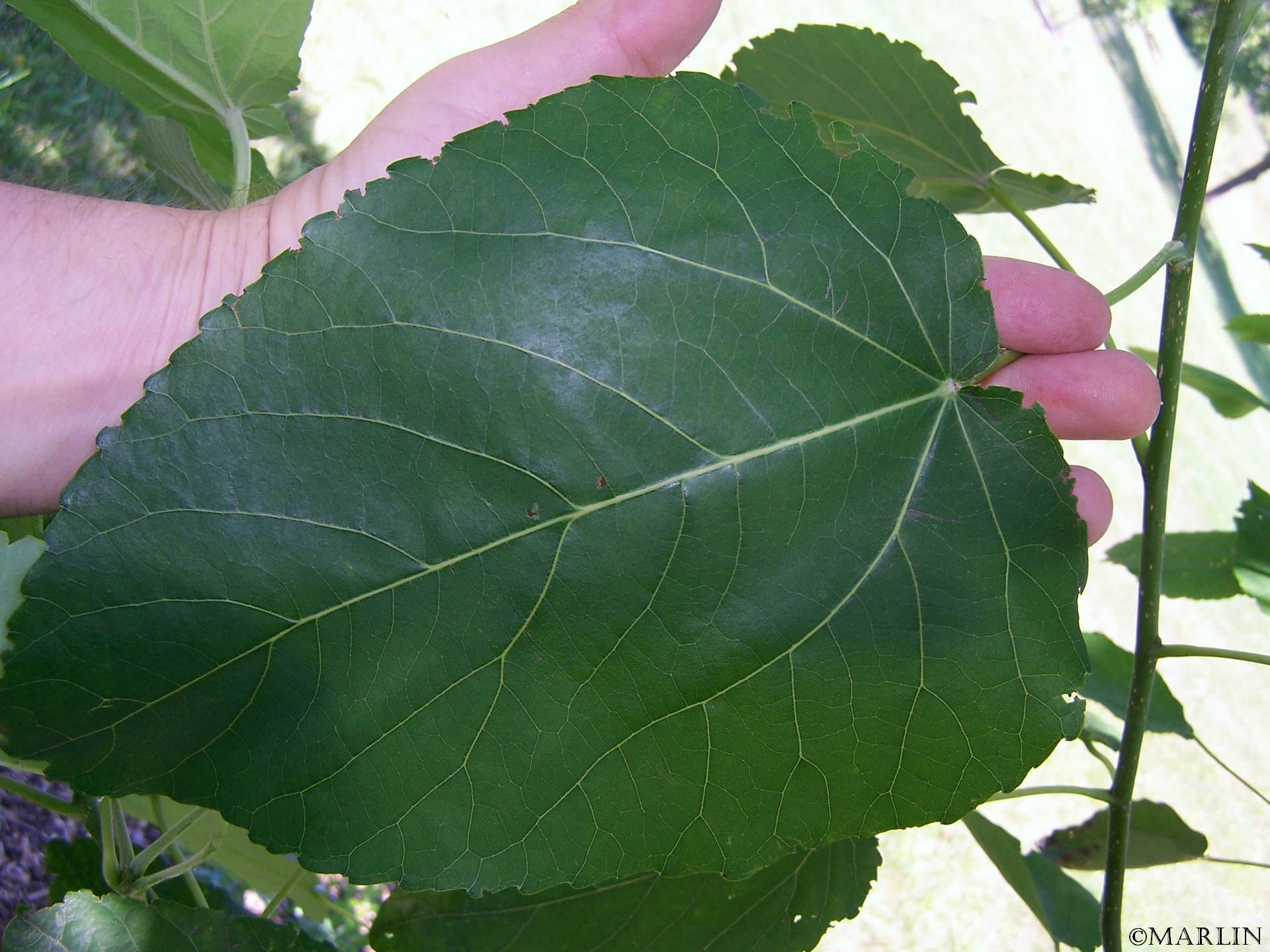 Swamp cottonwood is of secondary importance among bottom-land hardwoods. The species, sometimes referred to as black cottonwood, river cottonwood, downy poplar, or swamp poplar, may grow on sites that are too wet for other native poplars. It is a difficult species to grow from cuttings, a characteristic that limits its commercial value. Swamp cottonwood inhabits the wet bottom lands and sloughs of the Coastal Plain from Connecticut and southeastern New York to Georgia and northwestern Florida, west to Louisiana. It grows north in the Mississippi Valley to southeastern Missouri, western Tennessee, Kentucky, southern Illinois, Indiana, Ohio, and southern Michigan [1].
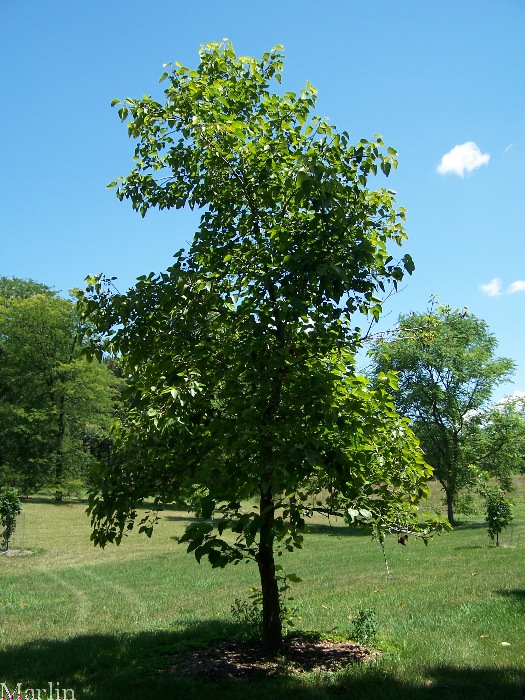 16 year old swamp cottonwood
Though most often found on heavy clays, swamp cottonwood also grows on the edges of, but not in, the muck swamps of the Southeast. Optimum growth and development is in the deep, moist soils of shallow swamps and low-lying areas near tidewater.
Sites that are too wet for eastern cottonwood (Populus deltoides) will support swamp cottonwood. Examples are shallow swamps, sloughs, and very wet river bottoms where the water table remains near the soil surface for all but 2 or 3 months in the summer and early fall. In the southern part of its range, low, wet flats provide the driest sites occupied by swamp cottonwood. However, in southern Illinois it is a dominant or codominant tree on soils with available moisture varying from 3 to 21 percent for the 61- to 76-cm (24- to 30-in) layer. Swamp cottonwood grows naturally on at least eight major soil types common to the Midsouth: Alligator, Amagon, Arkabutla, Forestdale, Perry, Rosebloom, Sharkey, and Tensas. The soils represent several families and the orders Alfisols, Inceptisols, and Entisols. They range from 4.6 to 5.9 in pH and from 24 to 65 percent clay in the surface 0.3 m (1 ft).
Damaging Agents- There are no reported insect or disease problems associated specifically with swamp cottonwood. But the ones that attack eastern cottonwood probably also damage swamp cottonwood. Important insect enemies include the cottonwood leaf beetle (Chrysomela scripta), cottonwood twig borer (Gypsonoma haimbachiana), poplar borer (Saperda calcarata), and the cottonwood borer (Plectrodera scalator). Among the more important diseases are Melampsora leaf rust (Melampsora medusae) and a number of canker diseases, including Septoria, Cytospora, and Fusarium.
References:
1. USDA Forest Service fact sheet,”Swamp Cottonwood”
2. NATIONAL AUDUBON SOCIETY, National Audubon Society Field Guide to North American Trees
North American Insects & Spiders
Online since 2002