Pyramidal Black Alder – Alnus glutinosa ‘Pyramidalis’
Family Betulaceae – Alder, Birch & Hornbeam
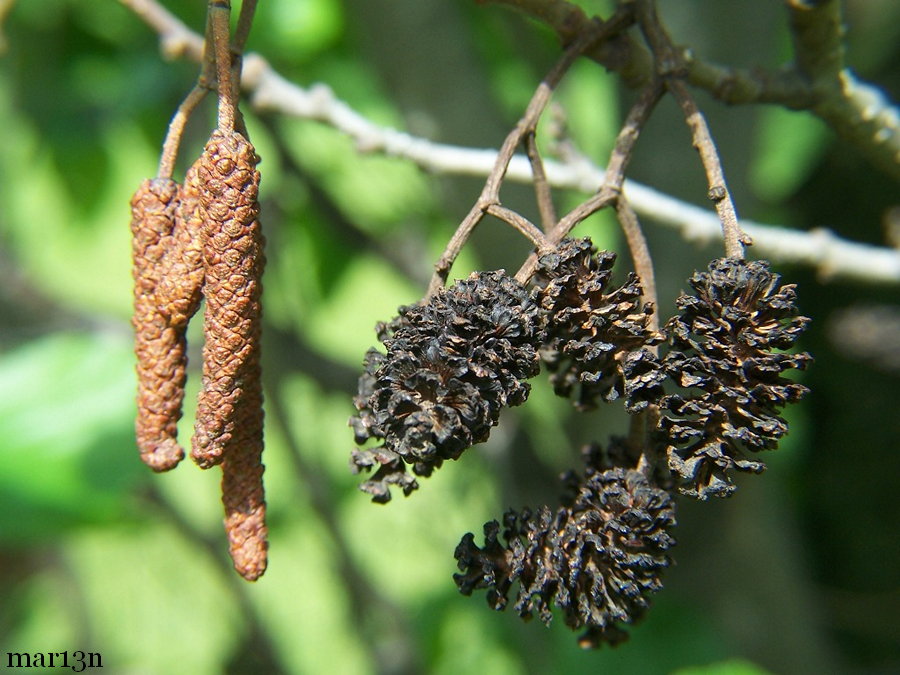
Black Alder is monoecious, that is, it has both male and female flowers on the same plant. Pollen is transmitted from male to female via wind. In this case, the male catkins are seen on the left, and the female strobili are on the right.
Alder is noted for its important symbiotic relationship with Frankia alni, an actinomycete filamentous nitrogen-fixing bacterium. These bacteria are found in the root nodules, where they absorb nitrogen from the air and make it available to the tree. Alder, in turn, provides the bacteria with carbon, which it produces by scrubbing CO2 from the atmosphere through photosynthesis. As a result of this mutually-beneficial relationship, alder improves the fertility of the soil [2].
European Black Alder, a native of Europe, northern Africa, and western Asia, was introduced to North America long ago and has escaped from cultivation. Today, it is grown as a shade tree in urban areas, or at wet sites (ponds, creeks, drainage ditches, etc.) where it thrives and provides both erosion control and ornamental appeal.
 |
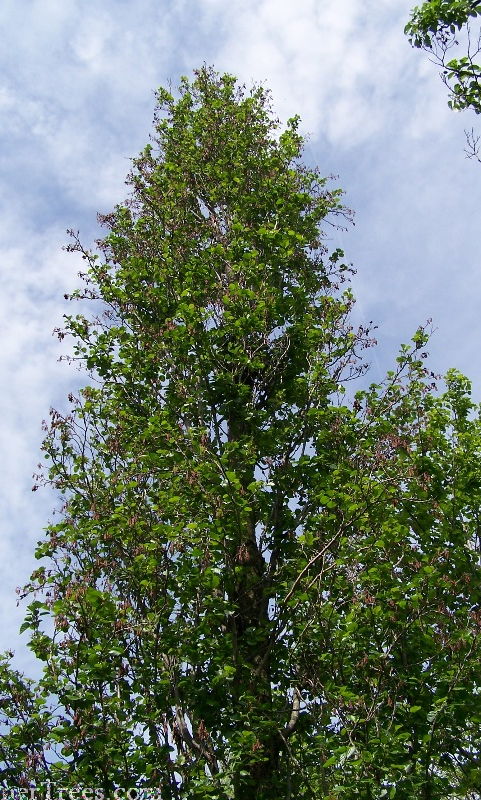 |
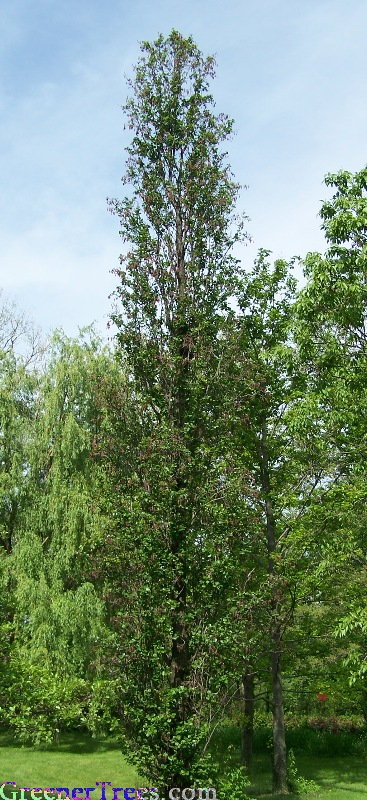
This pyramidal black alder, from a graft, is 52 years old [1]
Black Alder is adaptable to a wide range of favorable or harsh environmental conditions. It prefers moist to wet soils of variable pH that are rich and deep, but adapts to average or poor soils that are dry in summer. Growth is especially rapid in occasionally wet to permanently wet areas such as floodplains, streambanks and ditches.
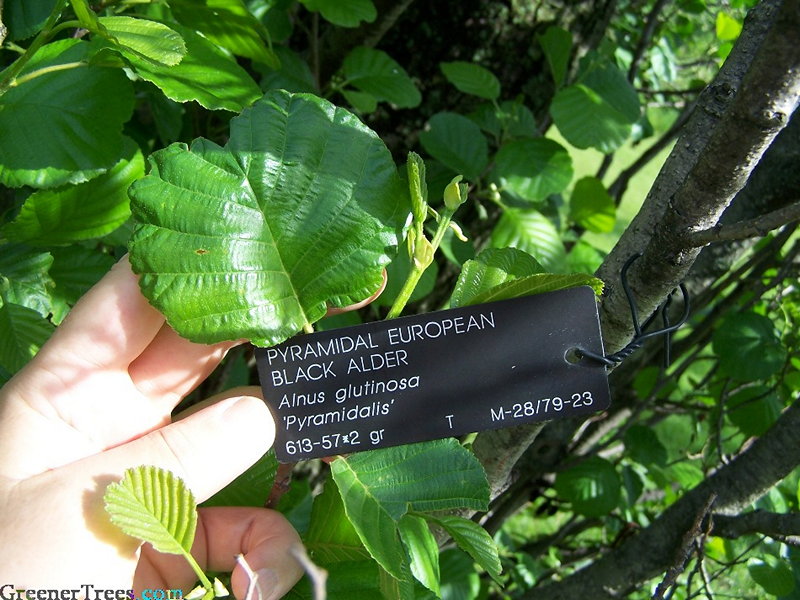
European Black Alder has a leaf that is atypical as compared to other Alders in that it is round in shape, rather than elliptical. In addition, some leaves have a distinct notch at the apex, which is not obvious until the leaves are fully expanded, as above.
This tree is widespread in North Africa, Iran and Turkey, Russia and Europe from Finland to Portugal [2].
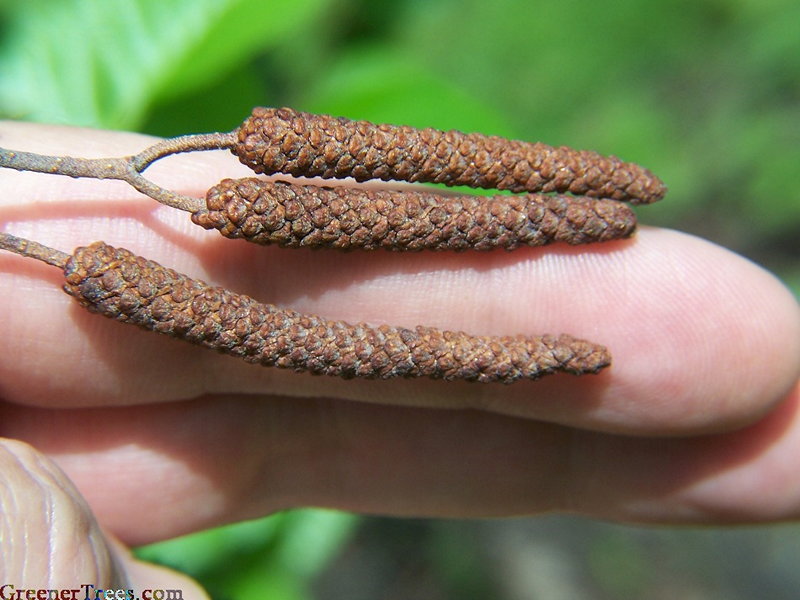 Black Alder Male Catkins
References
1. Pyramidal Black Alder, Morton Arboretum acc. 613-57-2 photos by Bruce Marlin
2. USDA, ARS, National Genetic Resources Program. (GRIN) “Black alder”
3. Invasive Plant Atlas of New England (IPANE)
Family Betulaceae – Alder, Birch & Hornbeam
Trees Index
Tree Encyclopedia / North American Insects & Spiders
Online since 2002