Paperbark Maple – Acer griseum
Family Aceraceae – Maples
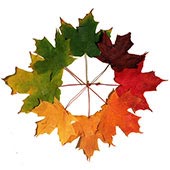
Paperbark maple has outstanding, showy scarlet fall foliage and beautiful exfoliating bark.
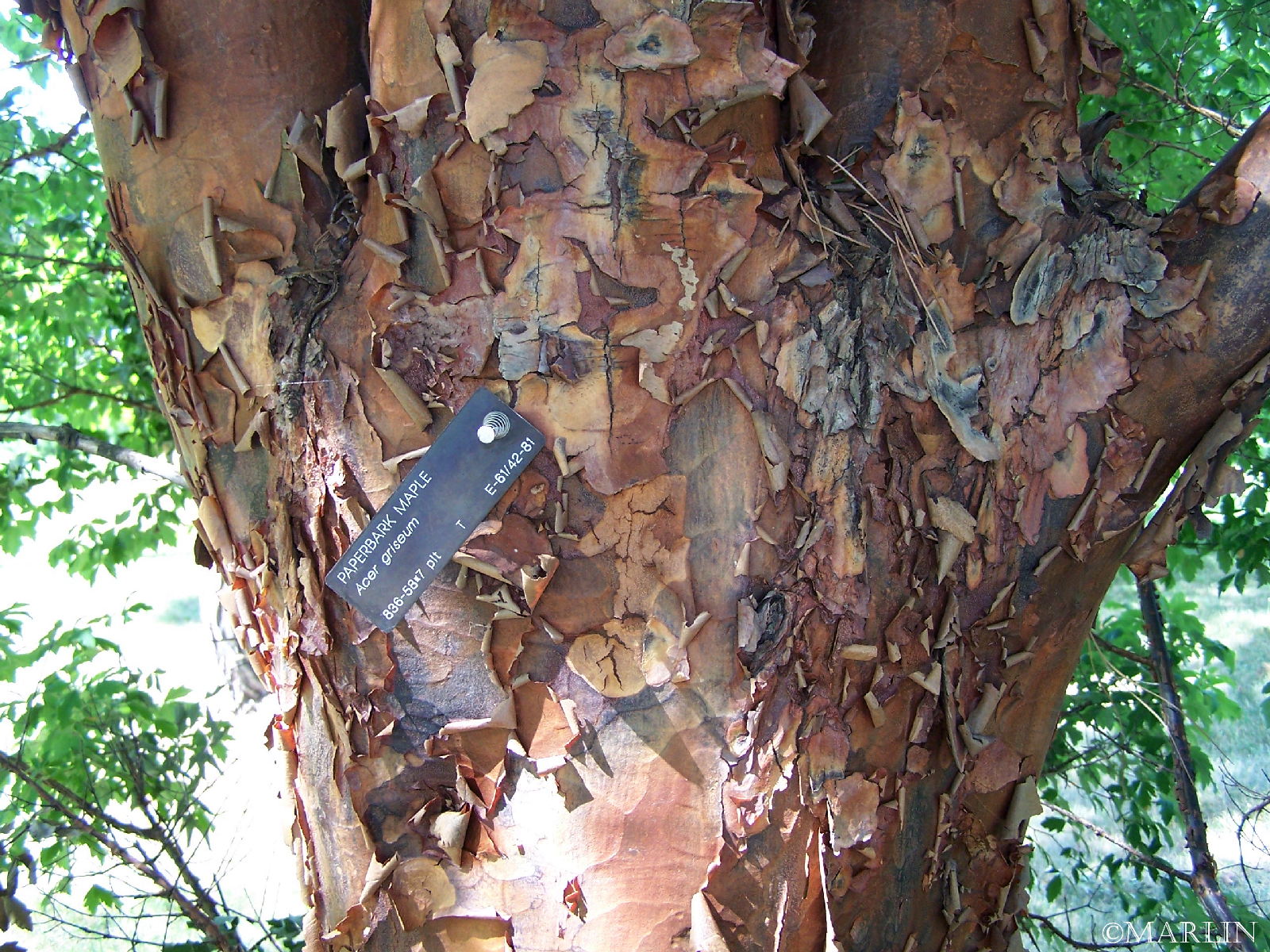
Paperbark maple is perhaps one of our most beautiful maples. It is a slow-growing deciduous tree with strikingly orange, peeling, papery bark not unlike that of the River Birch (Betula nigra) providing year-round interest. It has unusual trifoliate leaves for a maple, and the bark exfoliates even on young trees and small branches, making this a truly stunning specimen tree. Most specimens grow with multiple trunks which branch low to the ground, but can be trained to create a single trunk. Paperbark maple has outstanding, showy scarlet fall foliage [1,2].
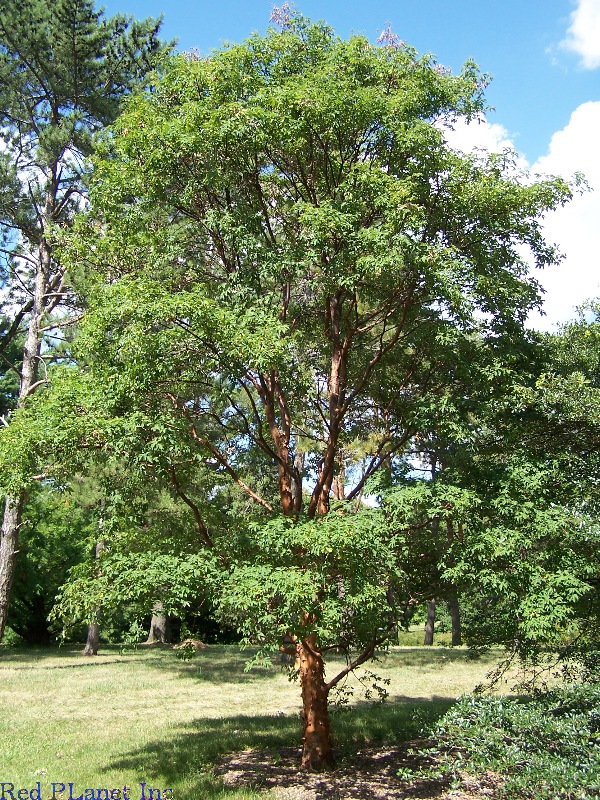
Single Trunk Specimen
Hardy in USDA zones 4 through 7, this tree can be used in Bonsai containers or above-ground planters, or planted in buffer strips around decks or patios. It grows to 25 feet tall and nearly as wide, but often takes a vase shape or upright form with an open crown. Inconspicuous green flowers appear in spring. Elongate, oval fruit with a hard brown husk are 1-3 inches long do not attract wildlife, neither do they present a clean-up problem.
Paperbark will grow in all light conditions from full sun to deep shade; it has moderate drought, salt aerosol, and soil salinity tolerance. The tree is hardy and grows very slowly to 25 or 30 feet. It does not usually produce surface roots and should not present a mowing problem unless allowed to assume its characteristic multi-trunked, low-branching form.
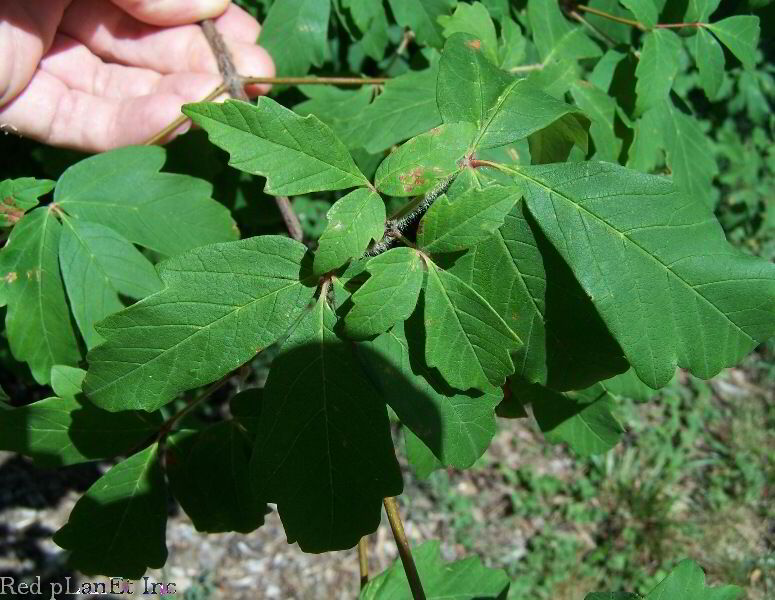
The multi-stemmed habit, unusual leaves, and wonderful bark makes this a prime candidate for specimen planting in any commercial, institutional, or residential landscape. If you can find it, plant it by a patio or other prime location and light it from below for nighttime enjoyment. The tree is hardy, grows very slowly to 25 or 30 feet tall, but, unfortunately, is difficult and expensive to propagate.
It does not tolerate extended drought or other environmental stresses in the south or in poor soil (moderate drought-tolerance in sandy loam) but will grow in sun or shade. Leaves will scorch during dry summers unless provided with some irrigation. Probably best in partial shade if planted in the south. The beauty of this tree makes up for the extra effort required to grow it [1].
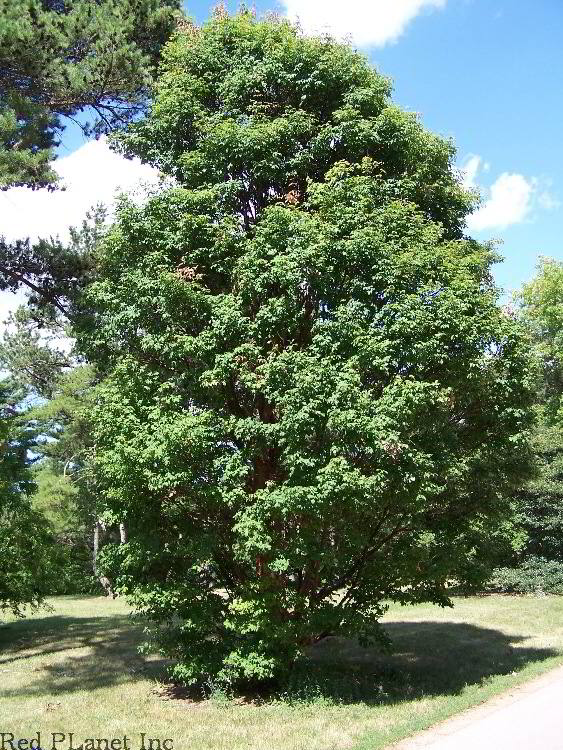
Multiple trunks, low-branching form
References:
1. Edward F. Gilman and Dennis G. Watson, USDA Forest Service ST-17 November 1993 Acer griseum
2. North Carolina State University Cooperative Extension, Consumer Horticulture Acer griseum
3. USDA, ARS, National Genetic Resources Program Germplasm Resources Information Network – (GRIN)
Family Aceraceae – Maples
Trees Index | Pine Family | Beech, Oak | Nut Trees | Birch Family | Magnolias
Tree Encyclopedia / North American Insects & Spiders is dedicated to providing family-friendly educational
resources for our friends around the world through large images and macro photographs of flora and fauna.
Online since 2002