Paper Birch – Betula papyrifera
Family Betulaceae – Alder, Birch, Hornbeam
Common names: Paper Birch, Canoe Birch, Silver Birch, White Birch
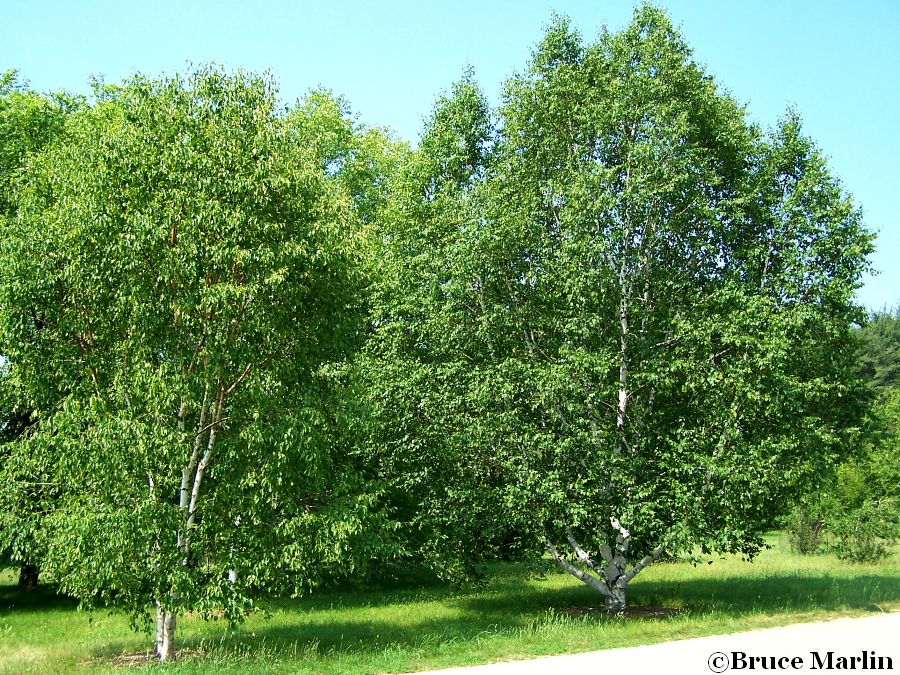
Paper Birch is a medium sized, single or multiple stemmed, deciduous tree. In forests a slender trunk with a narrow crown, but in openings a wider crown spreading out from near the base. Height at maturity 70′-80′ and sometimes to 30 foot width. Short-lived. Height growth ceases at about 60-70 years of age; few live more than 140 years.
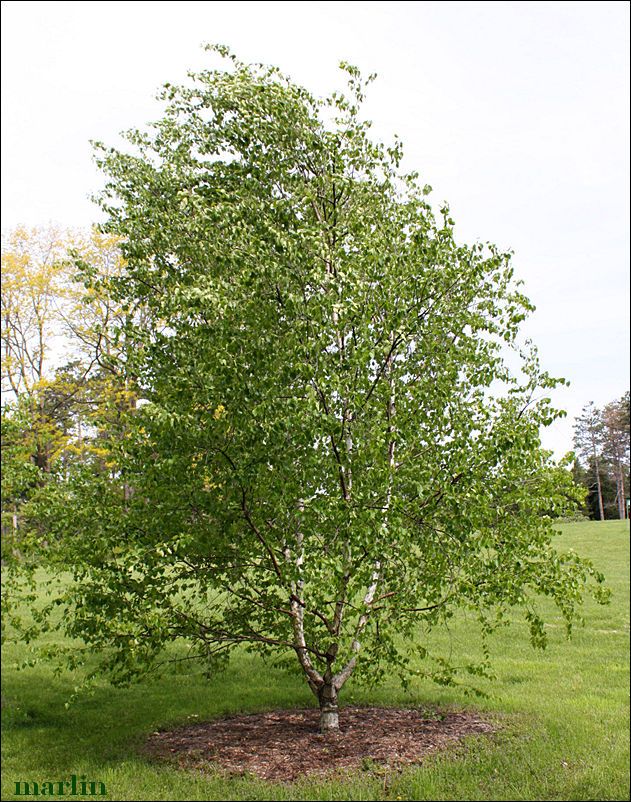 Paper birch, from seed, is 14 years old
Paper Birch grows in climates ranging from boreal to humid and tolerates wide variations in precipitation. Its northern limit of growth is arctic Canada and Alaska, in boreal spruce woodlands, in mountain and sub alpine forests of the western United States, the Great Plains, and in coniferous – deciduous forests of the Northeast and Great Lakes states.
The tree is particularly shade-intolerant. Where it occurs in old-growth forests, it is restricted to sunny glades and openings. Birches are often the first trees to repopulate logged, disturbed or burned acreage. Where such populations exist, they often crowd out other species, and form pure stands of silvery-white barked trees.
In this habit, they are quite like the Black Walnut; walnuts are generally among the first trees sprouting in disturbed places of the woodlots and bottomlands of the American Midwest. Birches grow in almost any soil, but best in deep, well-drained alluvial soils with a sandy component; such soils are common at glacial deposits.
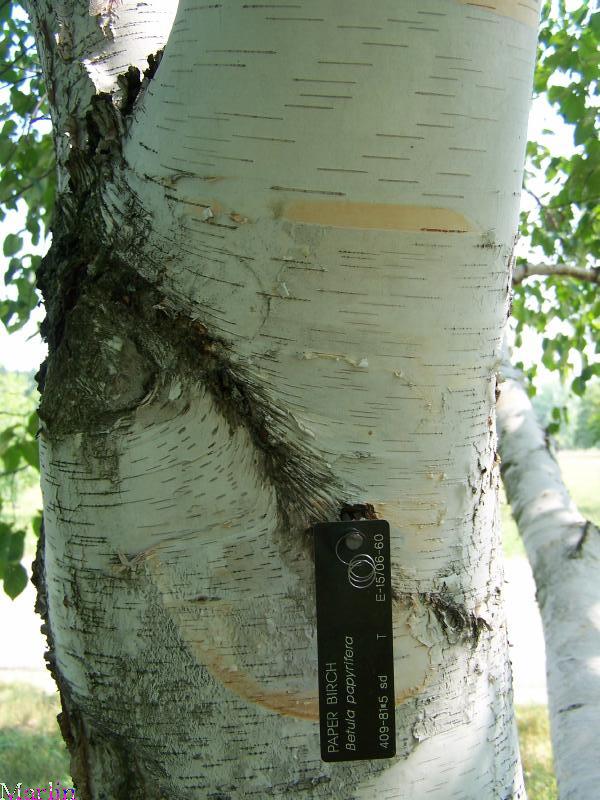 Paper Birch is shallow-rooted: few roots go deeper than 24″ below the soil surface. Bark is reddish-brown on saplings; on mature trees thin, white, and smooth, separating into papery strips. Native Americans gathered bark for canoe construction during a winter thaw or just when the sap started to flow in the spring. A tree of the desired size, with bark up to nine layers thick, was felled and trimmed and the bark was cut and stripped off in one piece.
The wooden frame of the canoe was usually made of northern white cedar. The birch bark, with the brown, inner layer of the bark turned to the outside, formed the skin. Seams were sewn with split roots of spruce or tamarack, then waterproofed with spruce resin. Birch bark canoes made by northern tribes were traded to tribes from more southern regions, where white birch was scarce, and later to European colonists. Our modern canvas and fiberglass canoes are patterned after the Native American birch bark canoe.
The birches have long been popular ornamental trees in North America, chiefly in the northern United States and Canada. Our specimens include river birch, Dahurian birch, paper birch, Arctic birch, Manchurian birch, Manchurian alder, downy birch, Japanese white birch, and 10 other species.
Family Betulaceae – Alder, Birch, Hornbeam
Trees Index | Pine Family | Beech, Oak | Nut Trees | Birch Family | Magnolias
Tree Encyclopedia / North American Insects & Spiders is dedicated to providing family-friendly educational
resources for our friends around the world through large images and macro photographs of flora and fauna.
Online since 2002