Osage Orange Tree – Maclura pomifera

Mulberry Family: Moraceae. The female flower in ripening becomes very fleshy, forming a large multiple fruit or syncarp composed of 1-seeded drupelets. The fruit ripens from September through October. The ripe fruit, 7.6 to 15 cm (3 to 6 in) in diameter, yellowish-green, resembles an orange, often weighing more than a kilogram (2.2 lb). When bruised, the fruit exudes a bitter milky juice which may cause a skin rash and which will blacken the fruit on drying. Female trees often produce abundant fruit when no male trees exist nearby, but such fruit contains no seeds. [1]
I can tell you from experience these fruits are not good for throwing at people or cars or cattle. They are not like snowballs. They are good for impromptu skeet-shooting. I think people sell them as some kind of bug repellent but I think that’s bull doody; people will believe anything.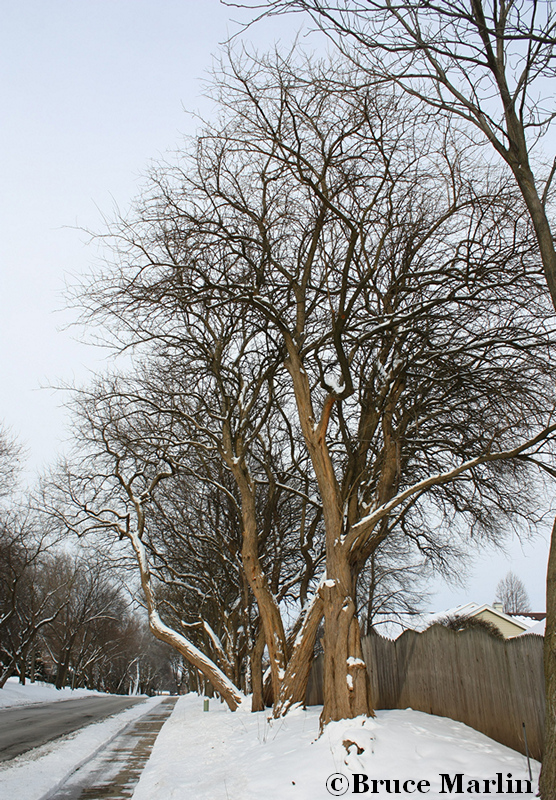
Osage-orange produces no sawtimber, pulpwood, or utility poles, but it has been planted in greater numbers than almost any other tree species in North America. Known also as hedge, hedge-apple, bodark, bois-d’arc, bowwood, and naranjo chino, it made agricultural settlement of the prairies possible (though not profitable), led directly to the invention of barbed wire, and then provided most of the posts for the wire that fenced the West. The heartwood, bark, and roots contain many extractives of actual and potential value in food processing, pesticide manufacturing, and dye making. Osage-orange is used in landscape design, being picturesque rather than beautiful, and possessing strong form, texture, and character.
The natural range of Osage-orange is in the Red River drainage of Oklahoma, Texas, and Arkansas; and in the Blackland Prairies, Post Oak Savannas, and Chisos Mountains of Texas. According to some authors the original range included most of eastern Oklahoma, portions of Missouri, and perhaps northwestern Louisiana. Osage-orange has been planted as a hedge in all the 48 contiguous States and in southeastern Canada. The commercial range includes most of the country east of the Rocky Mountains, south of the Platte River and the Great Lakes, excluding the Appalachian Mountains.
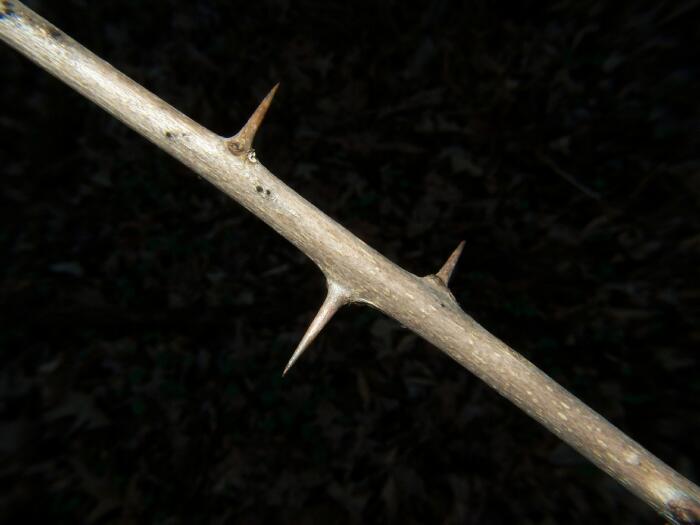
Although Osage-orange is one of the healthiest tree species in North America, it is attacked by some parasites. Cotton root rot, caused by Phymatotrichum omnivorum, attacks Osage-orange and most other windbreak species in Texas, Oklahoma, and Arizona (59). Losses are greatest in plantings on dry soil where rainfall is scant. Cotton root rot is the only serious disease.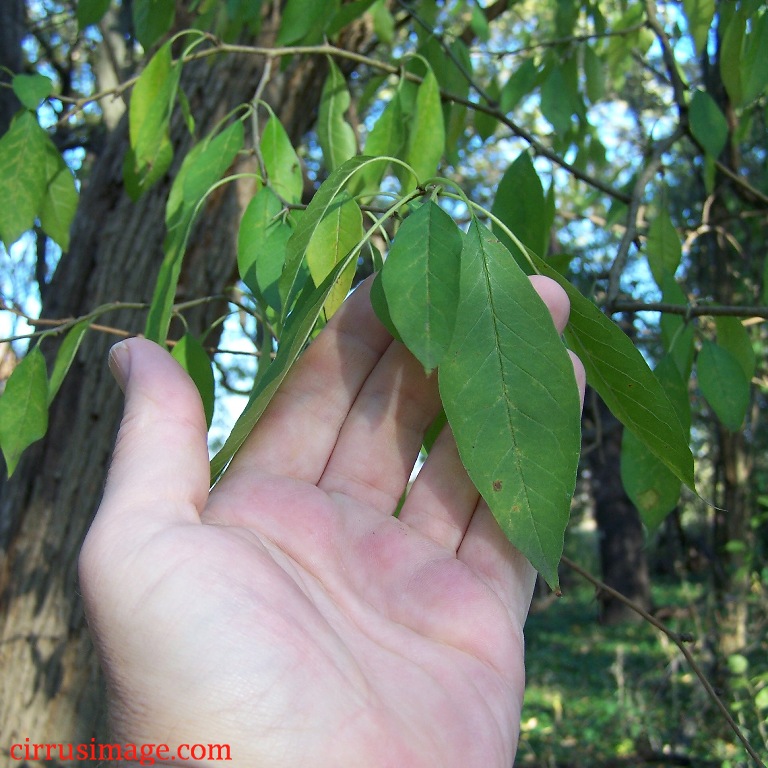
The outer layer of sapwood is very thin; consequently, even small-diameter stems give long service as stakes and posts (40,43). About 3 million posts were sold annually in Kansas during the early 1970’s. The branch wood was used by the Osage Indians for making bows and is still recommended by some archers today. The chemical properties of the fruit, seed, roots, bark, and wood may be more important than the structural qualities of the wood. A number of extractives have been identified by researchers, but they have not yet been employed by industry.
Numerous organic compounds have also been obtained from various parts of the tree. An antifungal agent and a nontoxic antibiotic useful as a food preservative have been extracted from the heartwood. Osage-orange in prairie regions provides valuable cover and nesting sites for quail, pheasant, other birds, and animals, but the bitter-tasting fruit is little eaten by wildlife. Reports that fruit causes the death of livestock have been proven wrong by feeding experiments in several States. [1]
1. J.D. Burton, USDA Forest Service Silvic Manual, Maclura pomifera (Raf.) Schneid.
2. NATIONAL AUDUBON SOCIETY, National Audubon Society Field Guide to North American Trees
3. Flora of China, Maclura tricuspidata
Trees Index | Pine Family | Beech, Oak | Nut Trees | Birch Family | Magnolias
Tree Encyclopedia / North American Insects & Spiders is dedicated to providing family-friendly educational
resources for our friends around the world through large images and macro photographs of flora and fauna.
Online since 2002