Oriental Arborvitae – Platycladus orientalis
Family Cupressaceae – Redwood, Cypress
Used most often in formal hedges, screens and windbreaks, or as specimen plantings
Also commonly called Chinese arborvitae, this plant is widely cultivated in gardens around the world. Oriental arborvitae is native to China, Korea, and the Russian far east. Used most often in formal hedges, screens and windbreaks, or as specimen plantings. Hardy in zones 6-11. “Arborvitae” is Latin for “tree of life.”
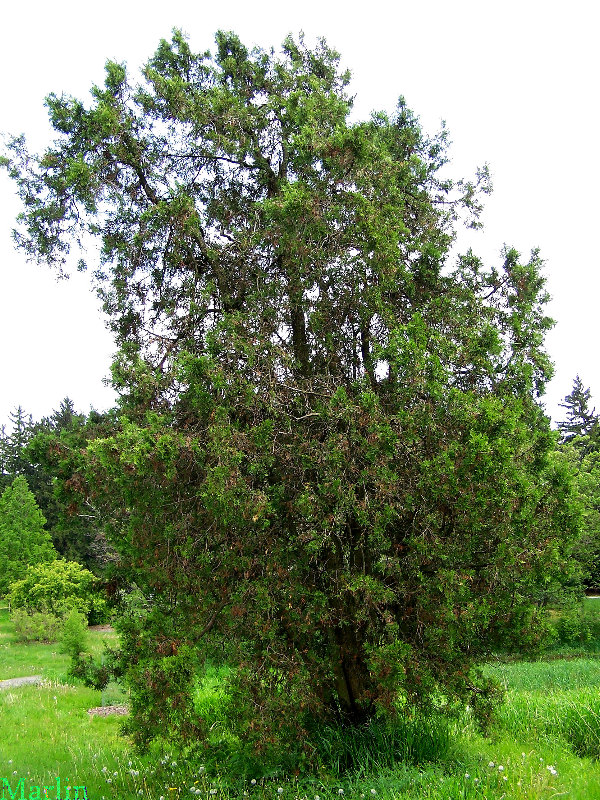
Oriental Arborvitae, from seed, is 55 years old [3]
Oriental arborvitae is a densely branched evergreen conifer that grows to 30 ft (15.2 m), with a spread of 20 ft (6.1 m). Cultivated specimens are usually grown as a smaller, bushier shrub. The shape is conical, with the crown becoming more irregular and spreading with age. [2]
A specimen in Nasreddinabad, Tajikistan, is 35 meters tall. Specimens in China are said to exceed 1,000 years old. [1]
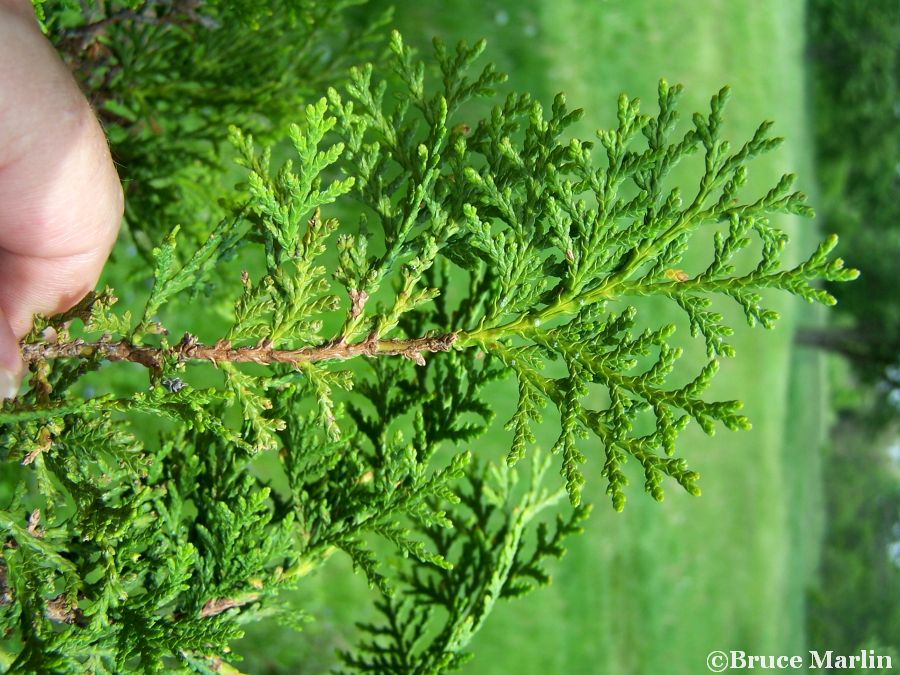
The numerous slender ascending branches support shoots that spread out in flat, vertical planes. The leaves are scales overlapping and tightly packed on the shoots. The oblong cones are about 1 in (2.5 cm) long, held upright, and blue-green, with a grayish waxy bloom. The cones are fleshy at first, becoming woody as they mature, and each of the 6-8 scales that cover the cone has a recurved, fleshy hook. Under the scales are wingless seeds.
“Arborvitae does not tolerate pruning well since all foliage is toward the outside of the crown, but it is well-suited for use as a barrier, background, or specimen planting in a large landscape where it is properly located so pruning is not needed. Its distinctive appearance does not fit easily into natural or informal landscapes. It is often planted in cemeteries and referred to as Cemetery Plant. Arborvitae grows moderately fast in full sun or very light shade and tolerates drought well once established. Sandy or loam soil is best, clay soil is only suited on a slope where drainage is good.
Pest problems include spider mites and bagworms. A fungus blight causes the interior twigs to turn brown. This blight can be controlled by fungicides in early fall and by pruning out and destroying affected areas. Locate the plant in a sunny area with good air circulation to keep the foliage as dry as possible.” [2]
References
- Conifers.org, Gymnosperm Database, Platycladus orientalis
- Edward F. Gilman and Dennis G. Watson, USDA Forest Service, Platycladus orientalis Arborvitae
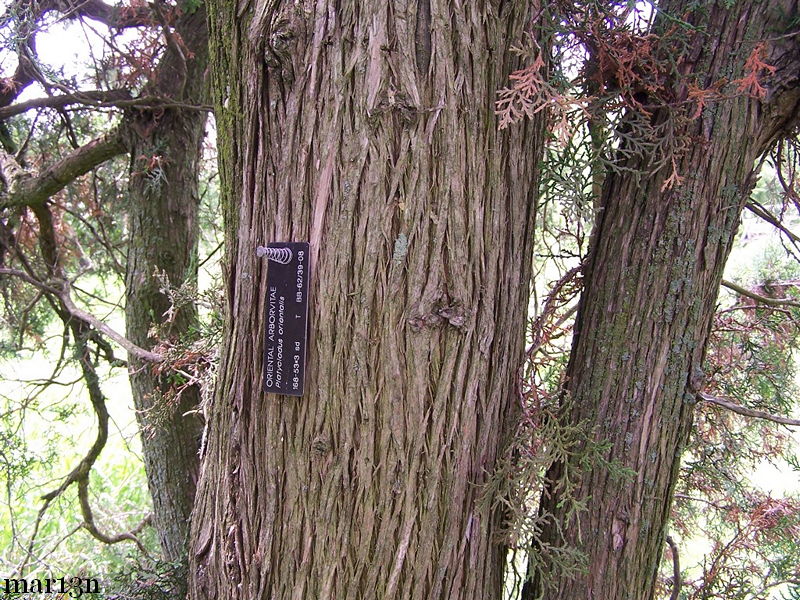
- Morton Arboretum accession 168-53#3, photos © Bruce Marlin
Family Cupressaceae – Arborvitae, Cedar, Cypress, Juniper, Redwood
Trees Index | Pine Family | Beech, Oak | Nut Trees | Birch Family | Magnolias
Tree Encyclopedia / North American Insects & Spiders is dedicated to providing family-friendly educational
resources for our friends around the world through large images and macro photographs of flora and fauna.
Online since 2002