Moor Birch – Betula pubescens
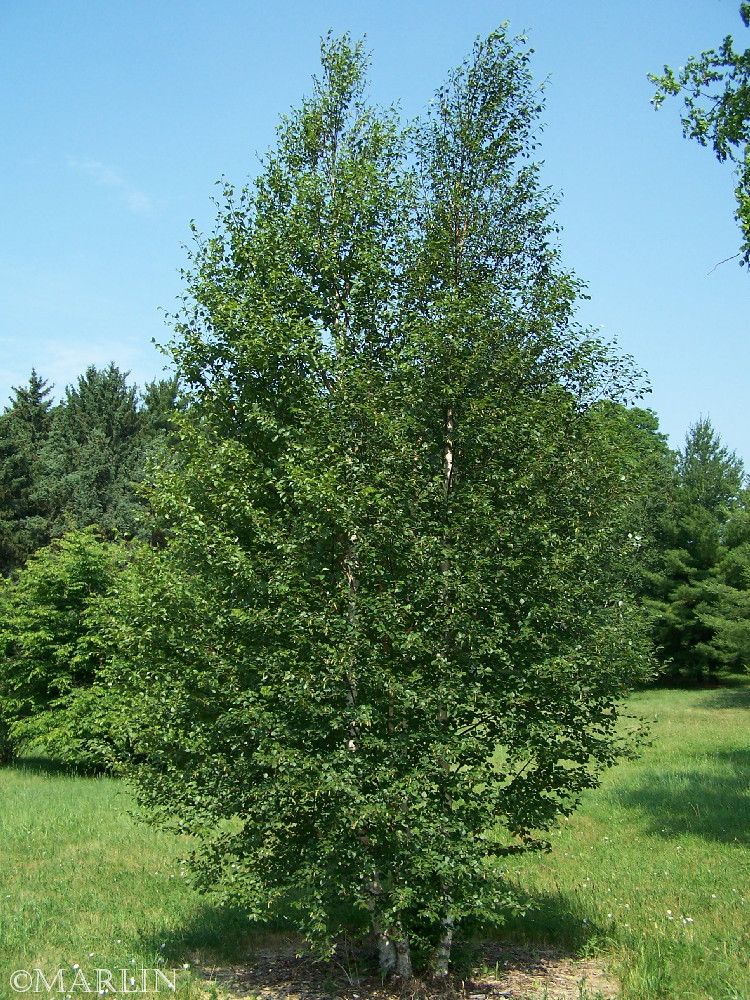
Moor birch is a deciduous tree growing to 60 feet with a narrow, often multi-trunked growth habit. The subspecies ‘tortuosa’ (arctic moor birch) is recognized as the farthest north-growing broadleaf tree, and the only tree species native to Iceland and Greenland [1].
The species epithet refers to the pubescent twigs, and to a lesser extent, hairy foliage. Downy birch does not exude the aroma of wintergreen as is noted in other species (most notably sweet birch Betula lenta) [3].
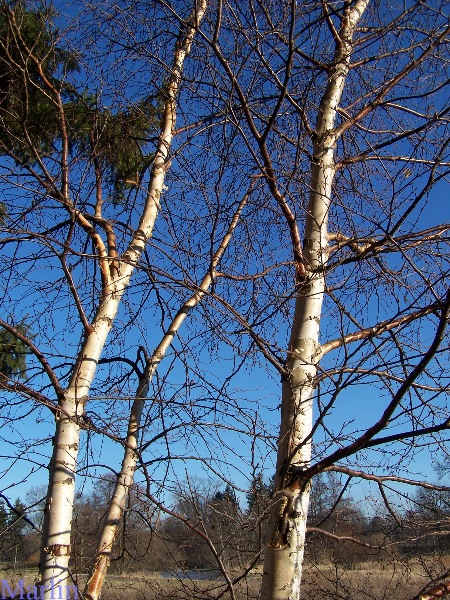 Moor Birch, Midwinter
This plant is wind-pollinated. Birch flowers are monoecious and borne in catkins. Staminate catkins are formed in late summer or autumn and open in the spring after elongating to about 20 mm (0.75 in). Pistillate catkins appear with the leaves and are borne terminally on short, spurlike branches. Flowers open in April and May. Seeds ripen from about mid-August through mid-September and are contained in erect strobili. Seed is released in autumn [3].
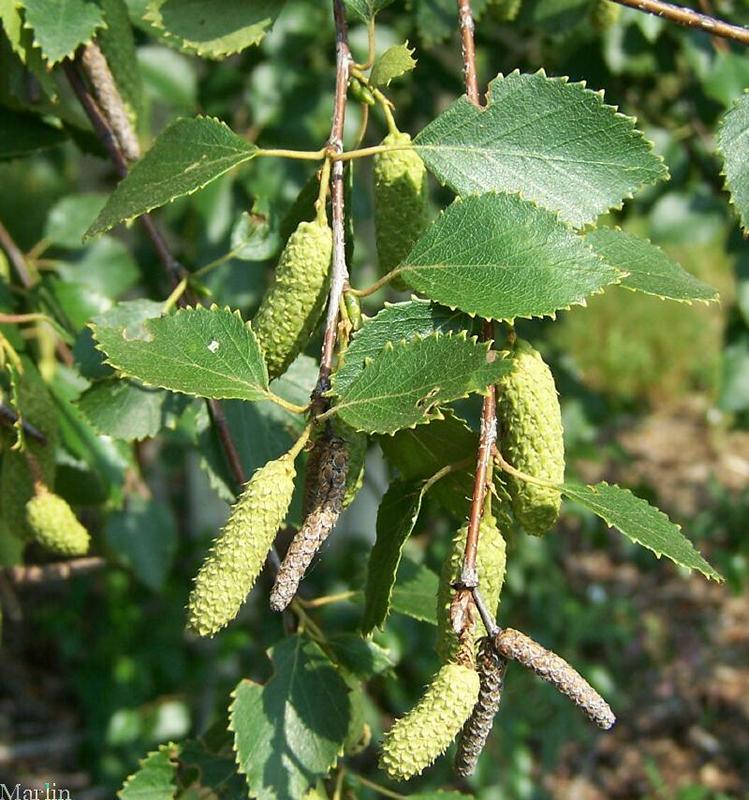 Moor birch catkins and foliage [1]
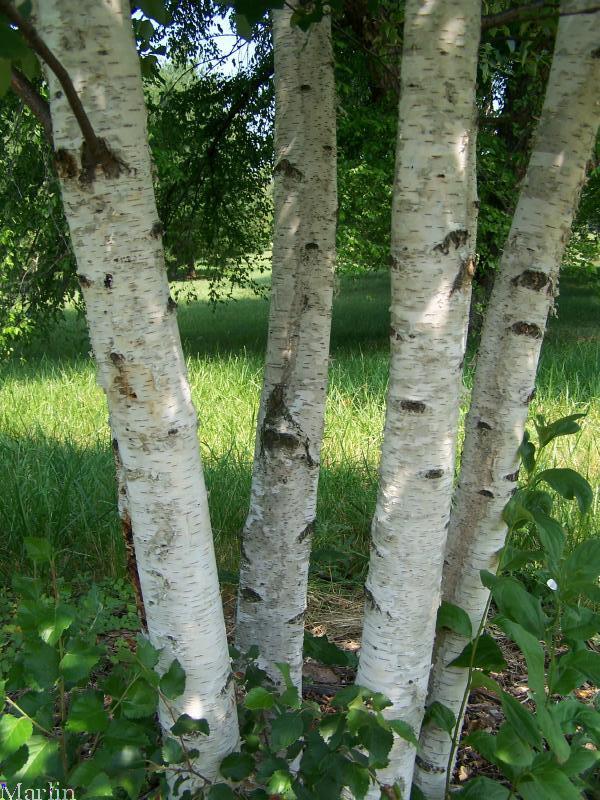 Multi-stem trunks
References
1. Moor birch, Betula pubescens, Morton Arboretum accs. 462-80-11 & 15 photos by Bruce Marlin
2. Wikipedia, “Betula pubescens”
3. www.efloras.org, Flora of North America, “Betula pubescens Ehrhart, Beitr. Naturk. 5: 160. 1790”
4. The Morton Arboretum, “Plants of Northern Europe: spruce, pine and birch”
Family Betulaceae – Alder, Birch, Hornbeam
The birches have long been popular ornamental trees in North America, chiefly in the northern United States and Canada. Our specimens include river birch, Dahurian birch, paper birch, Arctic birch, Manchurian birch, Manchurian alder, downy birch, Japanese white birch, and 10 other species.
Trees Index | Pine Family | Beech, Oak | Nut Trees | Birch Family | Magnolias
Tree Encyclopedia / North American Insects & Spiders is dedicated to providing family-friendly educational
resources for our friends around the world through large images and macro photographs of flora and fauna.
Online since 2002