 |
Von Moltke Linden – Tilia x moltkei Family Tiliaceae – Basswoods, Lindens This lovely shade tree is the result of grafting pendent silver linden onto American Linden. |

Custom Search
|
 |
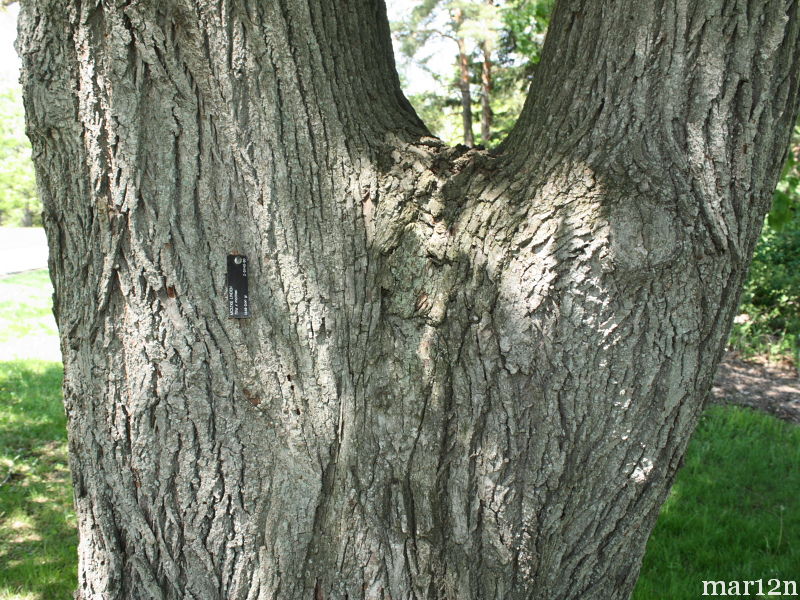
| This tree is large and needs plenty of room to develop. Branches should be well-spaced along a central trunk to allow for development of a durable structure. Left unpruned, crotches with embedded bark can develop but the wood is flexible so branches usually do not break from the tree. The tree is considered to have a strong branch structure.
Plant it as a specimen or shade tree on a commercial property where there is plenty of soil space available for root expansion. It can be used as a street tree in large tree lawns or along a street without a sidewalk, but is sensitive to road salt. Be prepared to remove sprouts periodically from the base of the trunk. A North American native tree, American Linden prefers moist, fertile soils, acid or slightly alkaline, in full sun or partial shade. More shade tolerant than many other large trees. The leaves will show some browning after a particularly dry season, but the tree appears fine the following year. It is often found (and prefers) growing along moist stream banks but tolerates moderate drought. |
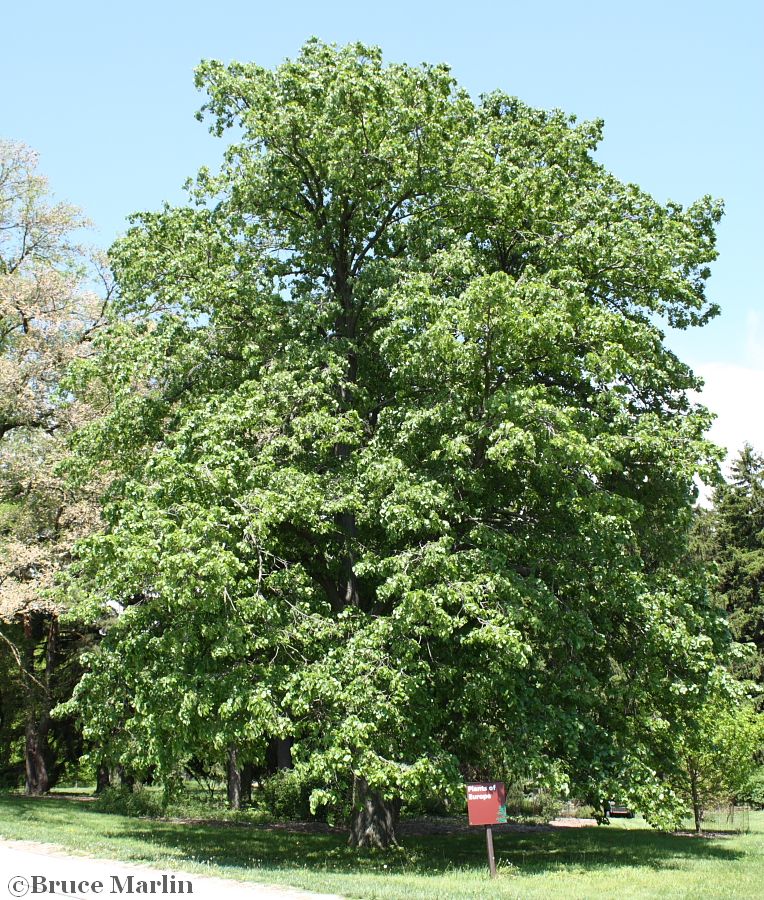 This Von Moltke Linden is one of the Morton Arboretum's original plantings circa 1924 |
| Origin: native to North America. Landscape uses: hedge; large parking lot islands (> 200 square feet in size) wide tree lawns (>6 feet wide); medium-sized tree lawns (4-6 feet wide); Recommended for buffer strips around parking lots or for median strip plantings in the highway; shade tree; specimen; sidewalk cutout (tree pit); residential street tree; no proven urban tolerance. |
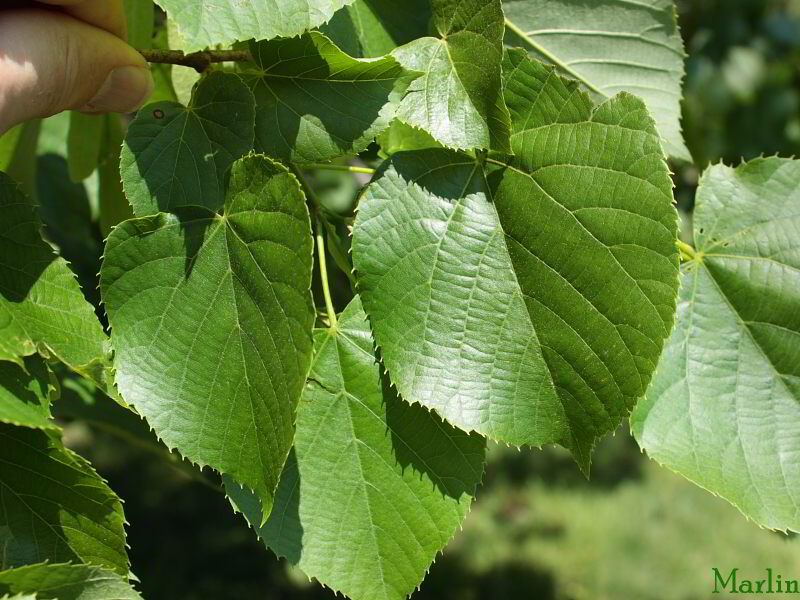 Von Moltke Linden Leaves |
| The fragrant flowers of the Linden tree hang from the middle of leafy, ribbon-like green bracts in long-stalked clusters. The flowers are tiny, with 5 yellowish-white petals. During the last weeks of June and first weeks of July they exude a powerful, haunting scent that can be detected up to a mile away.
The flowers possess a nectar which attracts bees and produces a strong flavored honey. When this tree is in flower it will be full of bees, hence its common name "Bee Tree". During the three weeks that the Lindens bloom, bees forsake most other flowers. The honey that they make of Linden nectar is white in color, and highly regarded. The flowers when gathered and dried can be used to make tea. Linden flowers are used in the manufacture of perfumes. |
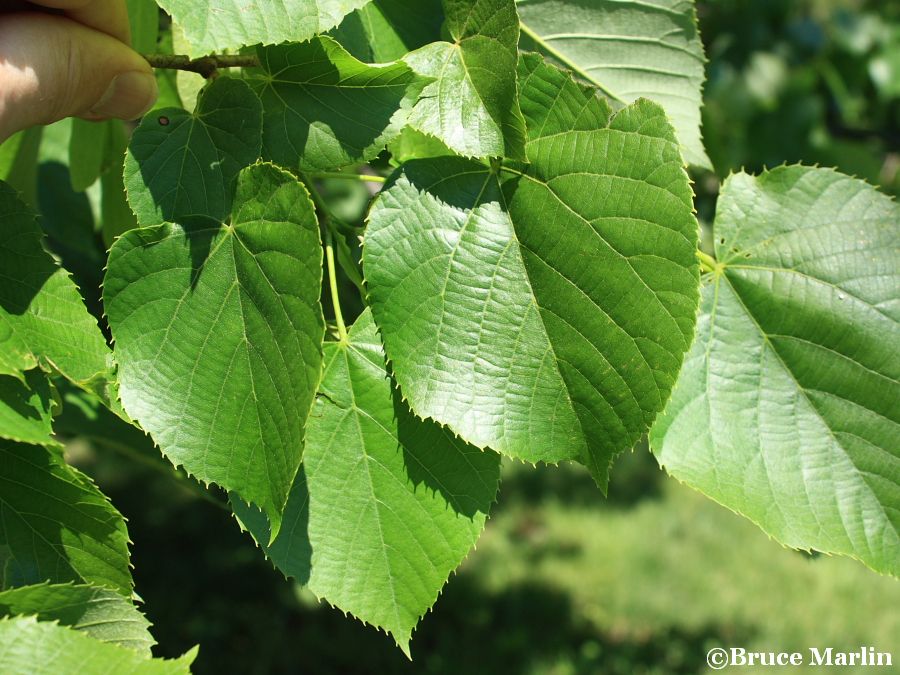
| When the flowers go to seed they form small nutlets that contain 1 or 2 seeds each, clustered beneath large leafy wing bracts which act as parachutes as they carry the seeds to the ground. The fruits are woody and about the size of peas. The leaves are heart-shaped, 2-3 inches long. Linden wood is soft and creamy, and it is much favored by woodcarvers because of its workability (it is said to "cut like cheese") and its even grain. In past centuries it was used to make ship's figureheads and cigar-store Indians. Today it is used for broom handles, beehive frames, piano sounding boards and certain parts of guitars. — USDA NRCS Plant Fact Sheet |
 |
| References 1. Keith Rushforth, Charles Hollis, National Geographic Trees of North America "Pendant Silver Linden" |
| Tree Encyclopedia / North American Insects & Spiders is dedicated to providing scientific and educational resources for our users through use of large images and macro photographs of flora and fauna. |
|
|
Family Tiliaceae – Basswoods, Lindens |