Mock Orange - Philadelphus x virginalis 'Natchez' [2]
Family: Hydrangeaceae. Hardiness Zones: 4 to 8 / Height: 12 ft Spread: 12 ft Form: rounded
Type: deciduous shrub. Annual Growth Rate: more than 18 inches / Flowers: White
Insects & Spiders | Elm Family | Ulmaceae Index | Tree Encyclopedia | Trees Index
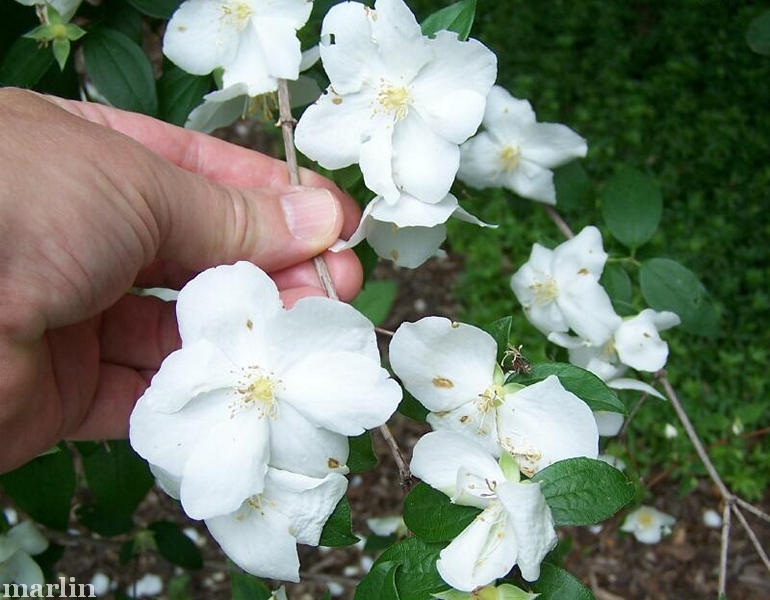
mock orange flowers
Natchez cultivar's flowers can be 2" across
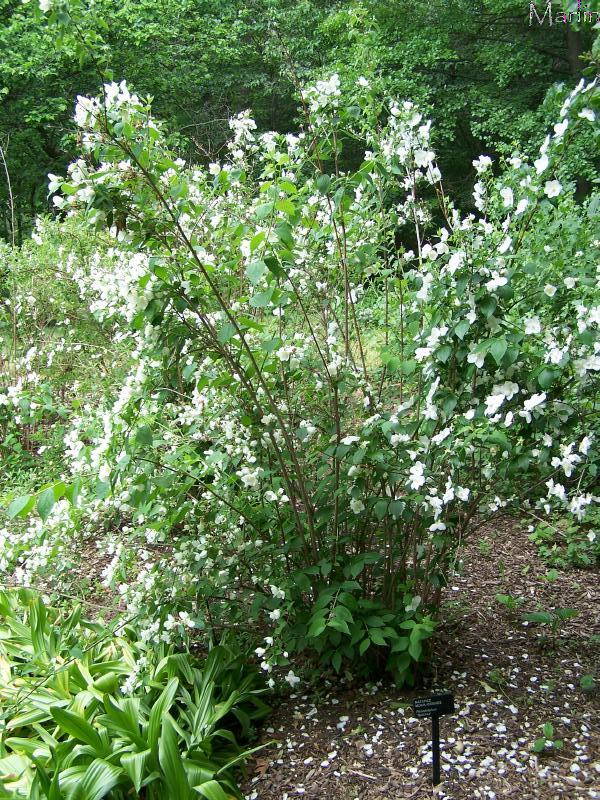
Mock Orange is grown for its fragrant, white flowers, produced in late spring after the leaves. Flowering is best in full sun, but the plant tolerates shade. A shrub or bush is a horticultural rather than strictly botanical category of woody plant, distinguished from a tree by its multiple stems and lower height, usually less than 5-6 m (15-20 ft) tall. A large number of plants can be either shrubs or trees, depending on the growing conditions they experience.

Mock Orange Shrub, Cultivar 'Natchez' [2]
Healthy, attractive trees add interest, pleasure, and value to landscapes. Some factors to keep in mind as you select a tree relate to your projected planting site and some factors relate to you. Healthy plants, growing under conditions that suit them, are marvelously engineered to deal with minor incidence of heat, cold, drought, storm damage, pests, and disease. Sometimes we unknowingly stress them, reducing their ability to stay healthy.

Trees provide cover: Birds and small animals need concealed places for nesting and hiding from predators. The presence of wildlife can make your backyard or woodlot a special place for your family and children. As urban sprawl displaces many birds and animals from their natural habitat, it becomes even more important for home and landowners to provide green space and mini-sanctuaries for birds and other wildlife.

Trees provide food: Having a wide variety of trees that provide seeds, nuts and fruit for wildlife to eat is one way to increase your success in attracting wildlife. although artificial bird feeders can supplement naturally occurring foods, they can attract unwanted pests such as pigeons, Canada geese, squirrels, and even rats. Trees also provide food by attracting insects and providing cover for their activities; mating, egg-laying. Insects form a huge portion of the warm-weather food supply for many species of songbirds.

And, most important in this age of man-made global warming, trees and shrubs sequester large amounts of carbon dioxide. [3]

Nova Zembla Rhododendron
Peter Tigerstedt Rhododendron
Tapestry Rhododendron
Weston's Tapestry Rhododendron
References
  1. ""Kemper Center for Home Gardening, Mock Orange - Philadelphus x virginalis
  2. Mock Orange Shrub, Cultivar 'Natchez', Morton Arboretum specimen, Photos: Bruce Marlin
  3. Morton Arboretum, Crabapples for the Home Landscape
  4. Oklahoma Biological Survey, Malus ioensis (Wood.) Britt.
    Excerpts from Morton Arboretum articles used with permission.
Common North American Flowers
A flower is the reproductive structure found in flowering plants (plants of the division Magnoliophyta, also called angiosperms). The flower contains the plant's reproductive organs, and its function is to produce seeds. After fertilization, portions of the flower develop into a fruit containing the seeds.  Tree Encyclopedia | Trees Index | Rhododendrons
Custom Search
Comments? Suggestions? We'd love to hear from you!
© Red Planet Inc.