 |
Whitebark Magnolia Magnolia hypoleuca A hardy, deciduous tree up to 60 feet tall in the wild. Native to Japan. USDA zones 5-9 |
|
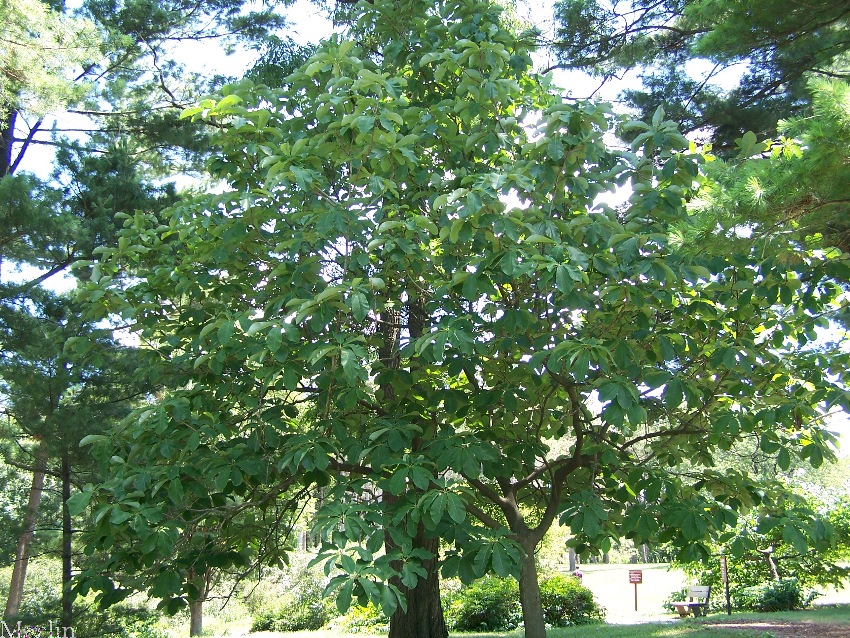
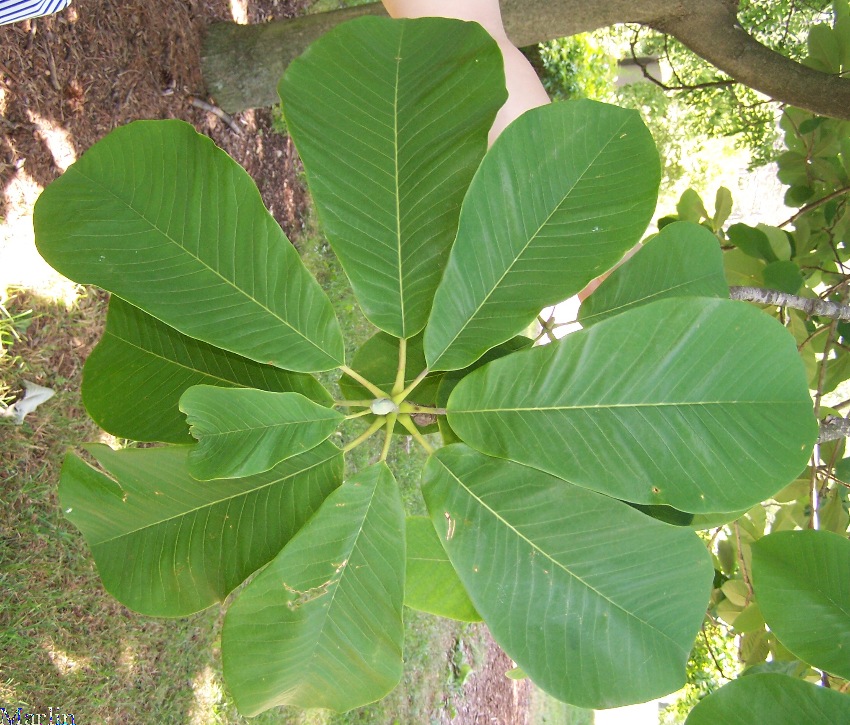
| Whitebark Magnolia is a deciduous tree growing to 20 meters in the wild. Leaves obovate, 20-45 cm long, 10-25 cm wide, light green and glabrous above, glaucous and slightly hairy beneath. Flowers cup-shaped, about 20 cm across, creamy-white, fragant, in May-June. Filaments and styles are crimson.
Damaging Agents- Young magnolia are susceptible to fire injury. Winter droughts can cause extensive dieback. A number of fungi, including species of Cladosporium, Colletotrichum, Glomerella, Phyllosticta, and Septoria cause leaf spots but these seldom result in any significant damage. A leaf spot caused by Mycosphaerella milleri can be a problem on nursery seedlings. A number of Fomes and Polyporus fungi can cause heartrot in southern magnolia. Heavy infestations of magnolia scale (Neolecanium cornuparyum) can kill branches or entire trees. Oleander pit scale (Asterolecanium pustulans) and tuliptree scale (Toumeyella liriodendri) attack and injure southern magnolia, but rarely cause mortality. A variety of other pests including tuliptree aphid (Illinoia liriodendri) striped mealybug (Ferrisia virgata), leaf weevil (0dontopus calceatus), magnolia leafminer (Phyllocnistis magnoliella), and spider mite feed on this species. |
Magnolia bark is used in traditional Chinese medicine, where it is known as houpu. The highly aromatic bark contains magnolol and honokiol, two polyphenolic compounds that have demonstrated anti-anxiety and anti-angiogenic properties. Magnolia bark also has been shown to reduce allergic and asthmatic reactions. The bark is stripped from the stems, branches, and roots. Cultivated supplies today produce most of the bark for commercial and domestic use.
 The large, white, fragrant flowers are perfect and appear from April to June. The fleshy conelike fruit matures from September through the late fall. When the fruit matures and opens, seeds 6 to 13 mm (0.25 to 0.5 in) long emerge and hang temporarily suspended by slender, silken threads before dropping. |
| References: 1. USDA United States Forest Service 2. NATIONAL AUDUBON SOCIETY, National Audubon Society Field Guide to North American Trees |
| Tree Encyclopedia / North American Insects & Spiders is dedicated to providing scientific and educational resources for our users through use of large images and macro photographs of flora and fauna. |
|
Magnoliaceae – Magnolia Family The earliest flowering plants date back about 130 million years. According to Cronquist Evolution and Classification of Flowering Plants, the most primitive of all living angiosperms belong to the subclass Magnoliidae. This subclass contains several primitive plant families, including the water-lilies (Nymphaeaceae), and buttercups (Ranunculaceae). Tree Encyclopedia | Tree Index | Magnolia Main |