Japanese Hill Cherry – Prunus serrulata
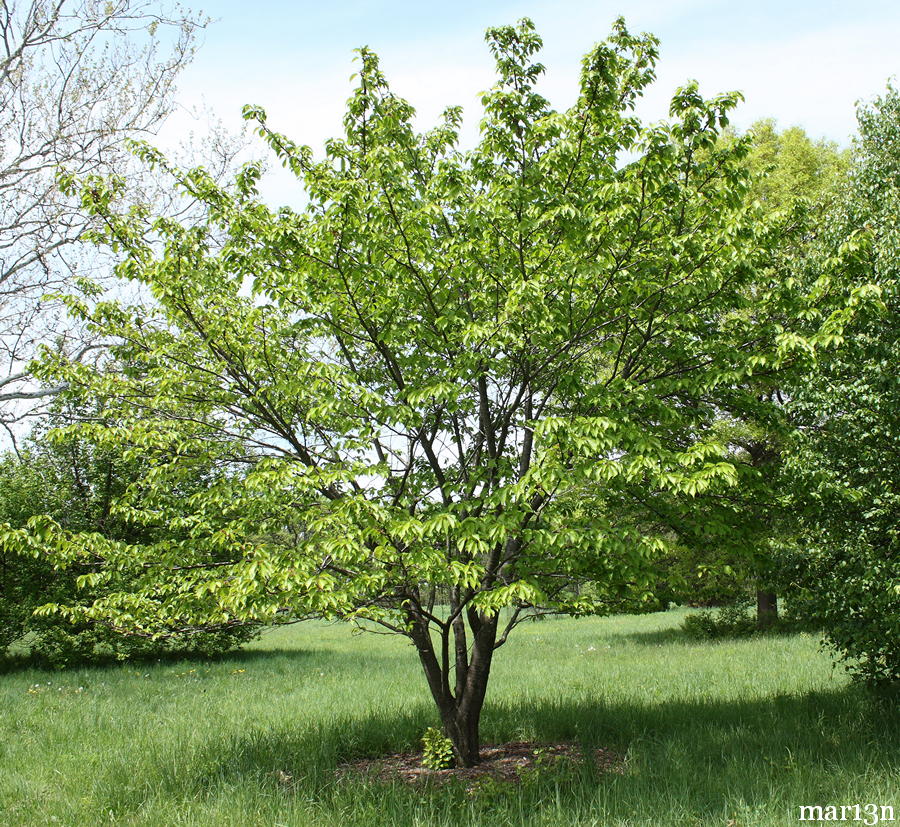 Japanese Mountain Cherry is 19 years old [2]
Widely grown as an ornamental, Japanese hill cherry is commonly called mountain or oriental cherry.
The National Cherry Blossom Festival, held annually at Washington, D.C. is a commemoration of the 1912 gift from the city of Tokyo of over 3,000 Prunus serrulata for planting around the Tidal Basin at the National Mall. The people of Japan have donated many more thousands of cherry trees in several different cultivars over the years, including Yoshino, Kwanza, Akebono, and Sargent cherry [2].
Hill cherry is hardy in USDA zones 5-6 and, like almost all fruit trees, grows best in full sun and well-drained but moist soil. It grows to 25 feet at maturity, but not particularly quickly; White flowers open in May, but don’t result in much actual fruit production [3]. Not known for longevity.
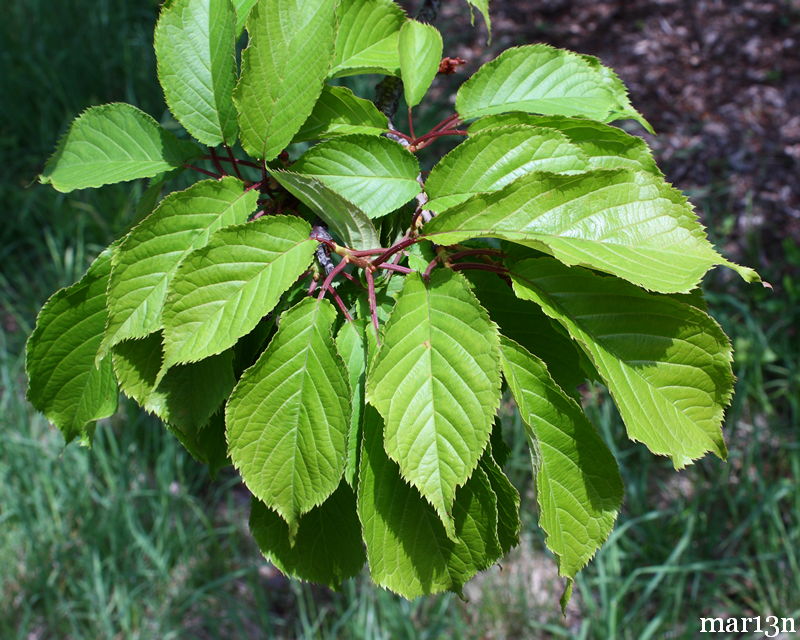
Cherries are an important source of food for many non-game birds, squirrel, deer, turkey, and other wildlife. I can tell you from a childhood spent chasing songbirds from our cherry trees, robins, grackles, starlings, and jays love cherries; but we loved them more; my mom’s cherry pie was even better than her apple or rhubarb. I would kill for a piece of that pie with vanilla ice cream! A better dessert has never been invented, in my humble opinion, “mom & apple pie” notwithstanding.
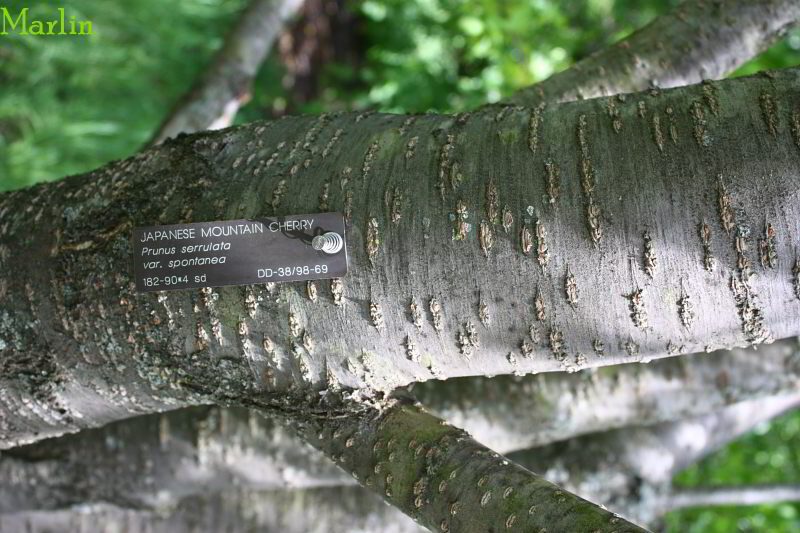 Bark is smooth with prominent lenticels [1]
The most important defoliating insects attacking cherry trees include the eastern tent caterpillars (below) and the cherry scallop shell moth (Hydria prunivorata). Infestations of these insects are sporadically heavy, with some apparent growth loss and occasional mortality if heavy defoliations occur several years in a row [3].
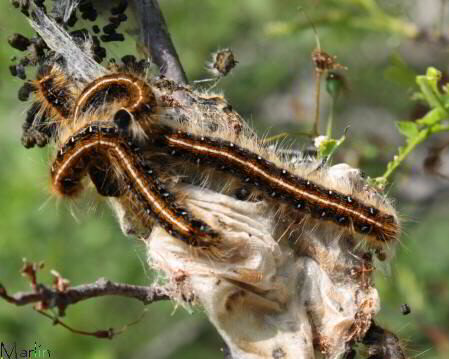 Cherry is often infested with tent caterpillars in springtime.
These pests can strip a tree of foliage in a matter of days.
References
- Japanese Mountain Cherry, Morton Arboretum acc. 182-90-4, photos ©Bruce Marlin
- Wikipedia, “National Cherry Blossom Festival“
- USDA, ARS, – (GRIN) Prunus buergeriana
Family Rosaceae – Rose Family; Fruit Trees
Trees Index | Pine Family | Beech, Oak | Nut Trees | Birch Family | Magnolias
Tree Encyclopedia / North American Insects & Spiders is dedicated to providing family-friendly educational
resources for our friends around the world through large images and macro photographs of flora and fauna.
Online since 2002