Jack Pine – Pinus banksiana
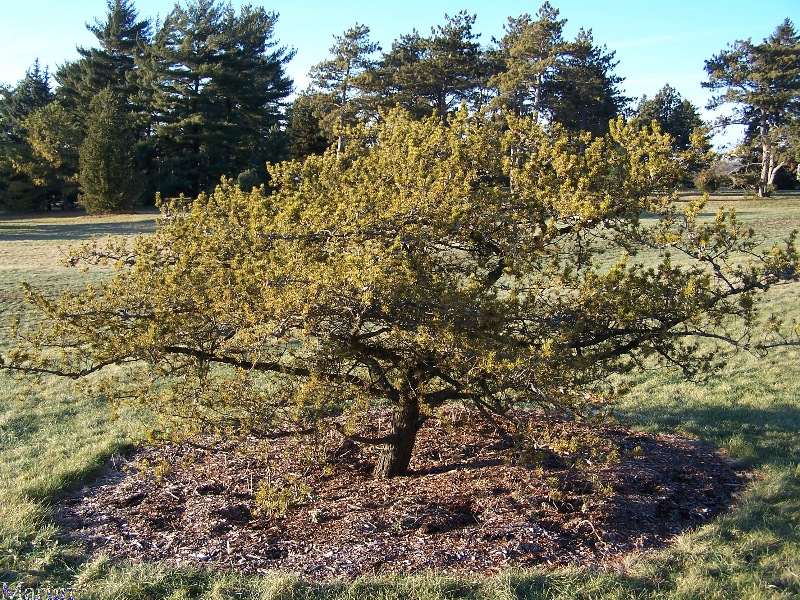
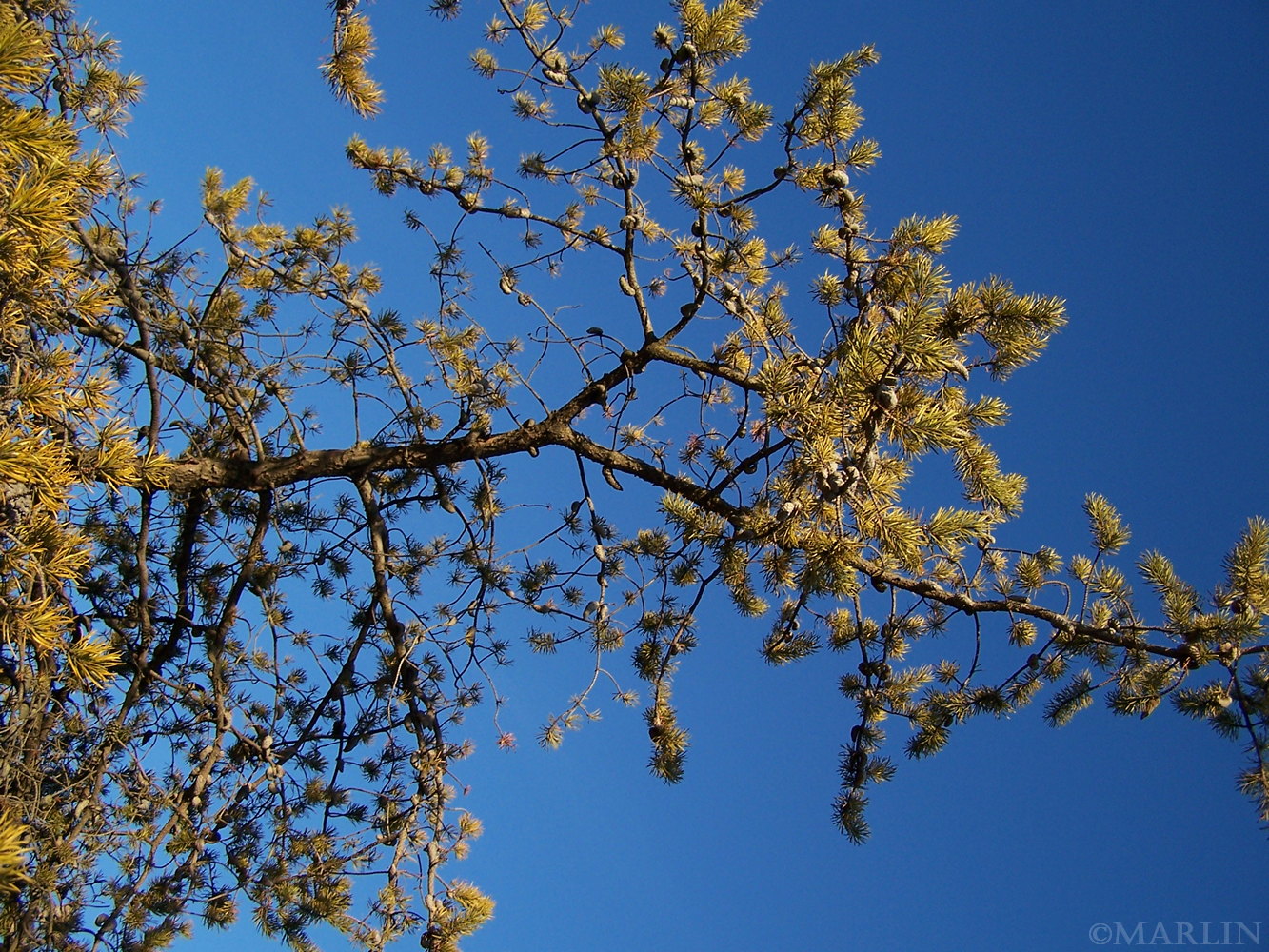 Jack Pine has an open foliage habit
Jack pine, also called scrub pine, Banksian pine, or Hudson Bay pine, is a small-to medium-sized coniferous tree native to the northern forests of the United States and Canada, where it is an important source of pulpwood, lumber, and round timber.
It grows farther north than any other American pine and is the most widely distributed pine species in Canada. It is a pioneer species in succession and invades areas where mineral soil has been exposed by major disturbances such as fires. It usually grows in even-aged pure or mixed stands on less fertile and drier soils than those required by other native species in its range.
The major portion of the jack pine range is in Canada where its northern boundary extends eastward from the Mackenzie River in the Northwest Territories across the country to Cape Breton Island, NS. The range then extends southwest through Maine, New Hampshire, northern New York, central Quebec and northern Ontario, Michigan, extreme northwest Indiana, northeast Illinois, then northwest through Wisconsin, Minnesota, Manitoba, Saskatchewan, central Alberta, to extreme northeast British Columbia.
The jack pine tip beetle (Conophthorus banksianae) causes extensive shoot tip mortality, preferring sapling-size trees. The lodgepole terminal weevil (Pissodes terminalis) attacks and destroys the new terminal bud of jack pine in Saskatchewan. Several sawflies attack jack pine. Trees are often killed because the sawflies feed on both old and new needles. The pine tussock moth (Parorgyia lagiata) commonly defoliates large areas of sapling- and pole-size jack pine. The jack pine budworm is the most important defoliator of pine in the northeastern United States. (1)

In the Lake States and Canada, jack pine grows most commonly on level to gently rolling sand plains, usually of glacial outwash, fluvial, or lacustrine origin. It occurs less commonly on eskers, sand dunes, rock outcrops, and bald rock ridges. In the Lake States jack pine is found chiefly at elevations between 300 and 460 m (1,000 and 1,500 ft), with a maximum of about 610 m (2,000 ft) above sea level. In the East, jack pine grows on a variety of sandy sites from near sea level up to about 610 m (2,000 ft), with an outlier in New Hampshire at 2,500 ft.
Jack pine is one of the most shade intolerant trees in its native range. It is the least tolerant of its associated pine species and is slightly more tolerant than aspen, birch, and tamarack.
References:
1. U.S. National Forest Service Silvics Manual Conifers Pinus banksiana Lamb. by T. D. Rudolph
2. USDA, ARS, National Genetic Resources Program. Germplasm Resources Information Network – (GRIN)
Trees Index | Pine Family | Beech, Oak | Nut Trees | Birch Family | Magnolias | Rose Family
Tree Encyclopedia / North American Insects & Spiders is dedicated to providing free, family-friendly
educational resources for our users through large images and macro photographs of flora and fauna.
Online since 2002