Hybrid Elm – Ulmus carpinifolia x pumila
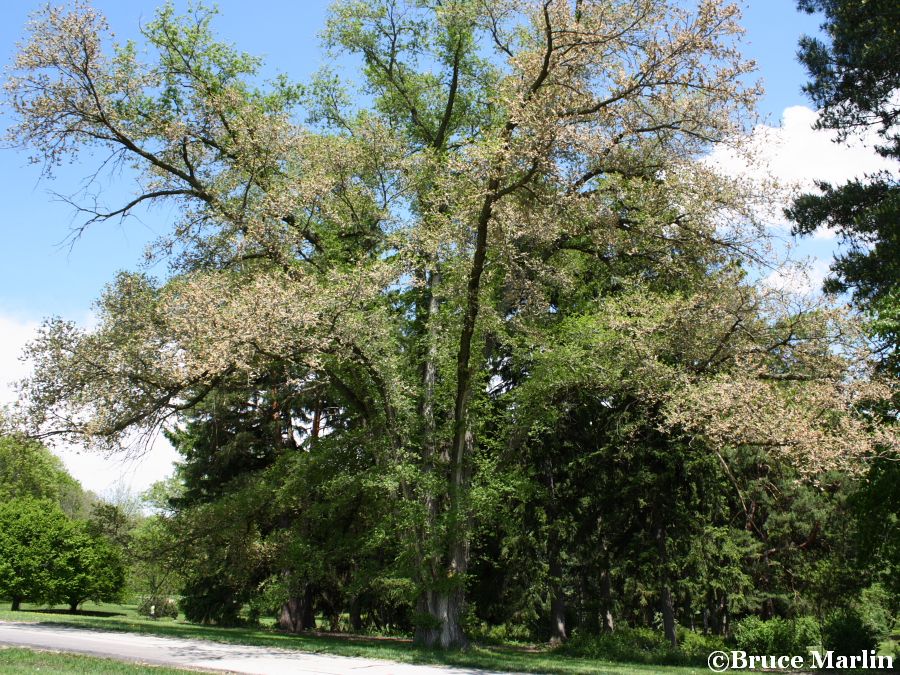
Hybrid Elm, Morton Arboretum acc. 1946-24*1
Family Ulmaceae – Zelkova, Hackberry, Elm
Once a very popular and long-lived (300+ years) shade and street tree, American Elm suffered a dramatic decline in the 1950s with the infestation of Dutch elm disease, a fungus spread by a bark beetle. The wood of American Elm is very hard and was a valuable timber tree used for lumber, furniture and veneer. The Indians once made canoes out of American Elm trunks, and early settlers would steam the wood so it could be bent to make barrels and wheel hoops.
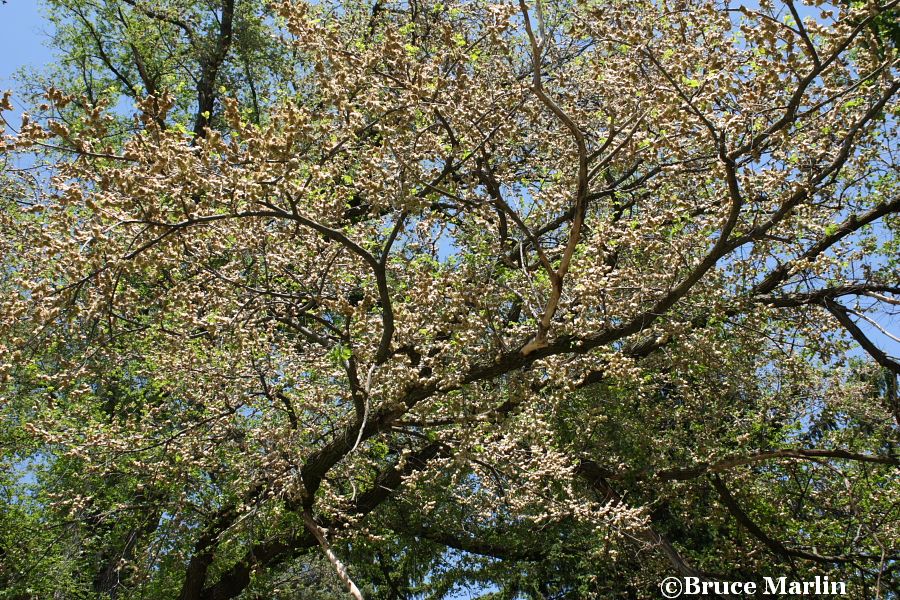 Masses of huge samaras make a spectacular spring show. I love this tree!
Data for David Elm, roughly applicable to this hybrid:
Flower: Monoecious; small, in drooping clusters of 3 to 5, appear in early spring before leaf buds open.
Fruit: Rounded, flat, pappery, wafer-like samaras, 3/8 to 1/2 inch across, deeply notched at apex, hairless except for margin; ripen in spring.
Twig: Slender, glabrous, slightly zigzag, reddish brown; buds ovate, over 1/4 inch long, reddish brown with darker edged scales, often placed a little to one side of the twig.
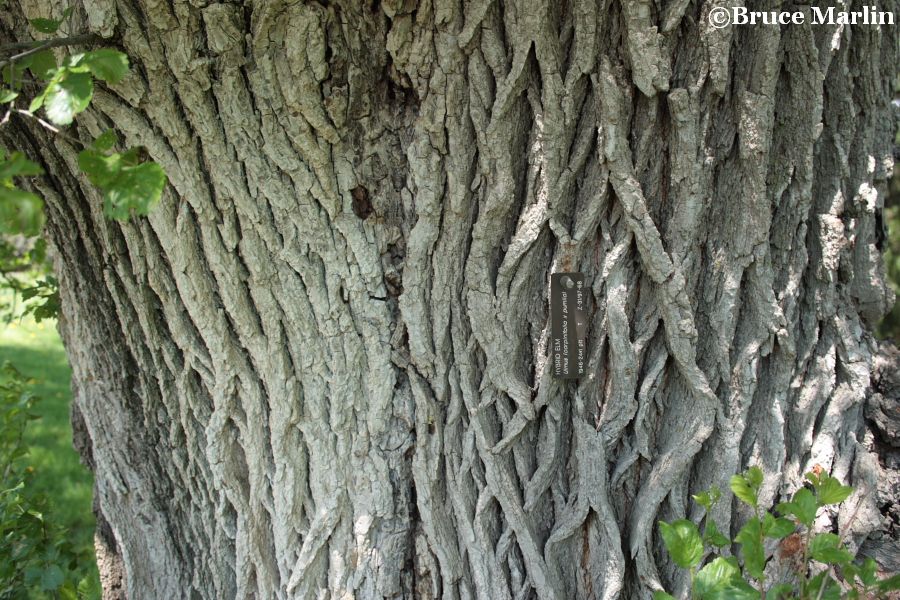
This 64-year-old elm has deeply fissured bark
The Morton Arboretum of Lisle, Illinois, has one of the largest collections of elm species in the world. The specimens are being assessed for resistance to DED and Elm yellows.
The 12 species being studied are: the Bergmann (Ulmus bergmanniana), Taihang Mountain (U. taihangshanensis), Tibetan (U. microcarpa), Anhui (U. gaussenii), Hebei (U. lamellosa), Harbin (U. harbinensis), corkbark (U. propinqua var. suberosa), plum-leaved (U. prunifolia), Chenmou (Ulmus chenmoui), Gansu (Ulmus glaucescens var. lasiocarpa), chestnut-leaved (U. castaneifolia) and Father David (U. davidiana var. mandshurica) elms.
These 12 Chinese trees are virtually unknown in the U.S., but are under close study at the arboretum. Dendrologist Emeritus and former research director Dr. George Ware, and Arboretum Assistant Director of Collections Kunso Kim are responsible for their observation and data collection. Their efforts may help ameliorate the effects of numerous maladies affecting trees around the world, such as Emerald Ash Borer, Oak wilt, Asian Longhorned Beetle, Pine Sawyer Beetle, et al.
“These and other problems underscore the urgent need for the Arboretum and others to continue seeking new species for urban use,” Kim says. The average lifespan of an urban tree is fewer than 10 years, according to Ware. But planting hardier trees increases the likelihood of a longer life span and a greener world – a goal that has never been more important than now, with climate change upon us. [2]
References
- Hybrid Elm, Morton Arboretum acc. 1946-24*1, photographed by Bruce Marlin
- The Morton Arboretum, Arboretum Records Honor, Milestone; Looks to Future
Tree Encyclopedia / North American Insects & Spiders is dedicated to providing family-friendly
educational resources for our users through use of large images and macro photographs of flora and fauna.