Large-Fruited Elm – Ulmus macrocarpa
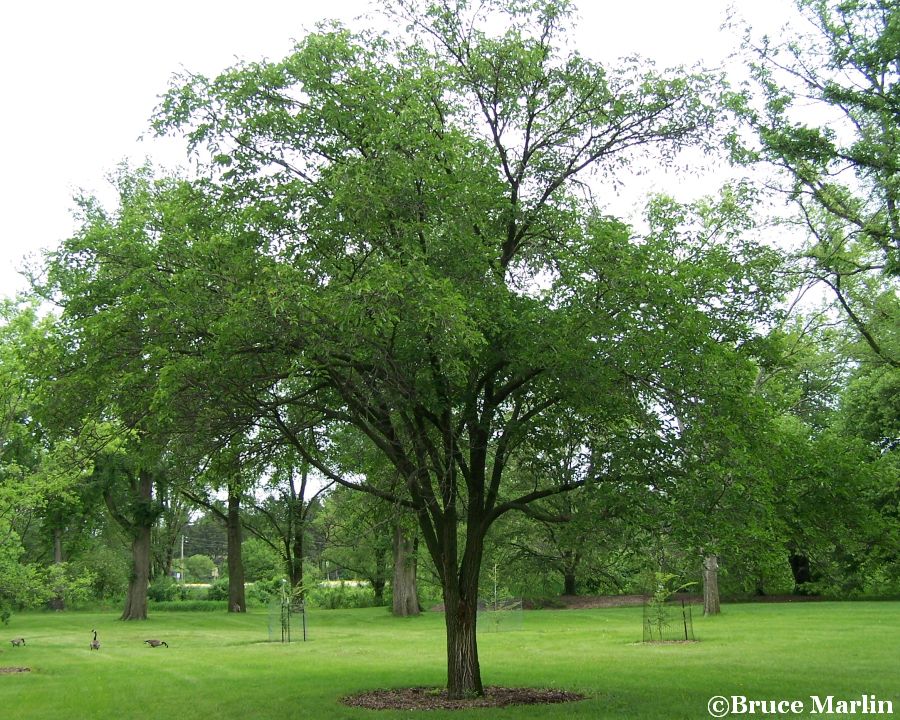
Family Ulmaceae – Zelkova, Hackberry, Elm
The large-fruited elm is a deciduous tree or large shrub widespread in the Far East. It is notable for its tolerance of drought and extreme cold and is the predominant vegetation on the dunes of the Korqin sandy lands in the Jilin province of north-eastern China, making a small tree at the base of the dunes, and a shrub at the top.
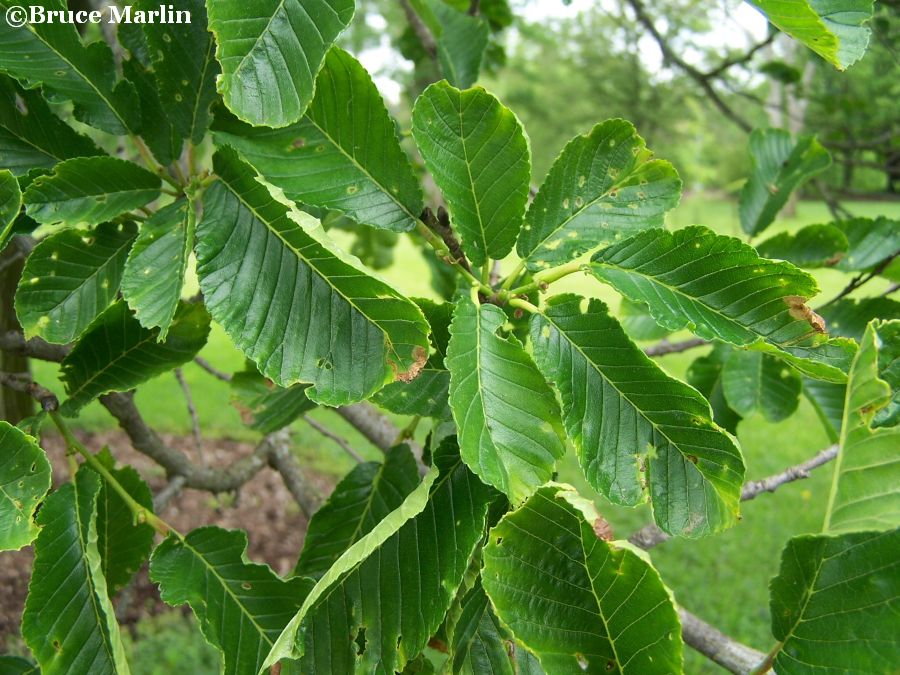
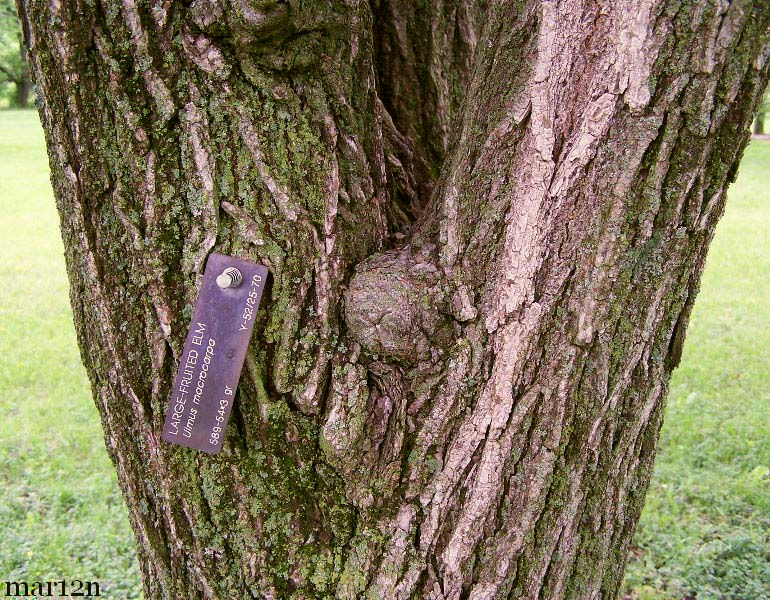
The common name is from Latin macrocarpa, in reference to its large, orbicular, wafer-like samarae, up to 50mm in diameter. The tree can reach a height of 17 m, with a slender trunk. The bark is longitudinally fissured, and dark grey in colour. The twigs often develop corky wings that may persist for several years. The leaves are usually obovate, less than 9 cm long, characterized by their thick, leathery texture. The wind-pollinated apetalous flowers appear March till May, and seeds from April to June.
Possessed of a moderate resistance to Dutch elm disease and a low susceptibility to Elm Yellows, it has also proven very resistant to the elm leaf beetle, Xanthogaleruca luteola, in trials in Oklahoma.
Family Ulmaceae – Zelkova, Hackberry, Elm
Trees Index | Pine Family | Beech, Oak | Nut Trees | Birch Family | Magnolias
Tree Encyclopedia / North American Insects & Spiders is dedicated to providing family-friendly educational
resources for our friends around the world through large images and macro photographs of flora and fauna.
Online since 2002