Swedish Whitebeam – Sorbus intermedia
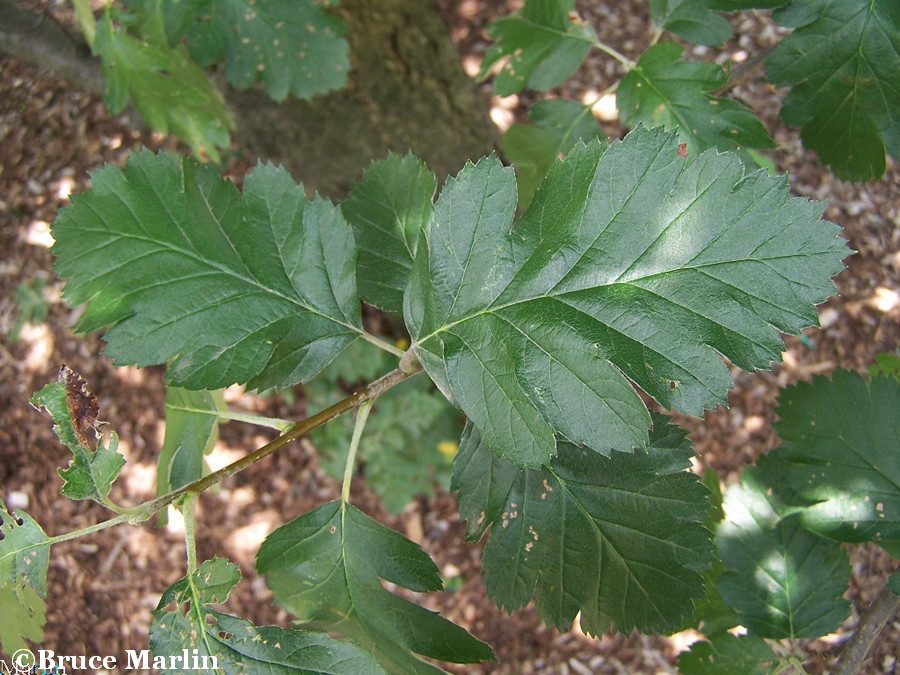
Swedish whitebeam leaves resemble common alder, but otherwise the trees are unrelated and dissimilar. S. intermedia has creamy white small flowers borne in tight clusters in April, giving rise to small red fruit (pomes). It may grow to be 50 feet in height, but is normally small, of limited familiarity and infrequently planted as an ornamental.
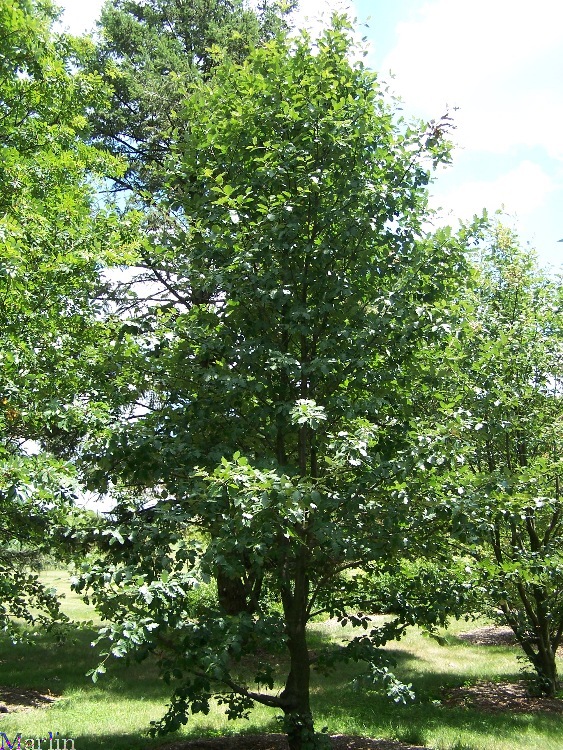 Swedish Whitebeam is 26 years old
The Swedish whitebeam is a member of the intermedia aggregate, a group within the genus Sorbus in which the leaflets have distinct lobes. The lowest veins of the leaf end in a pronounced lobe which itself can have smaller teeth on it and the lobe cuts into the leaf up to half way along the vein to the mid rib. S. intermedia has about 8 veins (7 to 9) the lowest six of which point to these lobes.
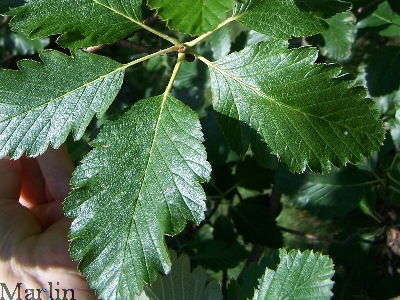 Mougeot Whitebeam Leaflet, S. Mougeotii |
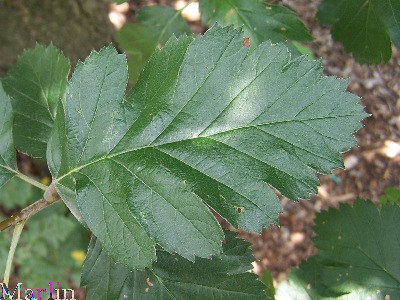 Swedish Whitebeam Leaflet, S. intermedia |
References
1. Cornell University Urban Horticulture Institute
2. Swedish Whitebeam, Morton Arboretum accession 187-83-1, photos by Bruce Marlin
3. USDA, ARS, National Genetic Resources Program.Germplasm Resources Information Network – (GRIN)
Tree Encyclopedia | Tree Index
North American Insects & Spiders
Online since 2002