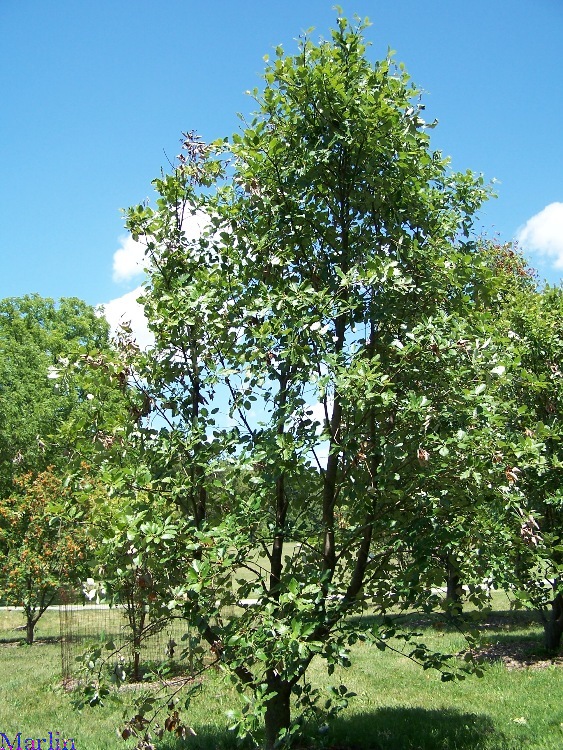
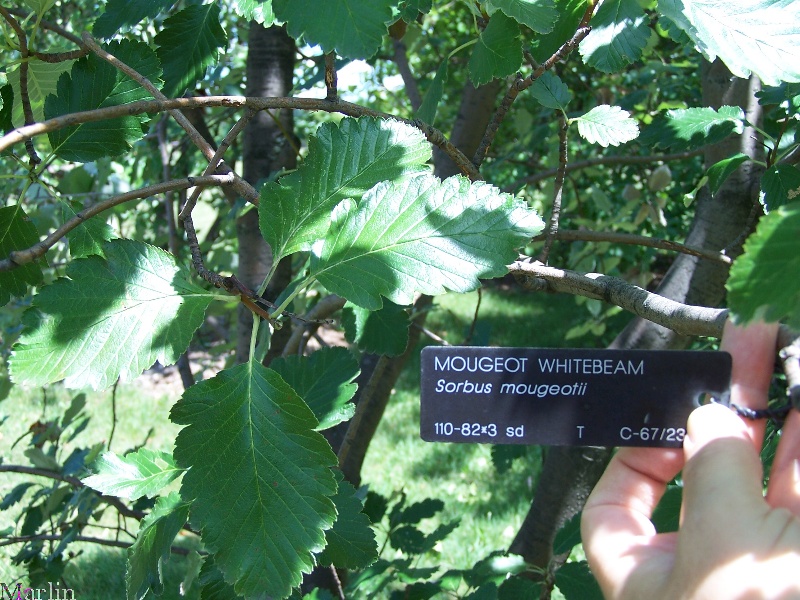
Mougeot Whitebeam - Sorbus mougeotii Soy.-Will. & Godr.
Rosaceae – Rose family
The
USDA Germplasm Resources Information Network (GRIN) reports this species a synonym of Sorbus intermedia (Swedish Whitebeam), and information is difficult to find on the Mougeot. However, this specimen was vetted by a certified arborist at The Morton Arboretum, which also has S. intermedia nearby. -Tree Encyclopedia Table of Contents-
 
Morton Arboretum accession 110-82-3


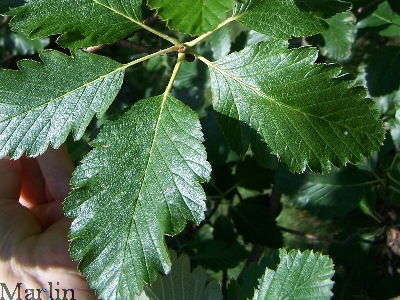
Mougeot Whitebeam Leaflet, S. Mougeotii

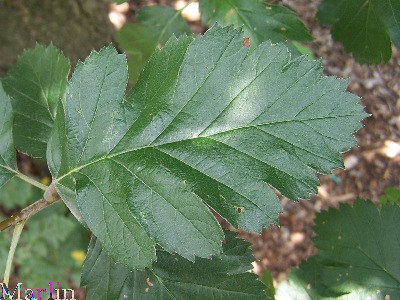
Swedish Whitebeam Leaflet, S. intermedia

Trees are essential elements of livable communities and a healthful environment. They are not only beautiful, they carry out many beneficial environmental functions. Trees absorb carbon dioxide, the major greenhouse gas (up to 50 pounds per tree each year), and release oxygen. They shelter and provide nesting habitats for wildlife, retain moisture in soils, hold topsoil in place, and provide shade and cooling.

Trees also provide fruits, nuts, oils, and syrups; pulp for paper, cloth, and rope; and wood for innumerable products and heat. Trees provide both direct and indirect economic benefits. Air-conditioning costs are less in a tree-shaded home, and heating costs are reduced when a home has properly selected and placed windbreaks. Beyond energy savings, landscaping with mature trees increases the value of property.

Indirect economic benefits extend beyond the individual to the community or region. Customers pay lower electricity bills when power companies use less water in their cooling towers and fewer measures to control air pollution. Communities also save money if fewer facilities must be built to control storm water.

Trees make the world more beautiful. They add color, structure, height, and grace to our neighborhoods, parkways, and streetscapes. Trees also neutralize the harshness and stress of urban life. They enrich our lives. Our forests, woodlands, parks, and preserves help us feel more relaxed and serene. A day or even an hour in the woods can help us feel rejuvenated. Trees are magnets for wildlife, which also add beauty, value, and interest to our world.

City and suburban trees often serve several architectural functions. They provide privacy, frame views, and screen out objectionable sights. They reduce glare and reflection, direct pedestrian traffic, and provide background for and soften, complement, or enhance architecture or topography.
--From The Morton Arboretum "Go Green"


Kingdom Plantae – Plants
Subkingdom Tracheobionta – Vascular plants
Superdivision Spermatophyta – Seed plants
Division Magnoliophyta – Flowering plants
Class Magnoliopsida – Dicotyledons
Subclass Rosidae
Order Rosales
Family Rosaceae – Rose family
Genus Sorbus L.
Species Sorbus mougeotii – mougeot whitebeam


Trees provide cover: Birds and small animals need concealed places for nesting and hiding from predators. The presence of wildlife can make your backyard or woodlot a special place for your family and children. As urban sprawl displaces many birds and animals from their natural habitat, it becomes even more important for home and landowners to provide green space and mini-sanctuaries for birds and other wildlife.

Trees provide food: Having a wide variety of trees that provide seeds, nuts and fruit for wildlife to eat is one way to increase your success in attracting wildlife. although artificial bird feeders can supplement naturally occurring foods, they can attract unwanted pests such as pigeons, Canada geese, squirrels, and even rats. Trees also provide food by attracting insects and providing cover for their activities; mating, egg-laying. Insects form a huge portion of the warm-weather food supply for many species of songbirds. Trees that provide fall and winter foods are especially important in helping wildlife survive the winter, and to provide forage and cover for early-arriving spring migrants that may get caught in late-season bad weather. Whatever the food sources you provide may be, birds and wildlife also need dependable source of water; create a small pool or birdbath in a protected place.


Mougeot Whitebeam - Sorbus mougeotii

References:
1. NCGR Corvallis
2. USDA Germplasm Resources Information Network (GRIN)
3. USDA National Agricultural Library
4. Missouri Botanical Garden - w3TROPICOS
5. University of Michigan, Native American Ethnobotany
6. USDA Natural Resources Conservation Services Threatened and Endangered Species (Illinois)


MORE TrEES


       web       www.cirrusimage.com