Mary Potter Crabapple – Malus ‘Mary Potter’
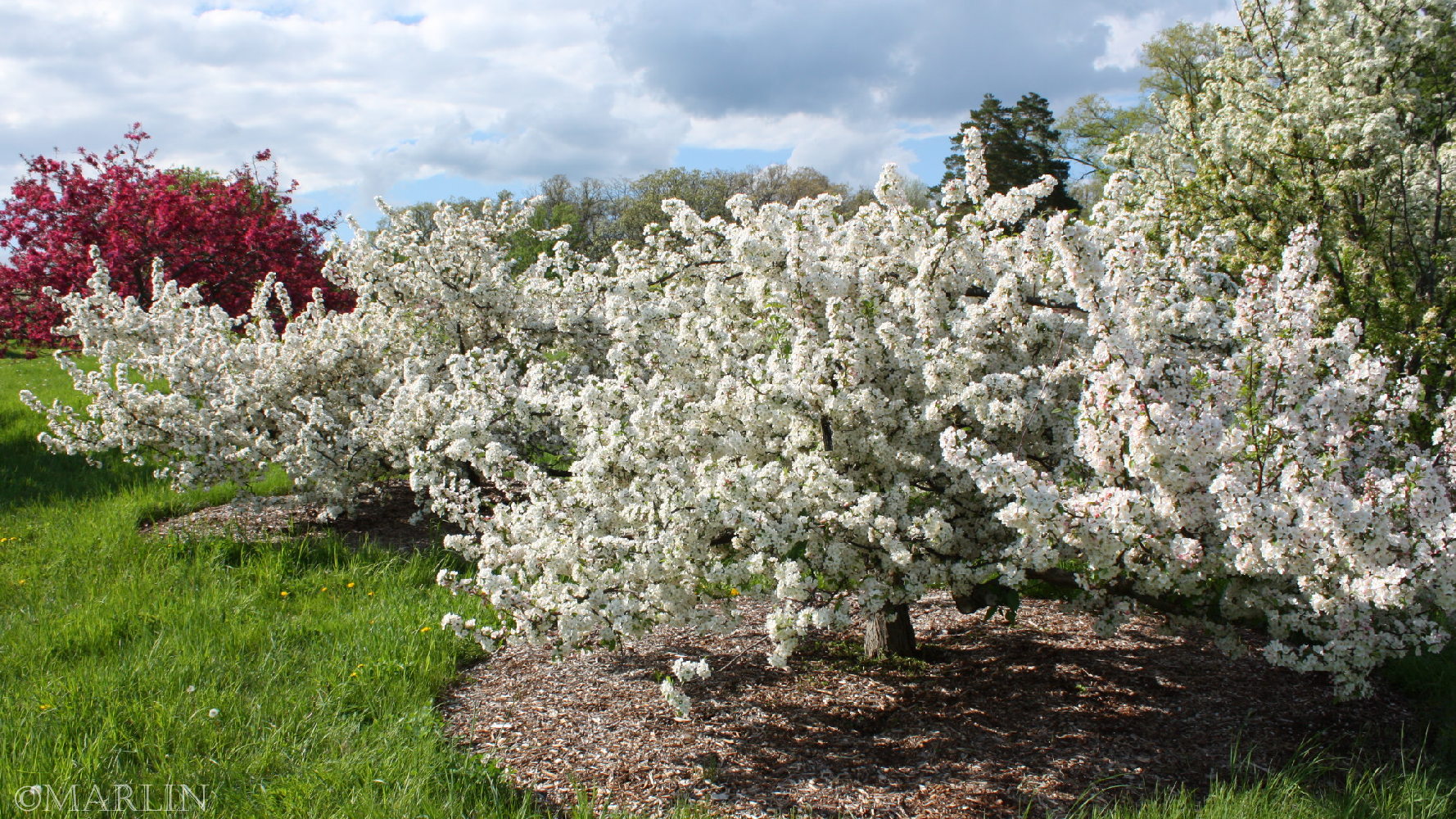
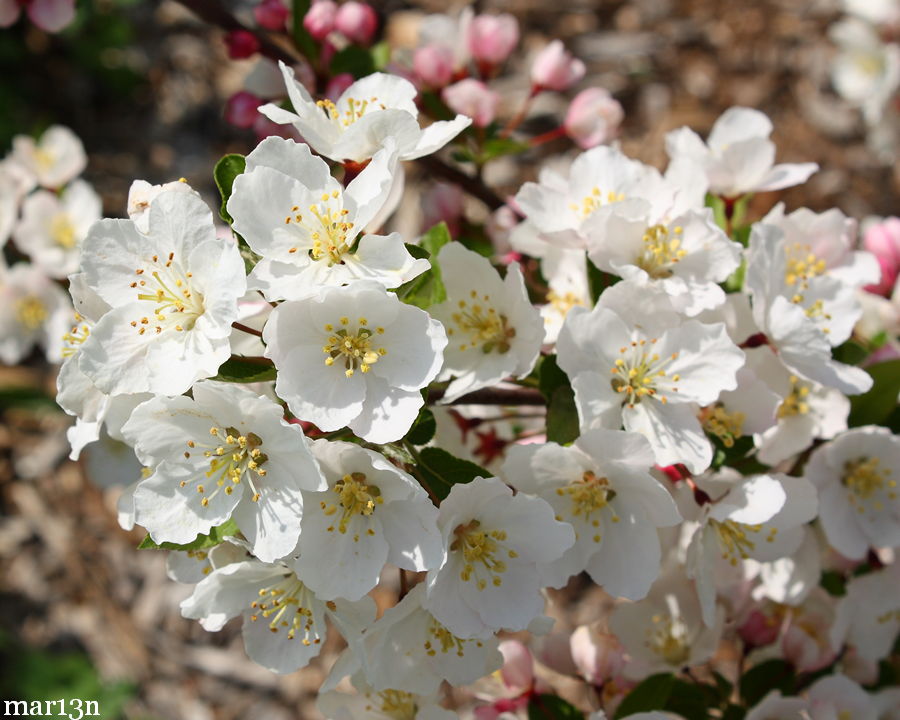
Red buds open to blindingly white flowers. USDA zones 4 through 7
Malus ‘Mary Potter’, a cross between M. sargentii ‘Rosea’ and M. atrosanguinea, was introduced by Dr. Sax in 1947 in honor of Mary Sargent Potter, daughter of the Arboretum’s first director, Charles S. Sargent. In May its bright pink buds open to display clear white flowers. In full bloom, trees look completely snow-covered. But perhaps the tree’s best feature is its form, which is unusually low-branching and spreading.
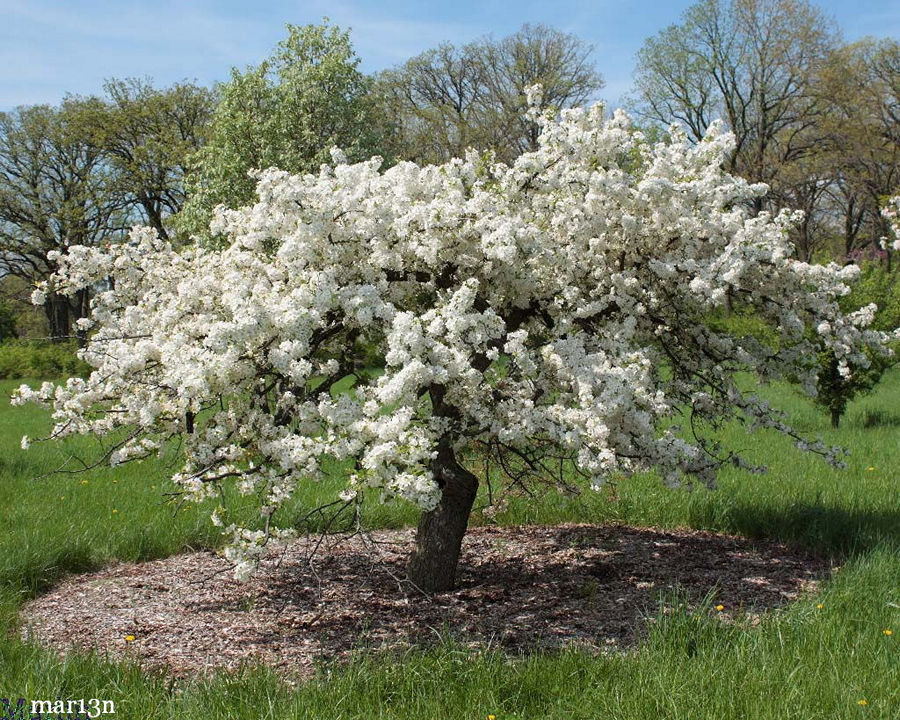
Introduced by The Arnold Arboretum of Harvard University, Mary Potter crabapple can be a ground-hugging, spreading form as witnessed by the three specimens pictured above. In my experience with crabs at the Morton, Mary Potter is one of the most spectacular bloomers, with profuse red-pink buds exploding to blinding-white blossoms in just a matter of hours it seems.
References
- USDA National Forest Service Fact Sheet 393, Malus x ‘Mary Potter’
- Mary Potter Crabapples, Morton Arboretum accs. 42-84*1,2 & 3, 520-62*2 photos: Bruce Marlin
- Morton Arboretum Crabapples For The Home Landscape
- The Arnold Arboretum of Harvard University, Malus at the Arnold Arboretum: An Ongoing Legacy
Family Rosaceae – Rose Family; Fruit Trees
Trees Index | Pine Family | Beech, Oak | Nut Trees | Birch Family | Magnolias
Tree Encyclopedia / North American Insects & Spiders is dedicated to providing family-friendly educational
resources for our friends around the world through large images and macro photographs of flora and fauna.
Online since 2002