Korean Pine – Pinus koraiensis
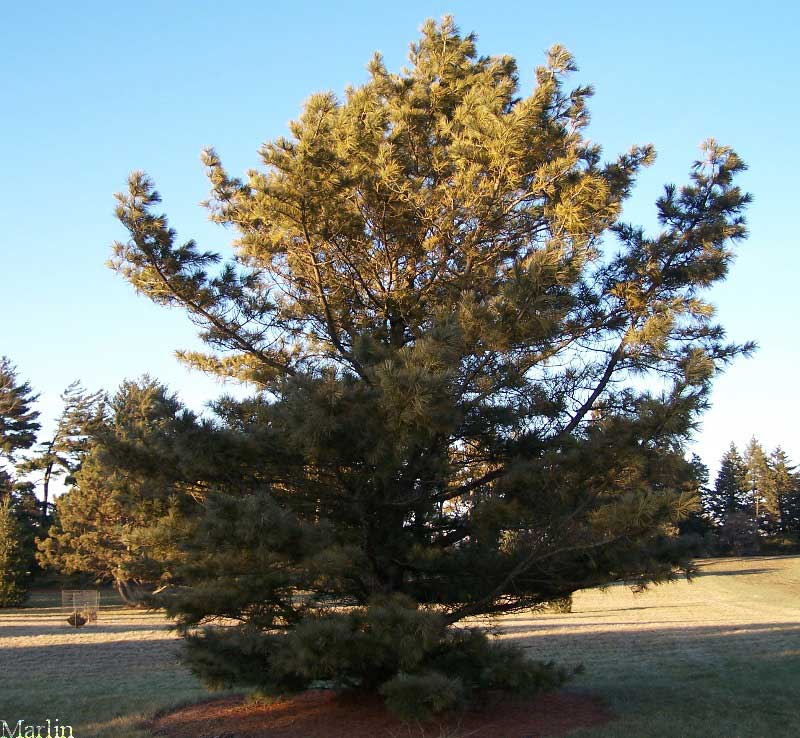
Family Pinaceae: Pine, Cedar, Spruce, Fir
Korean pine is native to the far-eastern Russian Federation, China, Japan and Korea. In the north of its range, it grows at moderate altitudes between 600-900 m. Cones are large and resinous, containing edible nuts commonly called Chinese pine nuts.
It is a member of the white pine group, Pinus subgenus Strobus, and like all members of that group, the leaves are in fascicles (bundles) of five, with a deciduous sheath. They are 7-13 cm long. Korean Pine cones are 8-17 cm long, green or purple before maturity, ripening brown about 18 months after pollination. The 14-18 mm long seeds have only a vestigial wing and are dispersed by Spotted Nutcrackers.
Korean Pine differs from the closely related Siberian Pine in having larger cones with reflexed scale tips, and longer needles. The seeds are extensively harvested and sold as pine nuts, particularly in northeastern China; it is the most widely traded pine nut in international commerce. Korean Pine is a popular ornamental tree in parks and large gardens where the climate is cold, such as eastern Canada and the northeastern states of the USA, giving steady though not fast growth on a wide range of sites. Hardy down to -50°C. –From Wikipedia
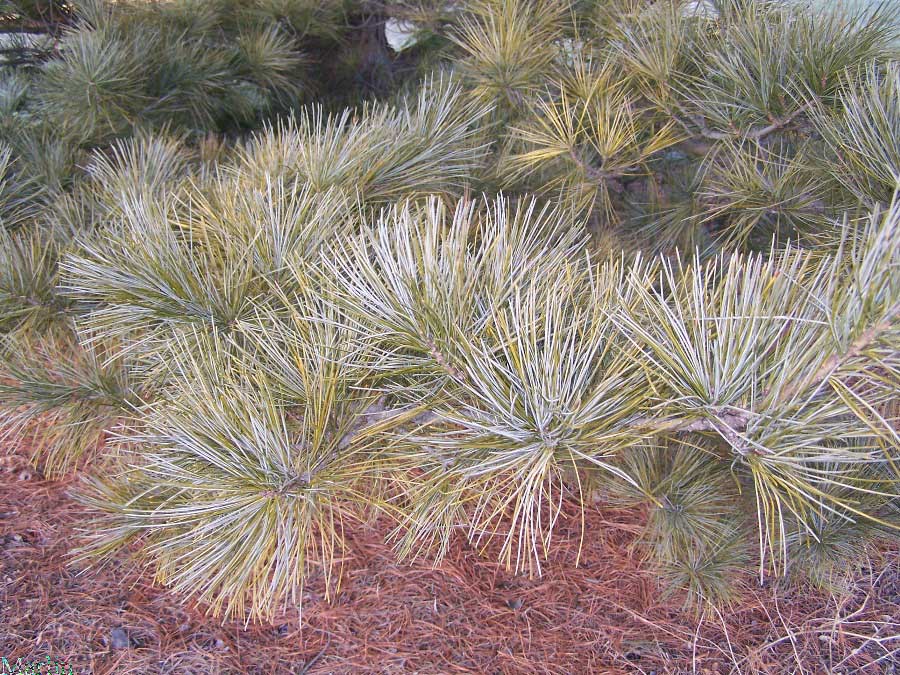
Family Pinaceae: Pine, Cedar, Spruce, and Fir
Trees Index | Pine Family | Beech, Oak | Nut Trees | Birch Family | Magnolias
Tree Encyclopedia / North American Insects & Spiders is dedicated to providing family-friendly educational
resources for our friends around the world through large images and macro photographs of flora and fauna.
Online since 2002