Kentucky Coffeetree – Gymnocladus dioicus
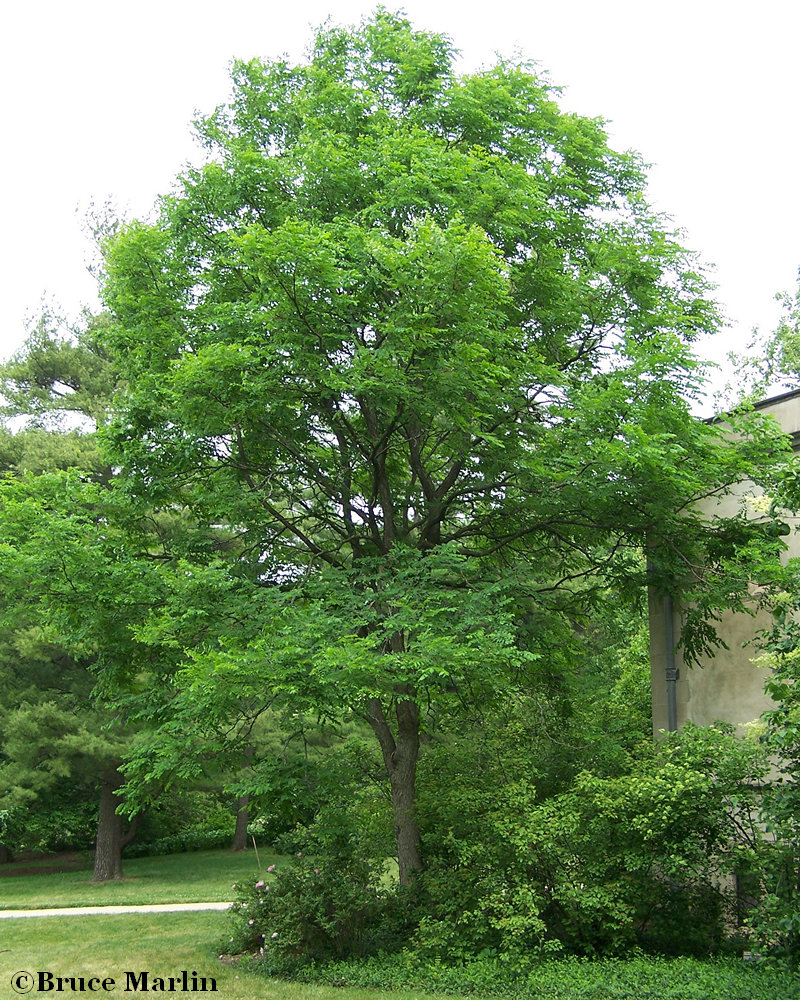
Gymnocladus (Neo-Latin, from Greek gymnos, naked + klados, branch) This tree spends about 6 months of the year without leaves.
Family: Fabaceae (Leguminosae)
This very rough, coarsely branched tree usually grows to a height of 40-70 feet with a trunk diameter of 3 feet. The bark is very rough. The leaves are doubly compound, with about 9 broad oval-shaped leaflets that are pointed and toothless. They are alternate and there is a pair of single leaflets on the base of the main stalk. There are male and female trees, which produce their flowers in white, nodding clusters, and bloom in May to June. The fruit is a broad, leathery, dark brown pod, 4-9 inches long, pulpy inside with 6-8 seeds, and pods persist in the winter. The seeds at one time were used as a substitute for coffee and were called coffee-nuts. The seeds are actually toxic unless boiled thoroughly.
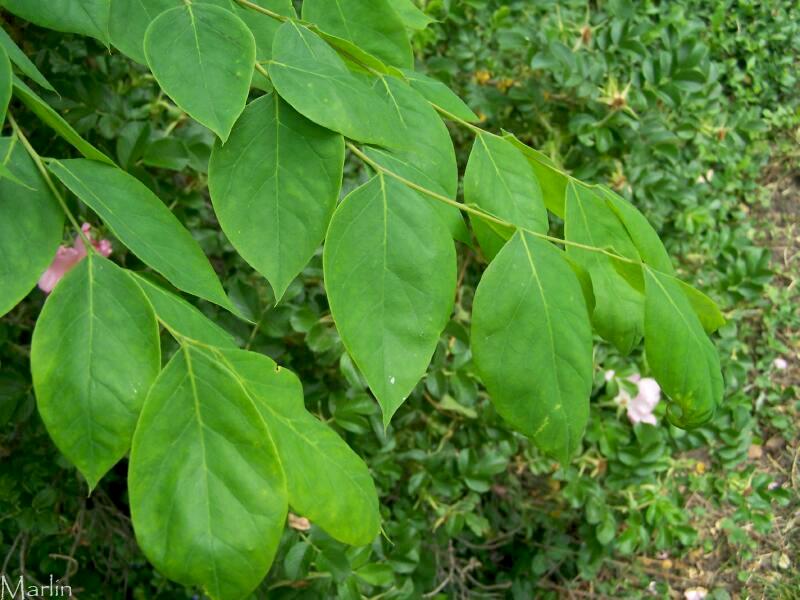
A legume, the Coffeetree produces long, dark brown leathery pods that contain up to seven rounded, dark, hard-coated seeds. The Kentucky Coffeetree prefers sunny locales in rich woodlands and at the edges of marshes. However, it tolerates a wide variety of growing conditions in full sun.
Family Fabaceae (Leguminosae) The Fabaceae, or Legumes, are mostly herbs but include also shrubs and trees found in both temperate and tropical areas. They comprise one of the largest families of flowering plants, numbering some 400 genera and 10,000 species.
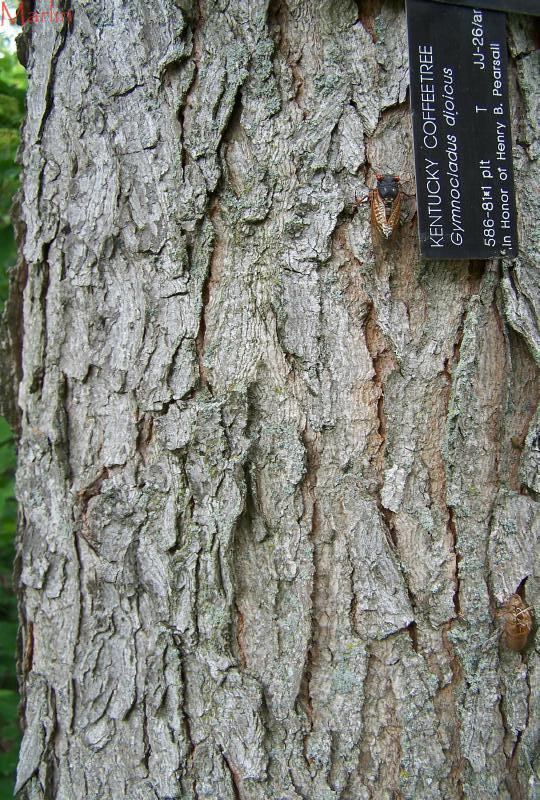 Kentucky Coffee Tree Bark with 17-year periodic cicada, Magicicada sp. brood XIII, 2007
References
1. Kentucky Coffee Tree, Morton Arboretum accession 586-81-1, photos: Bruce J. Marlin
Family: Fabaceae (Legumes)
Trees Index | Pine Family | Beech, Oak | Nut Trees | Birch Family | Magnolias
Tree Encyclopedia / North American Insects & Spiders is dedicated to providing family-friendly educational
resources for our friends around the world through large images and macro photographs of flora and fauna.
Online since 2002