Japanese Hornbeam – Carpinus japonica
Family Betulaceae – Alder, Birch, Hornbeam
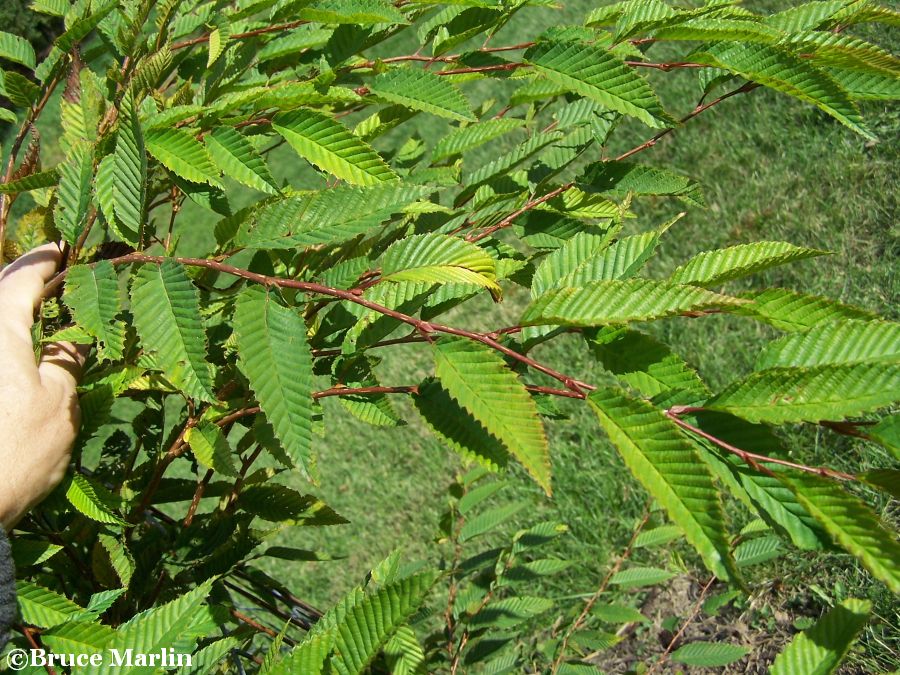
This shrubby understory tree has attractive, highly sculpted and serrate foliage.
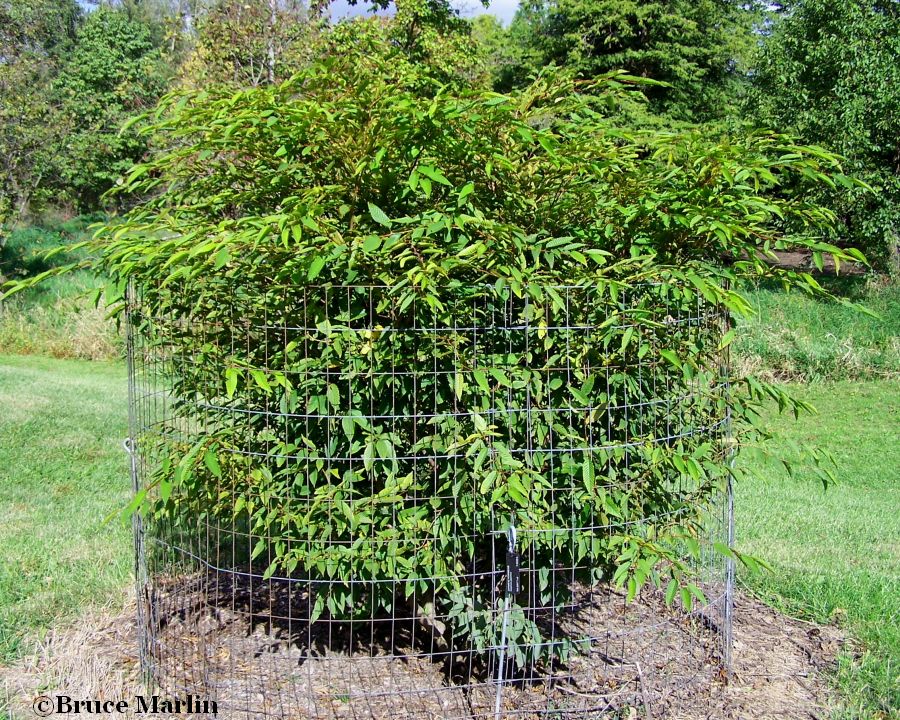 Japanese Hornbeam, from seed, is 9 years old
Japanese Hornbeam is cultivated as an ornamental tree or shrub. Grows to 30 feet under cultivation but 50 feet in the wild. Flowers open in April, male catkins 2.5-5cm (1-2in) long, females at tips of shoots 1.2cm (½in) long. Fruiting catkins, 5-6cm (2-2½in) long with toothed inward-curving bracts, color from green to pink-tinged, then crimson in autumn.
The leaves have numerous strong veins, and are longer and darker than European Hornbeam (C. betulus). Bark is smooth pinkish grey or dark with lighter stripes. This hornbeam is tolerant of shade or sun, and hardy in a wide variety of soil types.
Hornbeams are used as food plants by larvae of some old-world Lepidoptera species, including autumnal moth, common emerald, feathered thorn, Svensson’s copper underwing as well as the seed case-bearer moths C. currucipennella and C. ostryae. These pests do little lasting or widespread damage, and there are no significant disease problems.
Trees Index | Pine Family | Beech, Oak | Nut Trees | Birch Family | Magnolias | Rose Family
Tree Encyclopedia / North American Insects & Spiders is dedicated to providing family-friendly educational
resources for our friends around the world through large images and macro photographs of flora and fauna.
Online since 2002