Japanese Elm – Ulmus japonica x wilsoniana
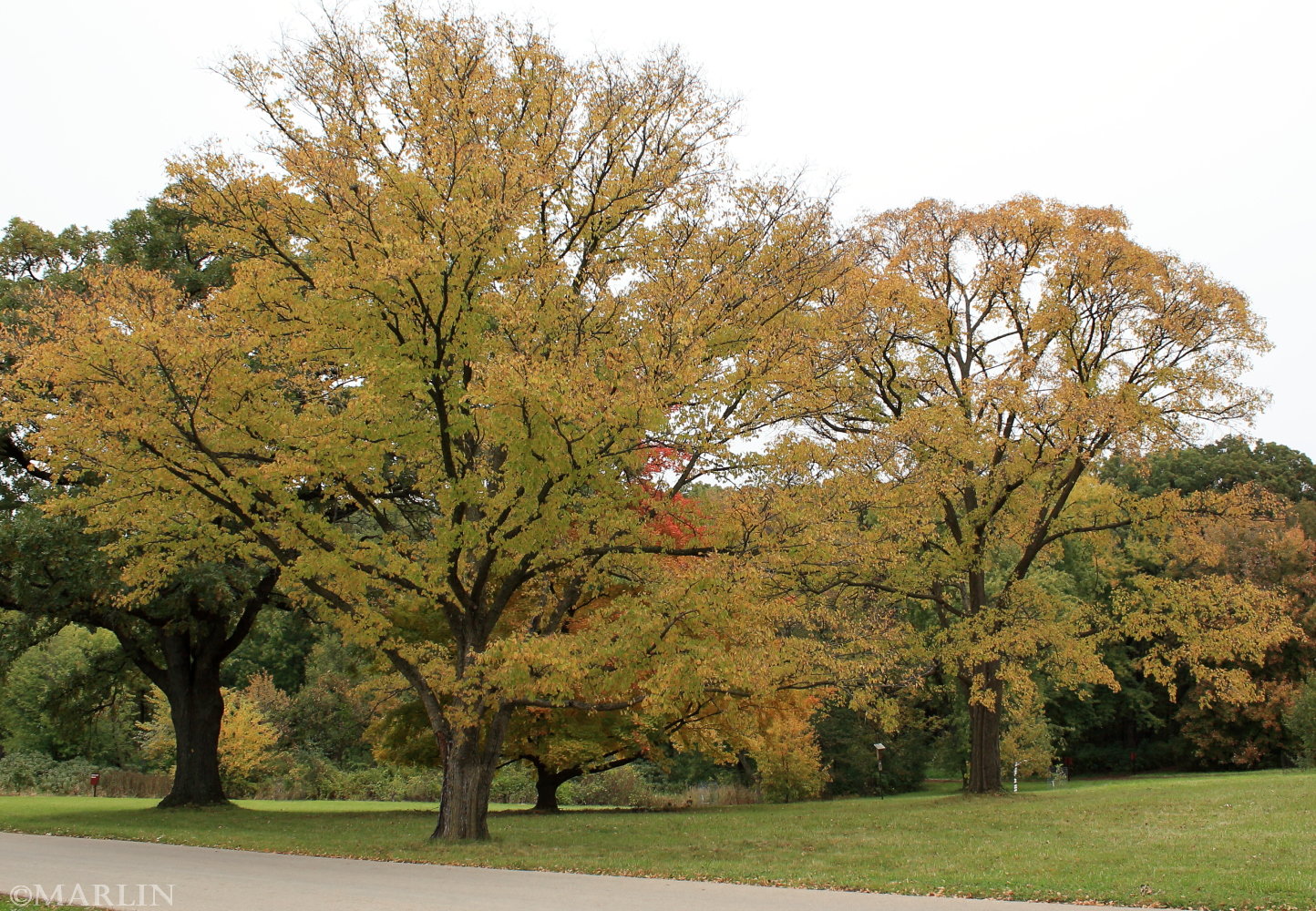
Family Ulmaceae – Zelkova, Hackberry, Elm
Native to Japan, Korea and China, this lovely shade tree is well adapted to urban soils.
Leaf: alternate, simple, ovate to oblong, 3 to 5 inches long, 1 to 3 inches wide, margin coarsely and sharply doubly serrate, base conspicuously inequilateral, upper surface green and glabrous or slightly scabrous, paler and downy beneath.
This tree grows quickly when young, forming a broad or upright, vase-shaped silhouette, 80 to 100 feet high. The deciduous leaves are dark green throughout the year, fading to yellow before dropping in fall. In early spring, before the new leaves unfold, the rather inconspicuous, small, green flowers appear on pendulous stalks. These blooms are followed by green, wafer-like seedpods which mature soon after flowering is finished. Trees have an extensive but shallow root system.
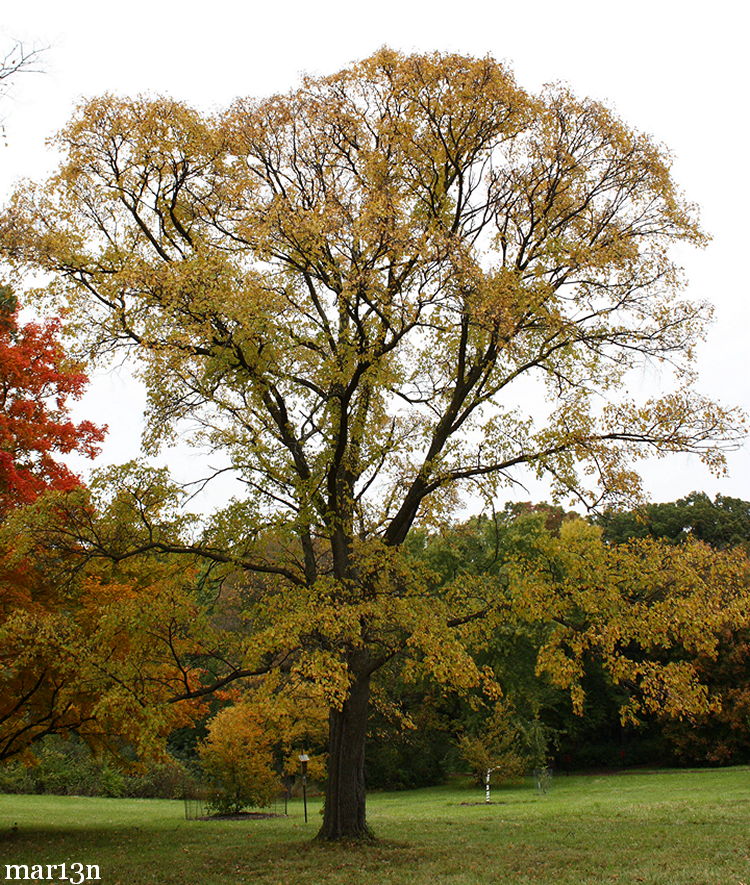
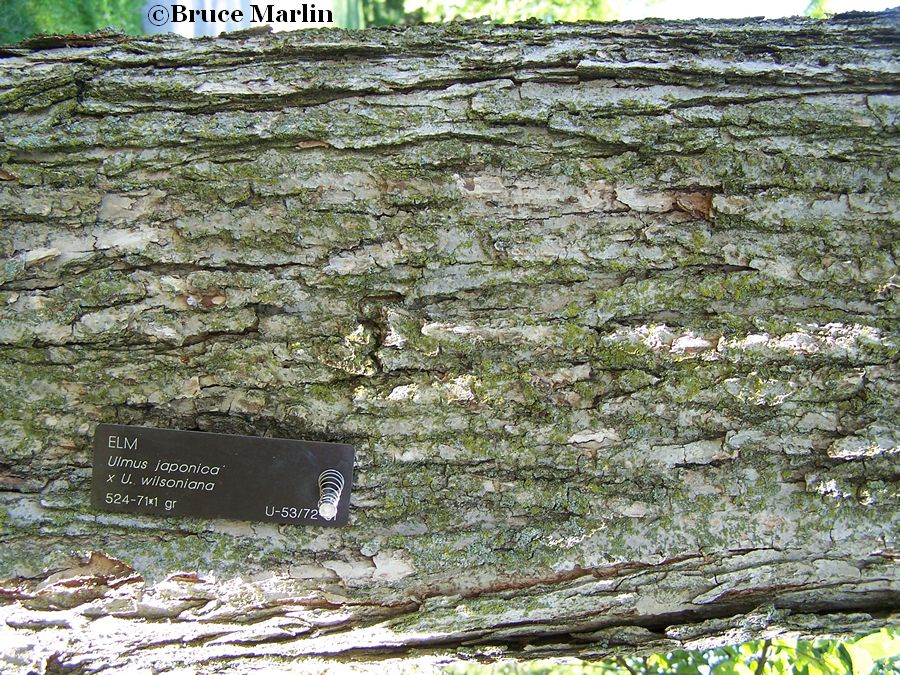
- Japanese Elm – Ulmus japonica x U. wilsoniana photos ©Bruce Marlin
- The Morton Arboretum, Arboretum Records Honor, Milestone; Looks to Future
- Ohio State University, Ohio Trees, Bulletin 700-00 “Ulmus – Elm” Key to Ulmus Species
Family Ulmaceae – Zelkovas, Hackberries and Elms
Trees Index | Pine Family | Beech, Oak | Nut Trees | Birch Family | Magnolias | Rose Family
Tree Encyclopedia / North American Insects & Spiders is dedicated to providing family-friendly educational
resources for our friends around the world through large images and macro photographs of flora and fauna.
Online since 2002