India Quassia – Picrasma quassioides
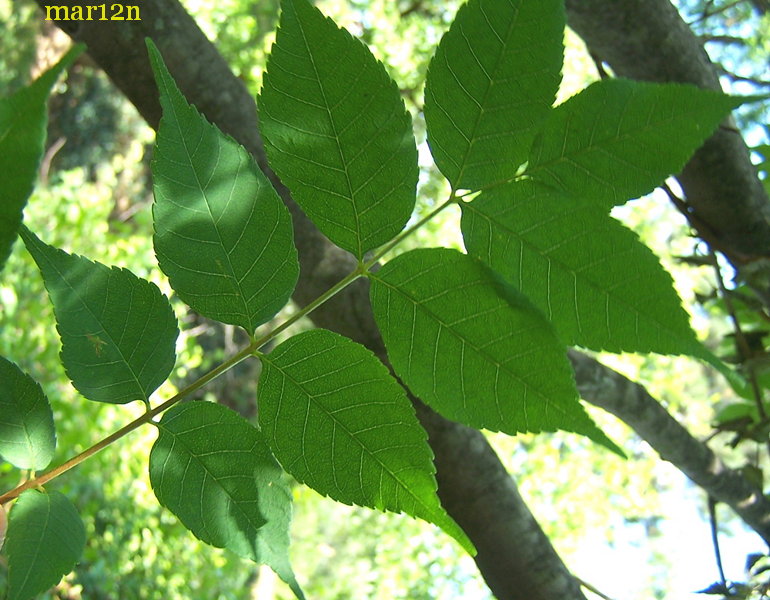
Quassia Family: Simaroubaceae
Common called Lignum Quassia (Quassia Wood), Nigaki, Shurni, Quassia-wood.
Traditionally used in making insecticide and medicines, this rare tree is native to Japan, Korea, Nepal, and northern India. Jamaica quassia extract, a natural bittering agent, is described as “a substance extracted from bark of Jamaica quassia” in the List of Existing Food Additives in Japan.(4) The bitter qualities of the bark extract, quassia, and related alkaloid compounds are well-known in folklore and well-studied in scientific literature.
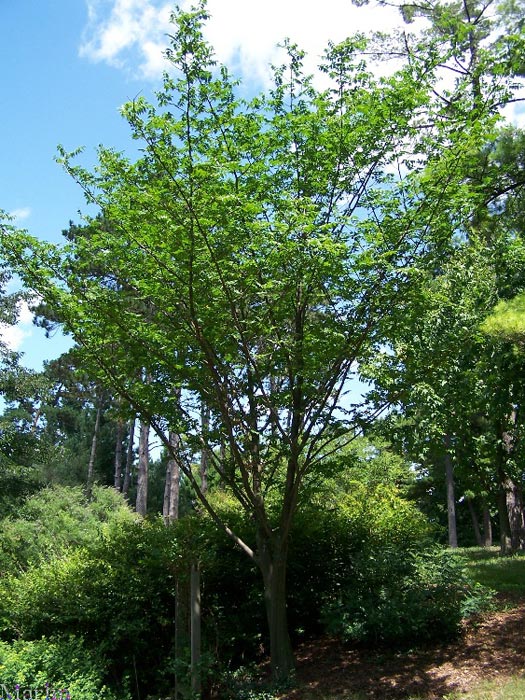
This India Quassia tree was started from seed 44 years ago
The following excerpt is taken from an herbal products website which reminds us in a disclaimer: “Written with the conventional wisdom of the early 1900’s. (This) should be taken into account as some of the information may now be considered inaccurate, or not in accordance with modern medicine.”
“Medicinal Action and Uses—Quassia, found in the shops in the form of chips or raspings, has no smell but an intense bitter taste, which will always distinguish the pure drug from adulterations; the infusion of these by perstitle of iron gives a bluish-black color, but as the blue Quassia chips contain no tannic acid, no result is produced in the infusion. Quassia wood is a pure bitter tonic and stomachic; it is also a vermicide and slight narcotic; it acts on flies and some of the higher animals as a narcotic poison. It is a valuable remedy in convalescence, after acute disease and in debility and atonic dyspepsia; an antispasmodic in fever. Having no tannic acid, it is frequently given with chalybeates and therefore can be prescribed with stitles of iron; as an aromatic bitter stomachic it acts in the same way as calumba. In small doses Quassia increases the appetite large doses act as an irritant and cause vomiting; its action probably lessens putrefaction in the stomach, and prevents the formation of acid substances during digestion.”
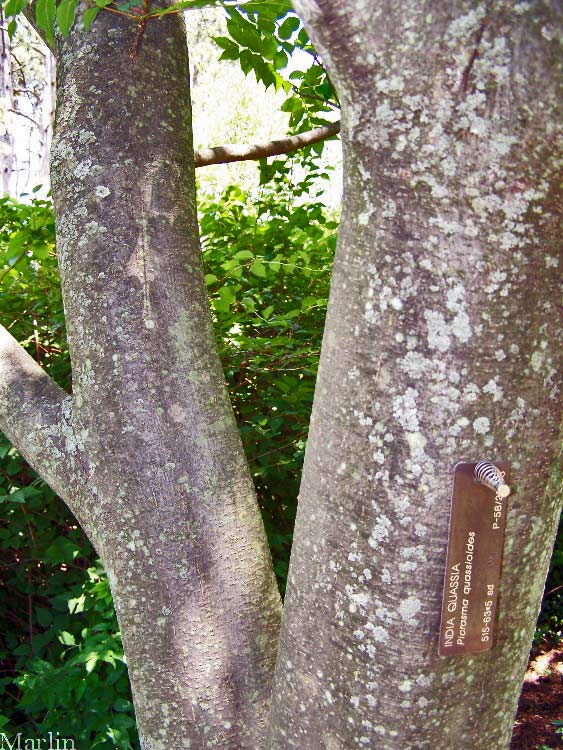 India Quassia-wood bark is mottled gray, smooth
“A decoction used as an injection will move ascarides; for an enema for this purpose, 3 parts Quassia to 1 part mandrake root are used, and to each ounce of the mixture, 1 fluid drachm of asafoetida or diluted carbolic acid is added. Cups made of the wood and filled with liquid will in a few hours become thoroughly impregnated and this drink makes a powerful tonic. The infusion is made by macerating in cold water for twelve hours 3 drachms of the rasped Quassia to 1 pint of cold water, 2 OZ. of the infusion alone, or with ginger tea, taken three times a day, proves very useful for feeble emaciated people with impaired digestive organs. The extract can be made by evaporating the decoction to a pilular consistence, and taken in 1 grain doses, three or four times daily, this will be found less obnoxious to the stomach than the infusion or decoction.”*
*Remember: inaccurate, not in accordance with modern medicine.
Native in ASIA-TEMPERATE: China: China – Hebei, Hubei, Sichuan, Yunnan
Eastern Asia: Japan – Hokkaido, Honshu, Kyushu, Ryukyu Islands, Shikoku; Korea; Taiwan
ASIA-TROPICAL: Indian Subcontinent: Bhutan; India – Arunachal Pradesh, Assam, Himachal Pradesh, Jammu and Kashmir, Meghalaya, Nagaland, Punjab, Uttar Pradesh; Nepal
References
- USDA Natural Resources Conservation Services
- USDA Germplasm Resources Information Network (GRIN)
- USDA National Agricultural Library
- Missouri Botanical Garden – w3TROPICOS # 50049632
- “Picrasma+quassioides” Plants for a Future Database
North American Insects & Spiders is dedicated to providing family-friendly, scientifically oriented educational resources for all.
Insects & Spiders | Tree Encyclopedia | Moths | Butterflies Main