
 |
European Larch – Larix decidua Mill. Family Pinaceae: Pine, Cedar, Spruce, and Fir Hardy to USDA Zone 3 |

Custom Search
|
 |
|
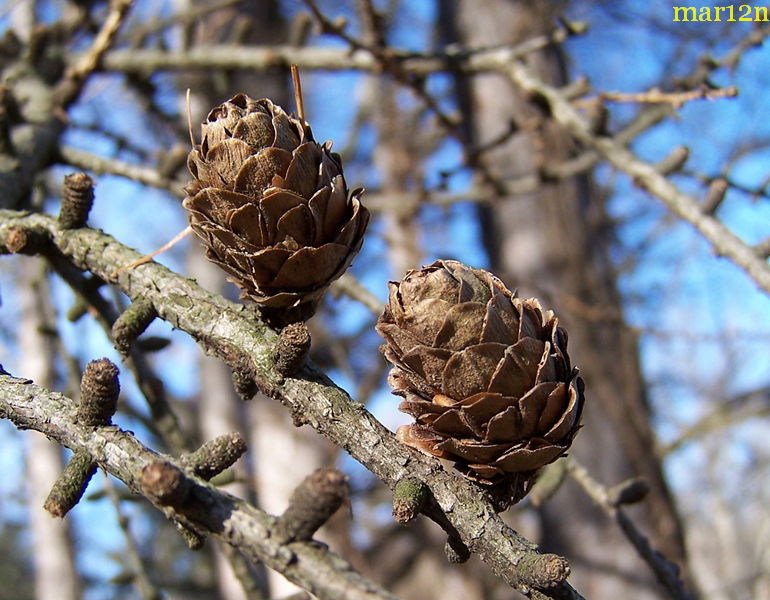
The cones are erect, ovoid-conic, 2-6 cm long, with 30-70 erect or slightly incurved (not reflexed) seed scales; they are green variably flushed red when immature, turning brown and opening to release the seeds when mature, 4-6 months after pollination. They are borne upswept on the stems. The old cones commonly remain on the tree for many years, turning dull grey-black.
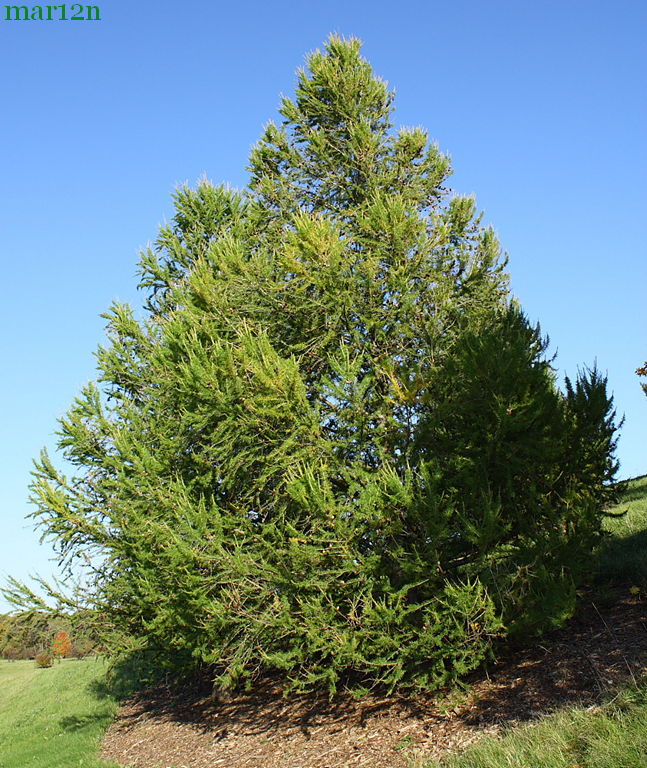
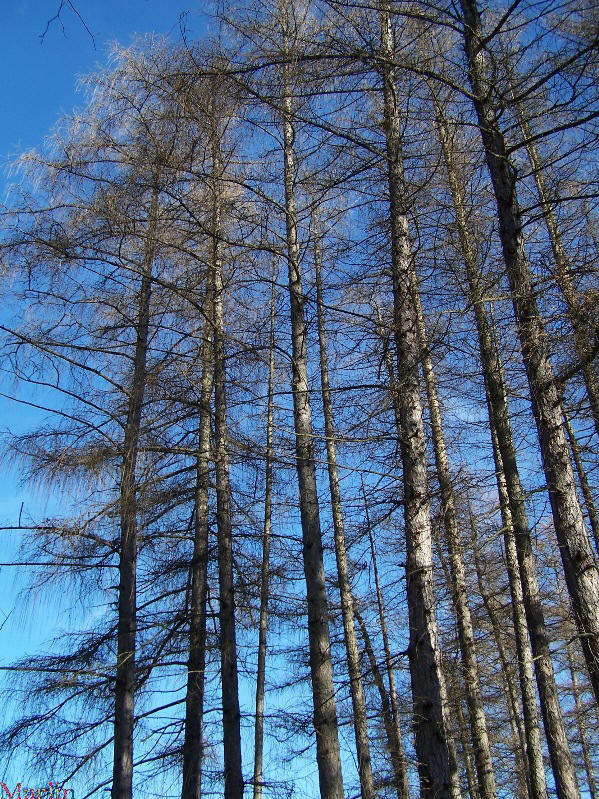
Larix decidua is commonly known as European Larch. It is native to the mountains of central Europe, in the Alps and Carpathians, with disconnected stands in Poland and Lithuania. It is naturalized and cultivated in North America. A long-lived, large deciduous coniferous tree reaching 35 meters, with a trunk up to 1 m diameter, European larch grows in stands of ramrod-straight trees and narrow crowns. The crown is conic when young, becoming broad with age; the main branches are level to upswept, with the side branches often pendulous. The shoots are dimorphic, with growth divided into long shoots (typically 10-50 cm long) and bearing several buds, and short shoots only 1-2 mm long with only a single bud. Inconspicuous red flowers bloom in mid-spring. The leaves are needle-like, light green, 2-4 cm long which turn bright yellow before they fall in the autumn, leaving the pale yellow-buff shoots bare until the next spring.
Larch wood is tough and durable, and is particularly valued for veneer and timbers for in yacht building. It is also used as sawn lumber, pulpwood and fence posts and as a source of Venice turpentine.
Venice turpentine is a viscous liquid resin; such resins exude from certain trees and are often referred to as balsams. Venice turpentine has been used in painting for centuries and has excellent handling and aging characteristics. It should not be confused with the thinners gum turpentine or rectified turpentine. Venice turpentine is used as an additive to thicken other media. This resin is popular because it gives body to the paint film while maintaining gloss and brilliance, and it yellows very little over time. Genuine Venice turpentine is not easily found and some companies are using a substitute resin called Canada balsam. Canada balsam has two advantages over Venice turpentine-it dries more clearly and it takes only one or two hours to dry, as opposed to three days for Venice turpentine. However, Canada balsam has a distinct disadvantage in that it is more fluid than Venice turpentine. (3)
|
| References: 1. USDA NRCS Plants profile Larix decidua 2. USDA, ARS, National Genetic Resources Program. Germplasm Resources Information Network 3. True Art Information Resins |
| Tree Encyclopedia / North American Insects & Spiders is dedicated to providing scientific and educational resources for our users through use of large images and macro photographs of flora and fauna. |
|
Family Pinaceae: Pines, Cedars, Spruce, and Firs
Explore over 2,000 large format pictures of trees in more than 400 species. Our extensive catalog contains the largest catalog of flowering fruit trees on the net – over 40 varieties. Find extensive descriptions and landscape planning information. Tree Encyclopedia | Tree Index |
