European Black Alder – Alnus glutinosa
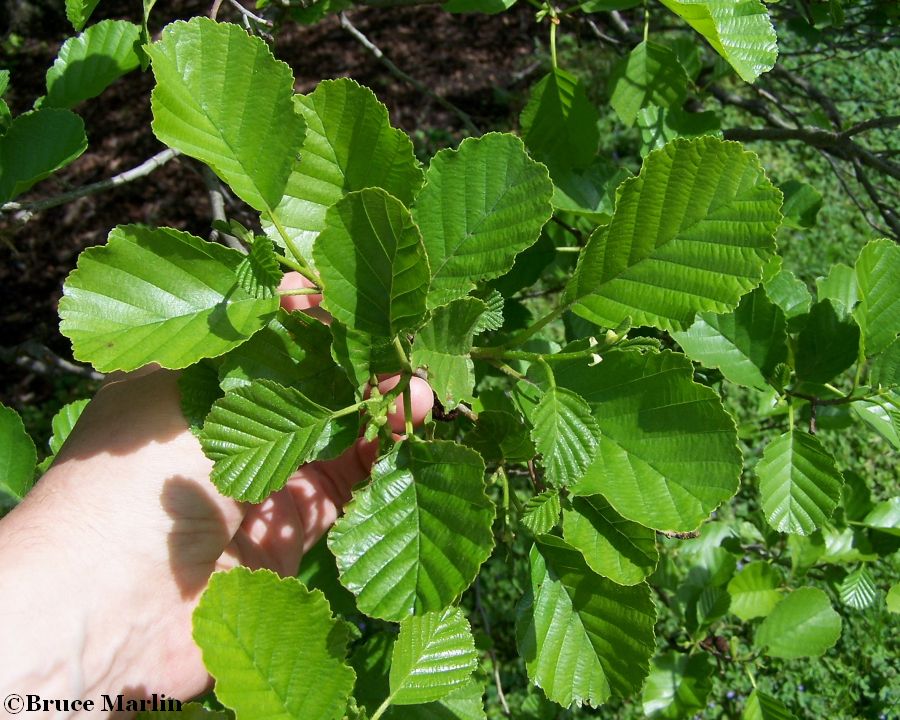
European Black Alder, a native of Europe, northern Africa, and western Asia was introduced to North America long ago, and has escaped from cultivation. It is often seen along bodies of water, where it may successfully self-sow and form pure stands. Today, it is grown as a shade tree in urban areas, or at wet sites (ponds, creeks, drainage ditches, etc.) where it thrives and provides both erosion control and ornamental appeal.
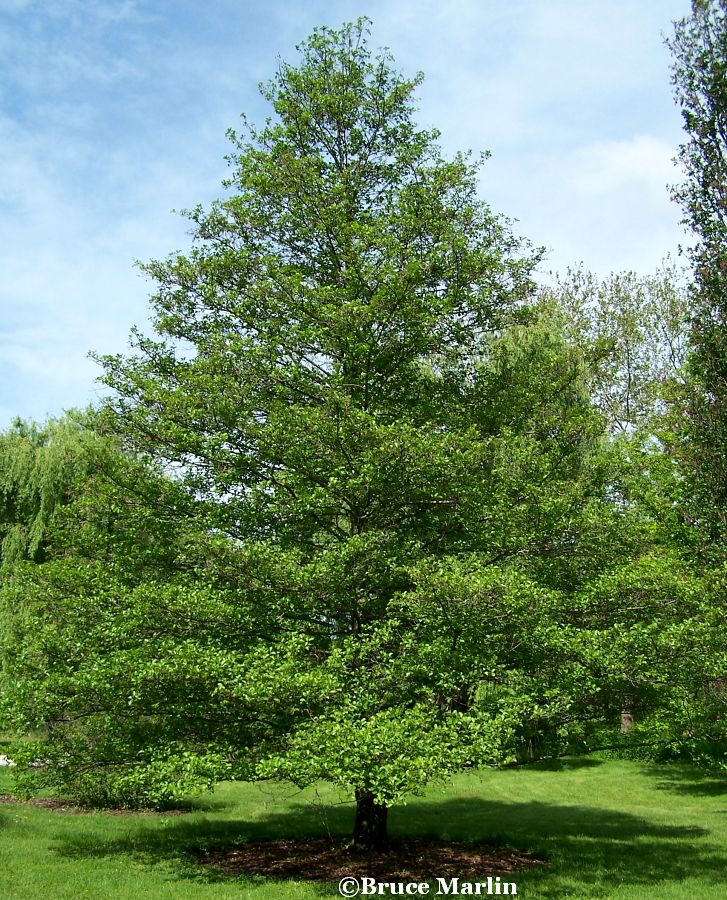
This European Black Alder was started from seed 25 years ago
Alders have formed a symbiotic relationship with nitrogen-fixing bacteria in the genus Frankia. Nodules formed by Frankia on alders are huge and elaborate, as large as a human fist, with many small lobes. This circumstance puts alders in the happy company of plants (including, most notably, the legumes) able to harness atmospheric nitrogen for their own growth. [2]
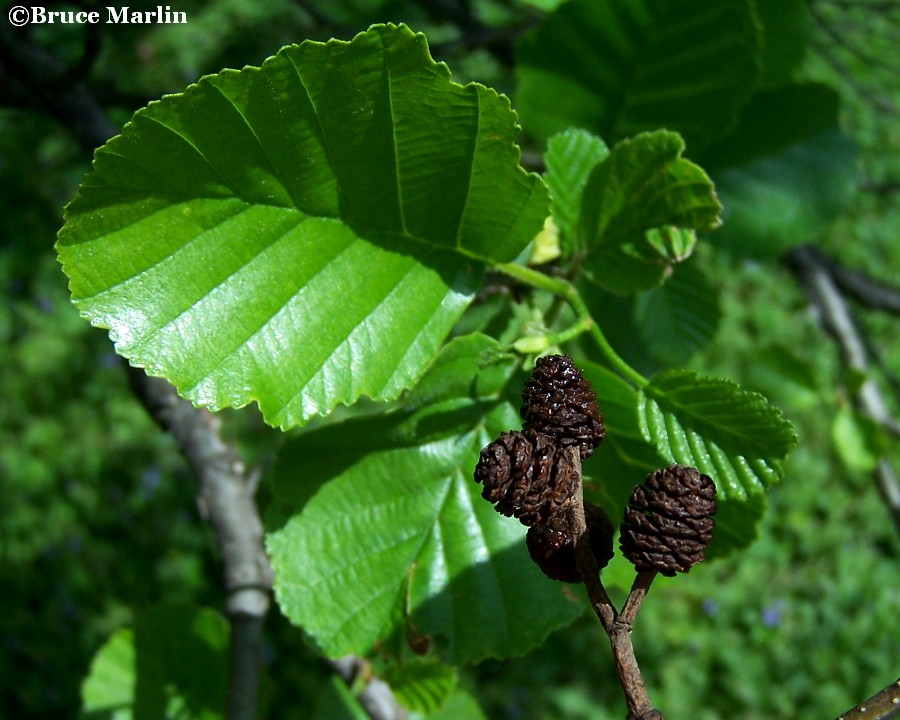
Black Alder strobiles
References
- USDA, ARS, National Genetic Resources Program. GRIN, “Alnus glutinosa (L.) Gaertn.“
- John L. Ingraham, March of the Microbes: Sighting the Unseen (Belknap Press, 2010).
Family Betulaceae – Alder, Birch, Hornbeam
The birches have long been popular ornamental trees in North America, chiefly in the northern United States and Canada. Our specimens include river birch, Dahurian birch, paper birch, Arctic birch, Manchurian birch, Manchurian alder, downy birch, Japanese white birch, and 10 other species.
Tree Encyclopedia | Trees Index | Elms & Zelkovas