Orb Weaver Spider – Mangora placida
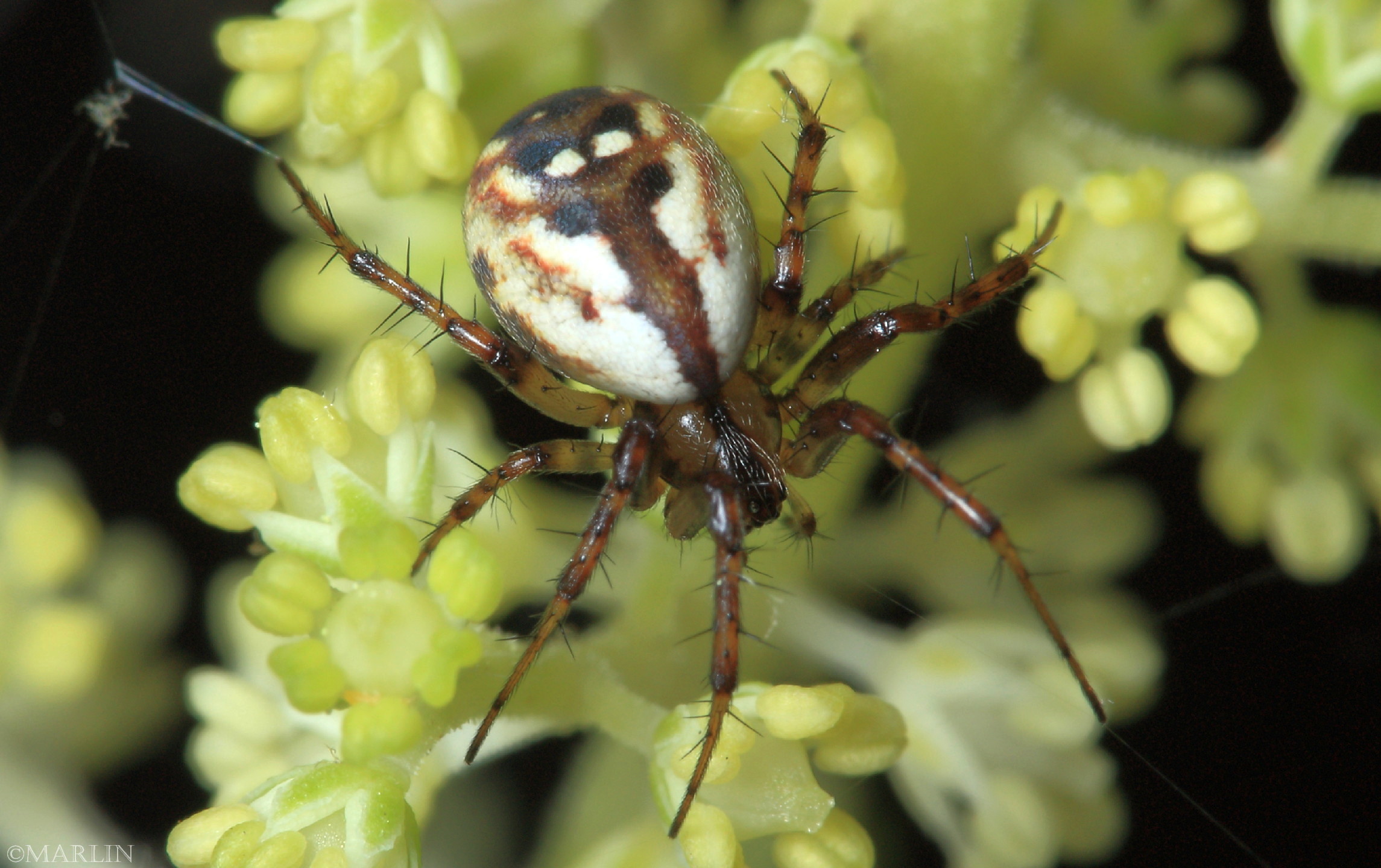
Family Araneidae – Orb weaving spiders
Live adult female spiders photographed in the wild at Warrenville, Illinois. Size – 7mm (spiders are measured by body length)
These small orb weavers seem to spend much of their time hunting in flowers. Their small size makes them easy to overlook, and presents a challenge to the macro photographer. They do build a pretty standard orb web, and the spider below is ensconced formly in the center. Sometimes the web is situated in such wise as to prevent its capture in a photograph.
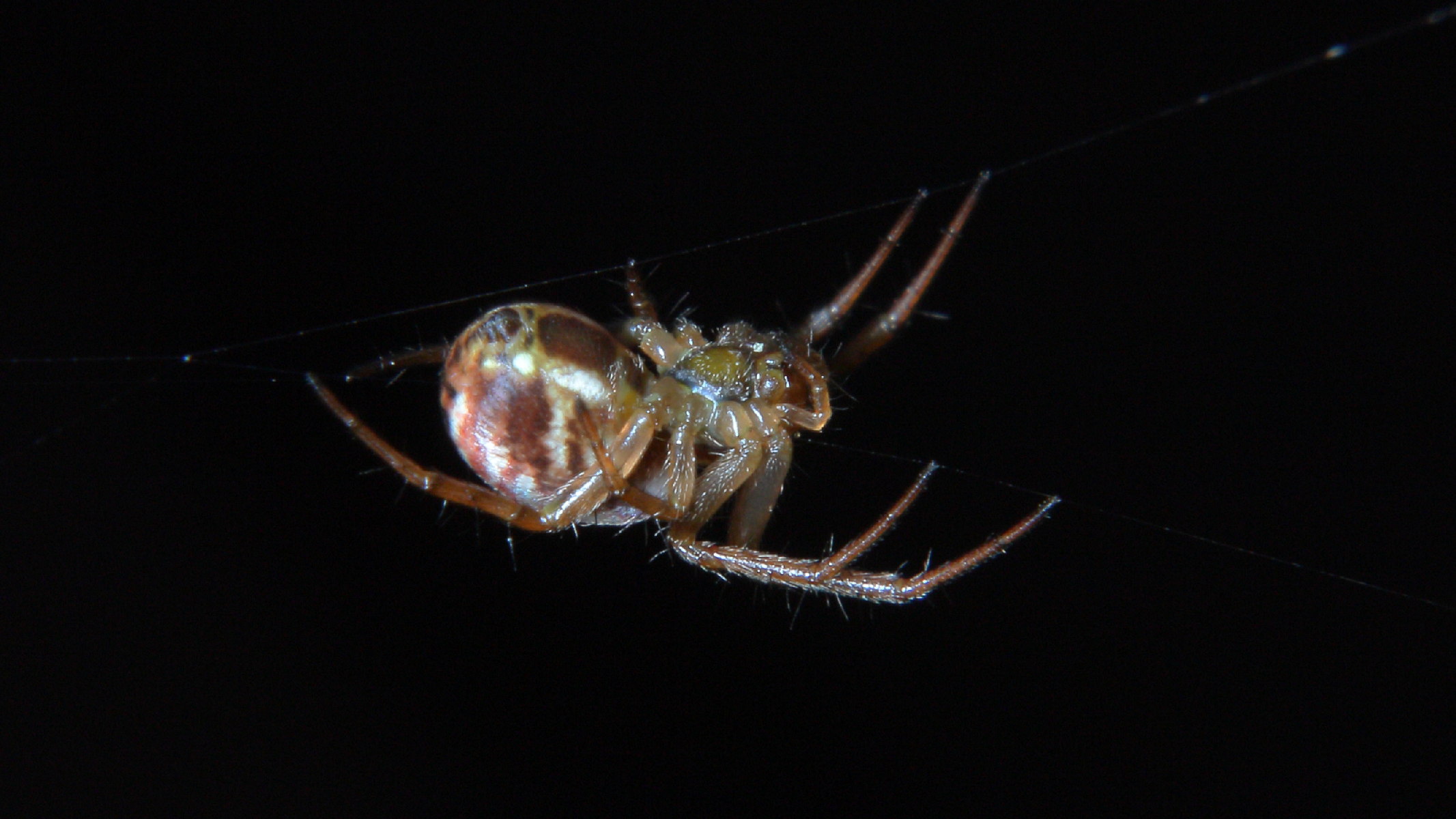
Orb weavers (Family Araneidae) comprise a huge family of spiders, of which there are several hundred species in North America. These spiders vary greatly in color, shape and size, measuring between 2 – 30mm (1/16 — 1 1/4″) long. They have eight eyes arranged in two horizontal rows of four eyes each. The males are generally much smaller than the females and commonly lack the showy coloring of their fairer sex. They often spin their own smaller orb web near an outlying portion of the female’s, and I’ve noticed most males give the females wide berth.
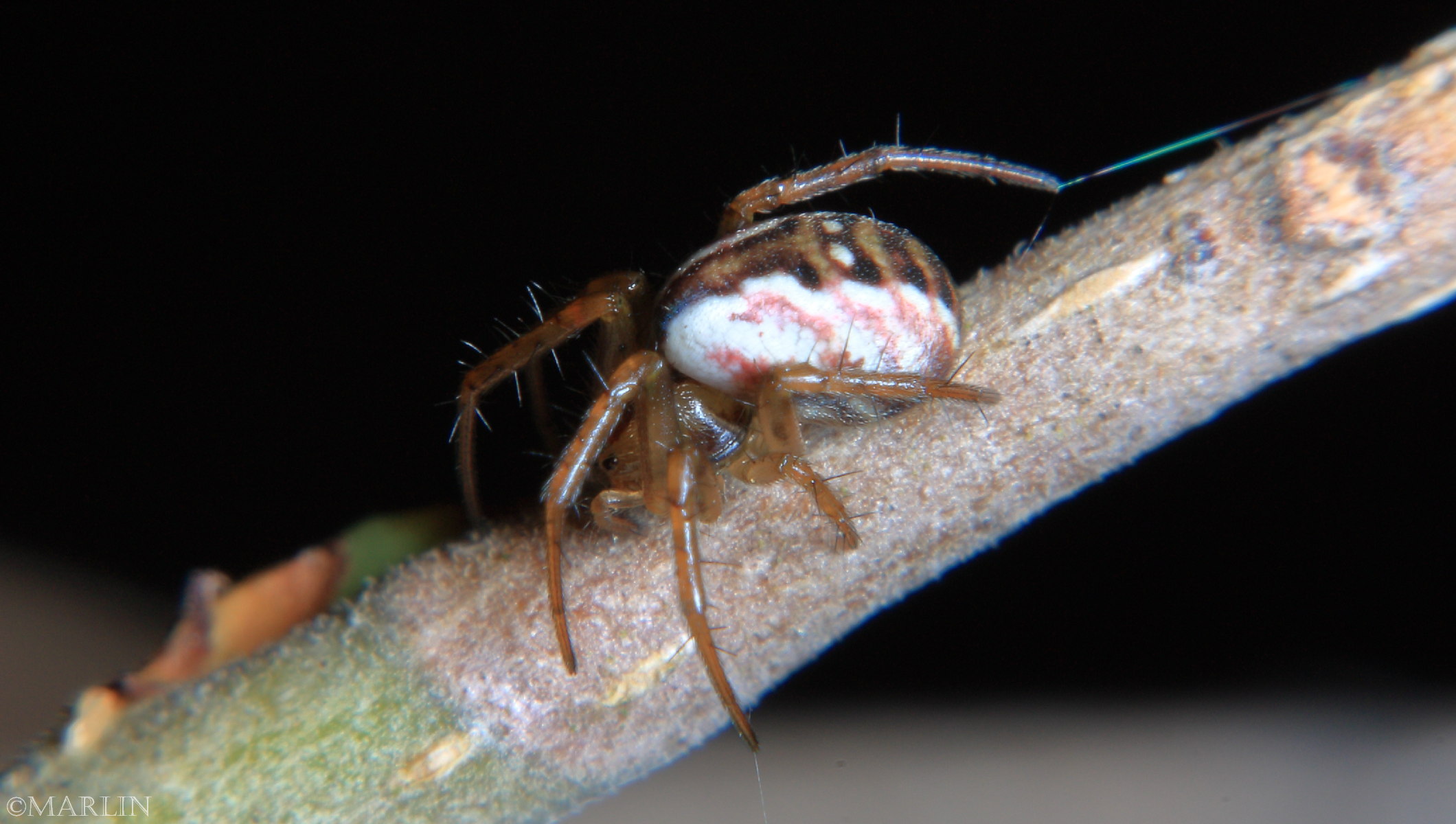
Most orb weavers spin spiraling webs on support lines that radiate outward from the center; the plane of the web may be vertical or horizontal or somewhere in between. Many of this family replace the entire web daily, spinning a new web in the early evening (this usually takes about an hour) and deconstructing the web each morning in a ritual almost as complex as the spinning process: they gather the silk into a ball and eat it for reprocessing. Our page on the Neoscona orb weaver has a series of pictures showing this process.
Reference: Bugguide.net Mangora placida
Orb Weavers
Spiders Index | Spiders Main
Tree Encyclopedia / North American Insects & Spiders
Online since 2002