Family Araneidae – Orb Weaver Spiders
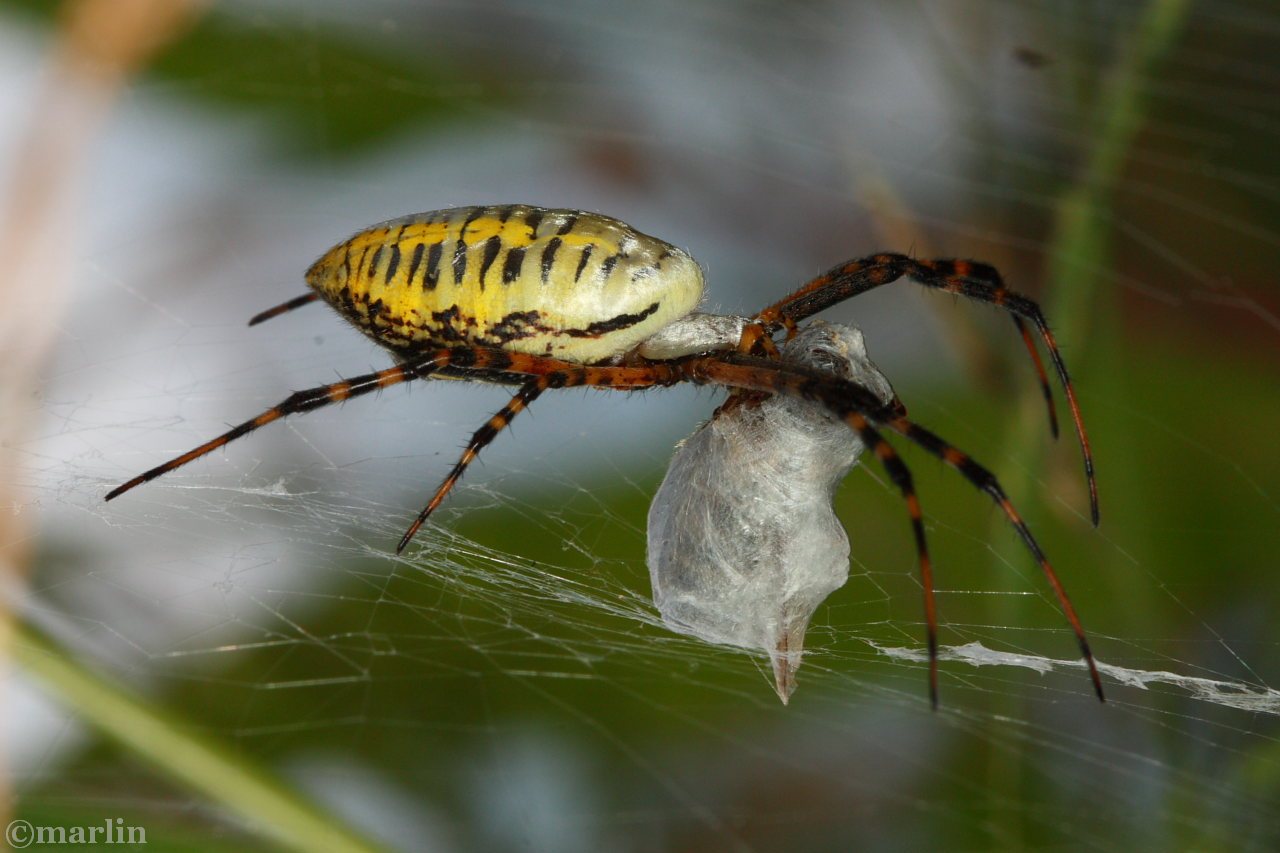 Banded Garden Spider – Argiope trifasciata become very active toward the middle of August here in Illinois. They actually hatch and mature in early summer, but stay mainly out of sight until they are big enough to build their signature web.
Orb weavers comprise a huge family of spiders, with 3500 species worldwide, 180 of which call North America home. These spiders vary greatly in color, shape and size, measuring between 2 – 30mm (1/16 — 1 1/4″) long. They have eight eyes arranged in two horizontal rows of four eyes each.
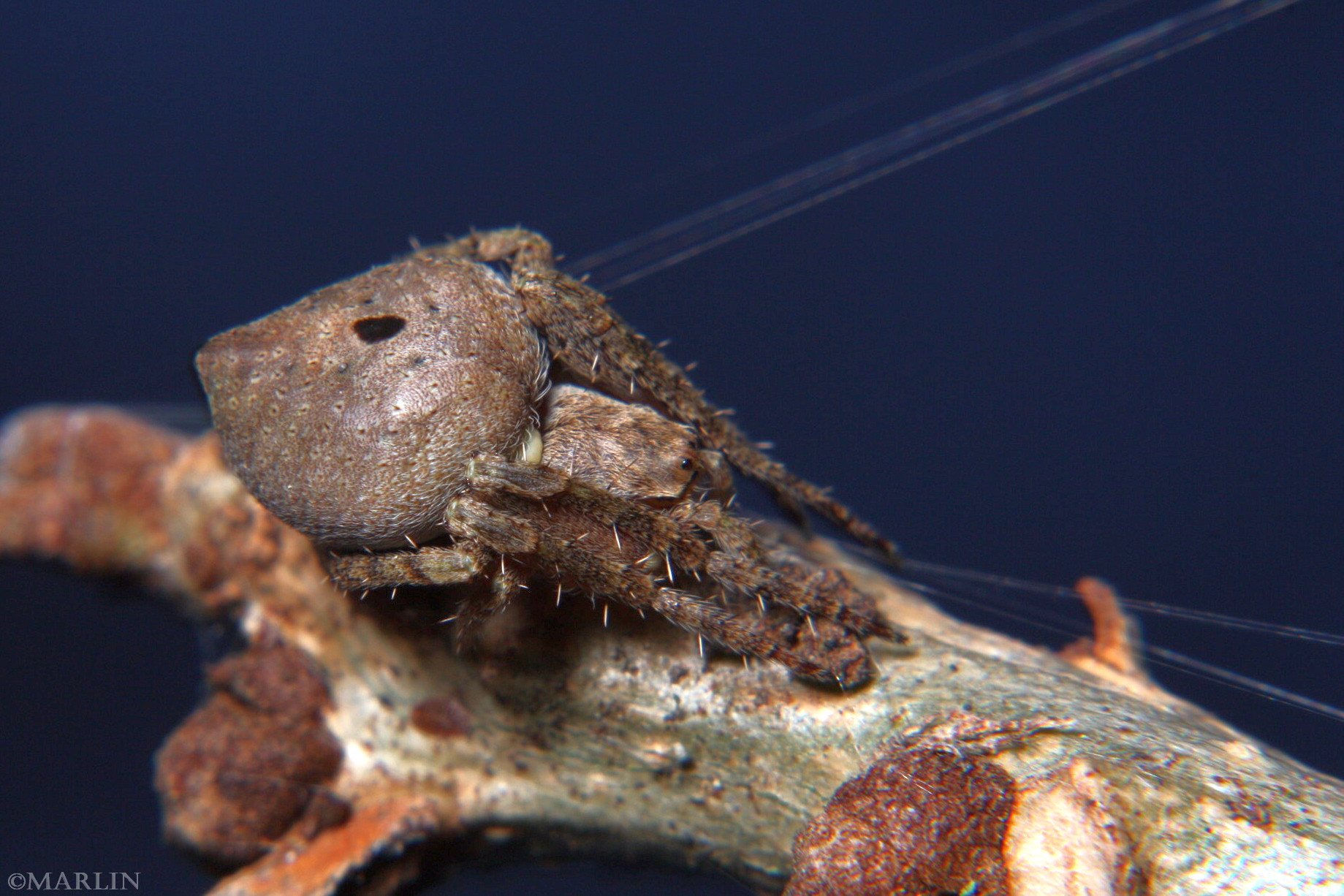
Humpback Orb Weaver Spider – Eustala sp. This tiny (5mm) unfortunate spider had become host to some sort of parasitic larva – you can see the white, worm-shape on top of the cephalothorax under the overhang of the abdomen. Click the link for the full story of the nasty worm.
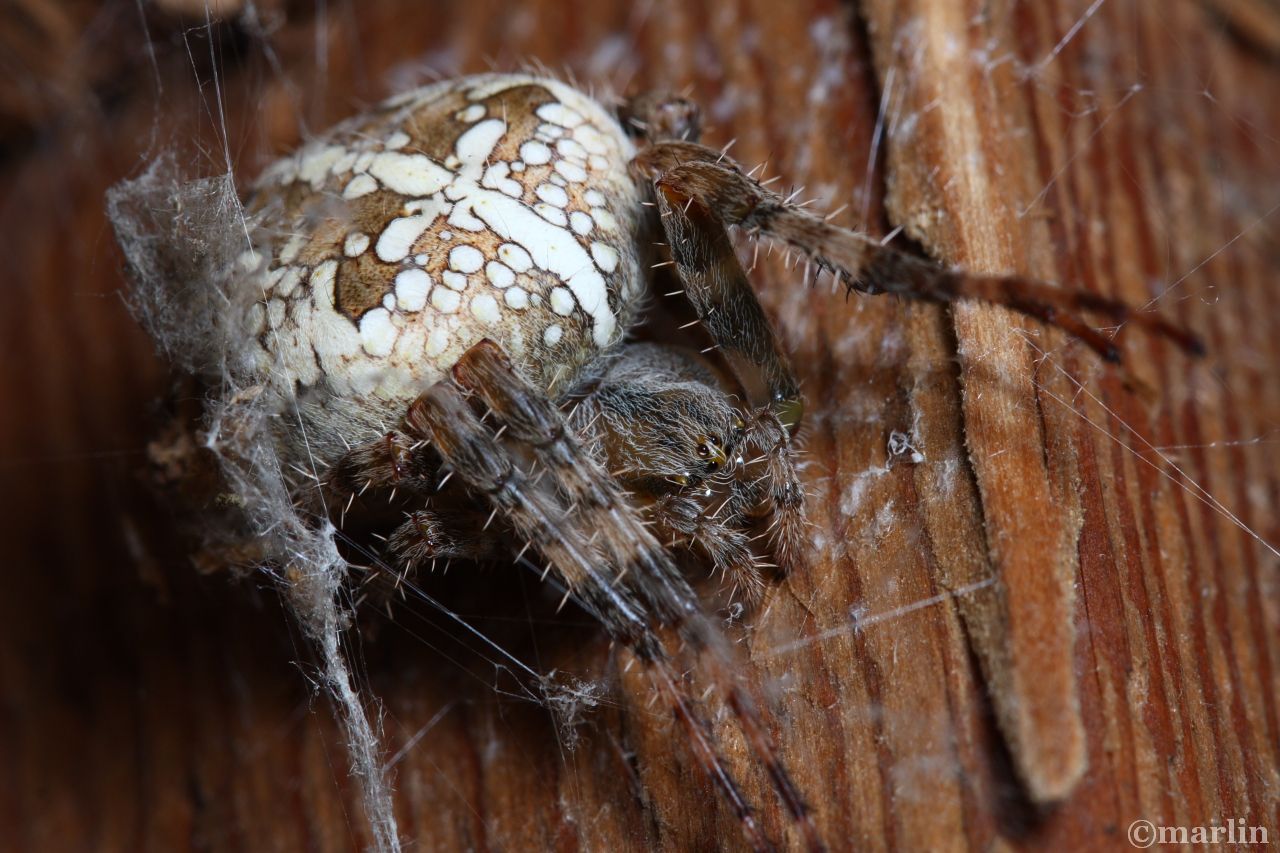
Cross Spider – Araneus diadematus Live female spider photographed at Wheaton, Illinois. Size: 18mm.
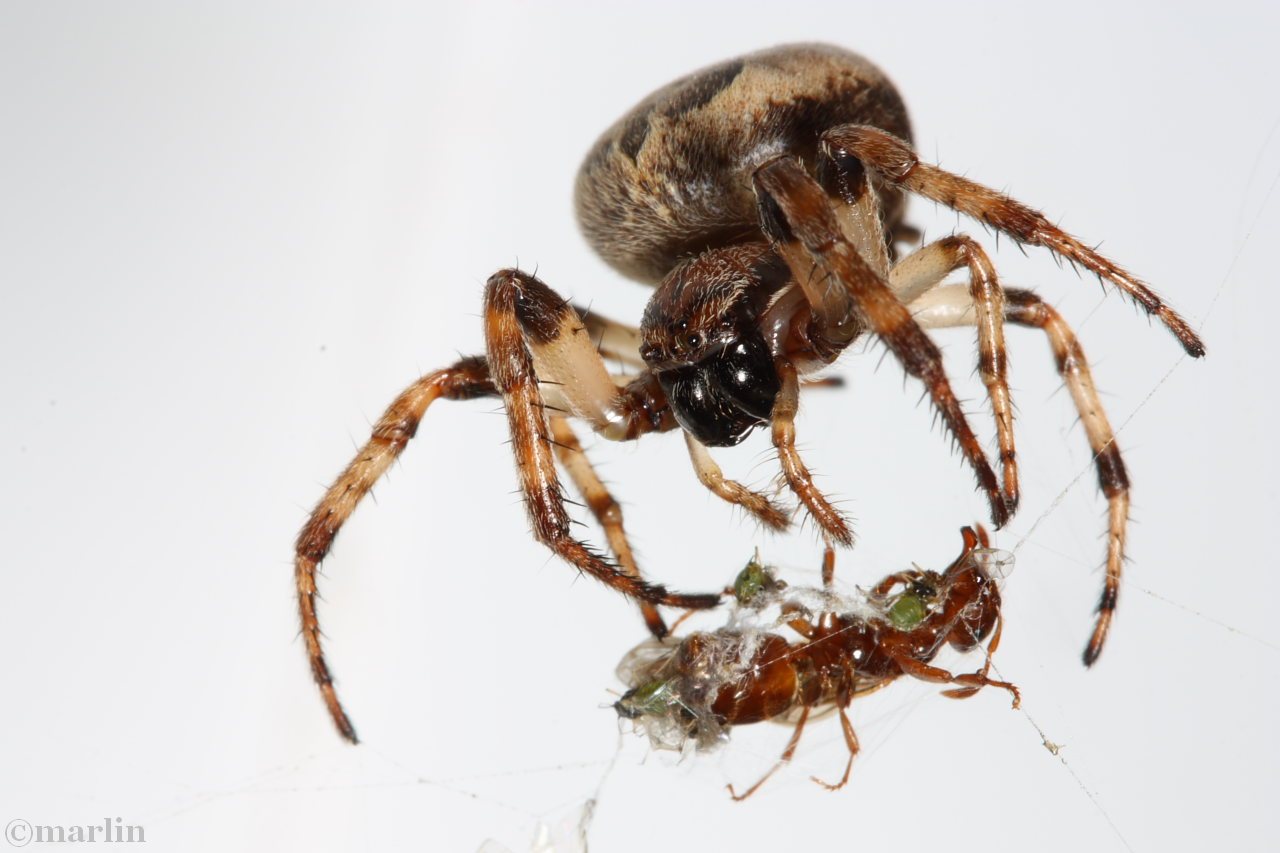
Furrow Spider – Larinioides cornutus mature female above = 12mm. This orb-weaver, commonly called the furrow or foliate spider, is very common on human structures, especially under eaves and porches.
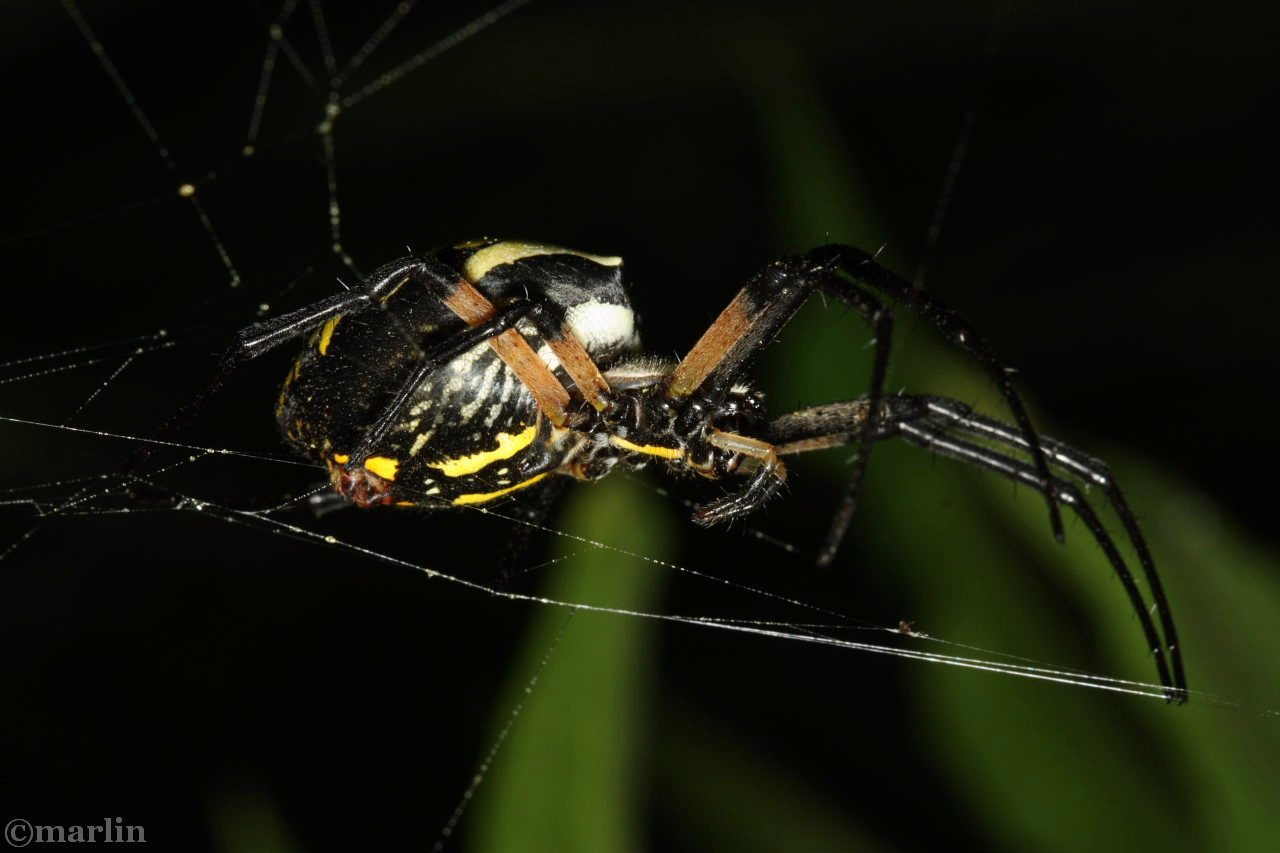
Black and Yellow Garden Spider – Argiope aurantia Female Argiope are the largest spiders most people in the USA encounter.
These charming creatures can be found in gardens and weedy fields from early summer to mid-Autumn, but become conspicuous only when they build their large webs toward the end of summer.
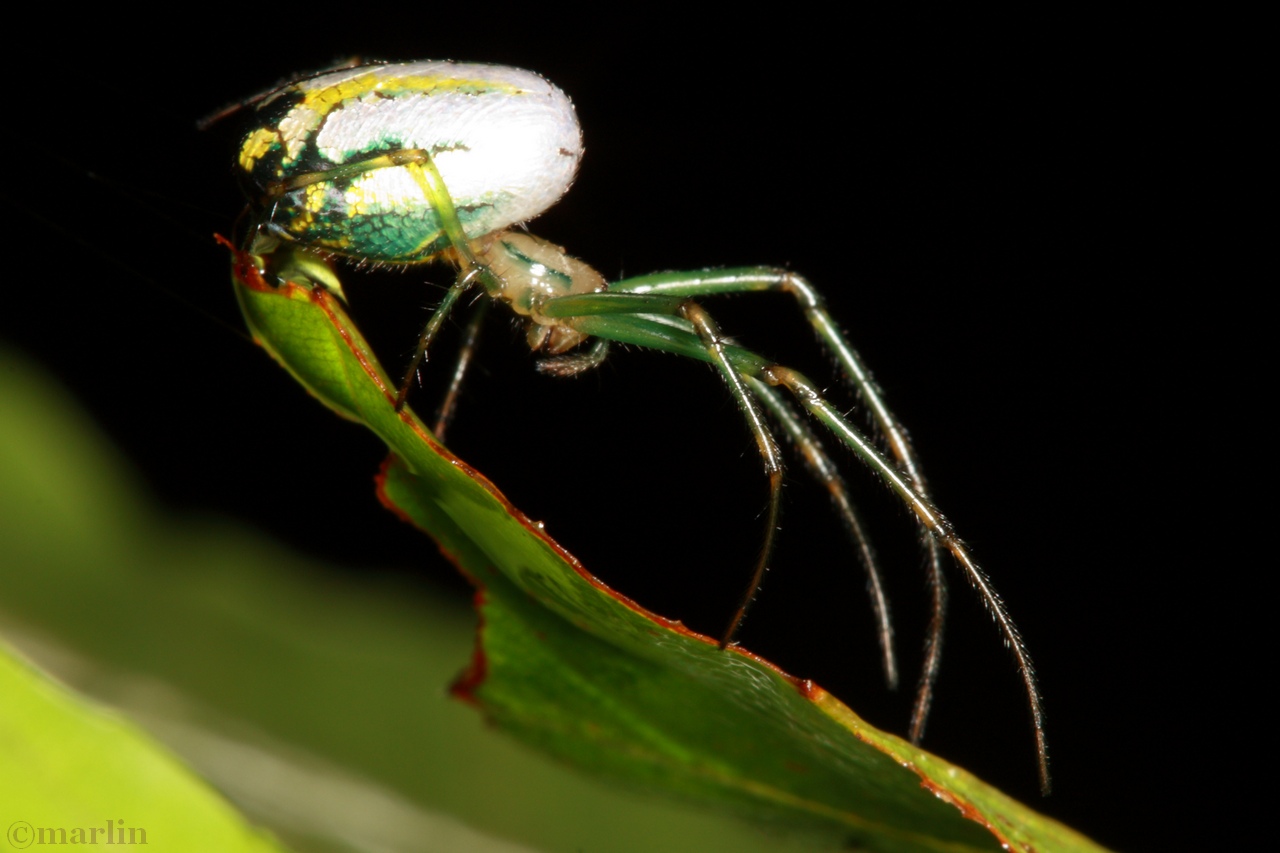
Venusta Orchard Spider Leucauge venusta are very small spiders that build their webs in the horizontal plane. They are nearly everywhere in low foliage, especially in temperate deciduous forest understory and just about any type of prairie.
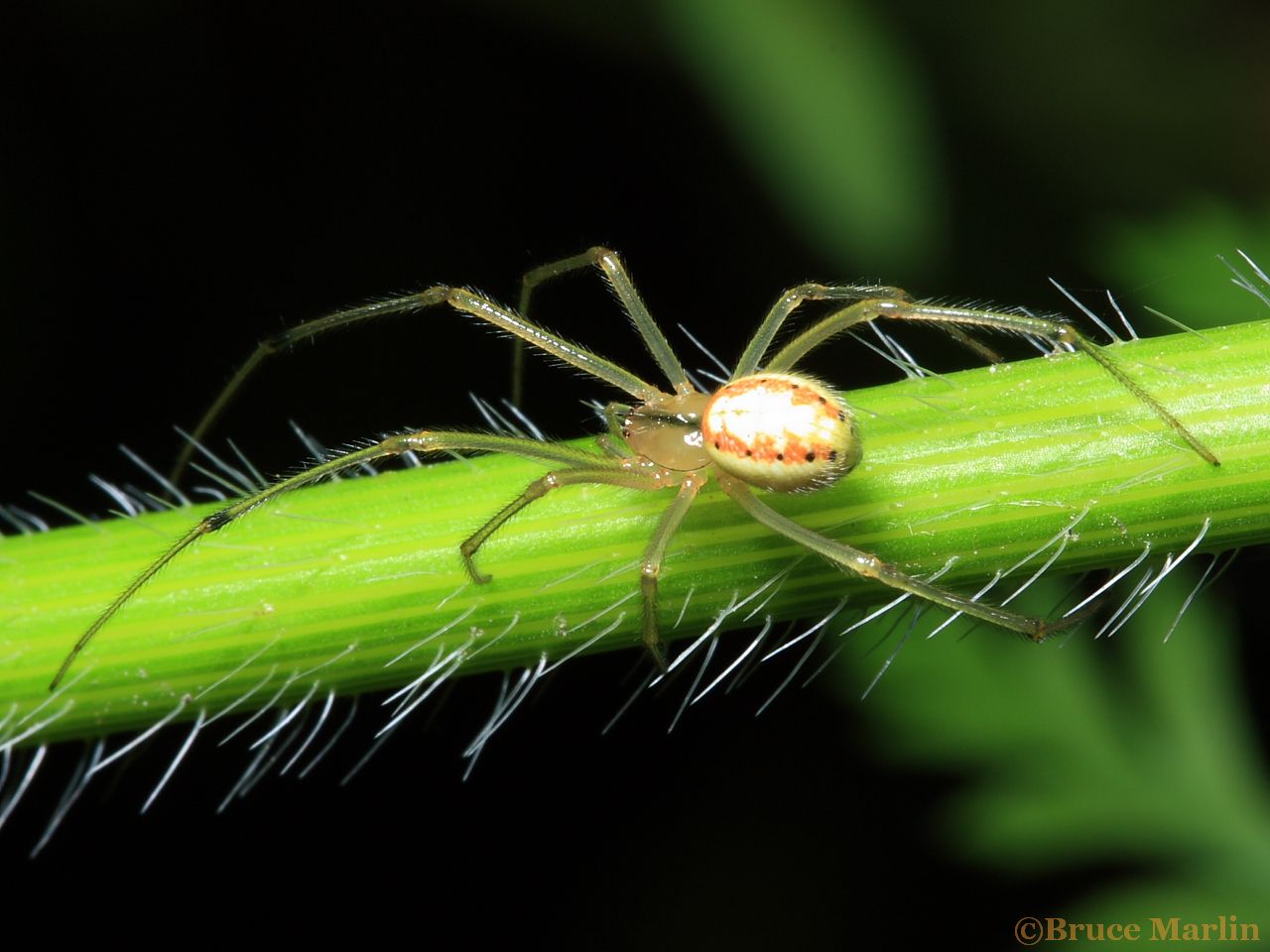
Enoplognatha ovata looks like it should be an orbweaver, but it’s not. It’s a cobweb spider. Ha-ha! Fooled you!
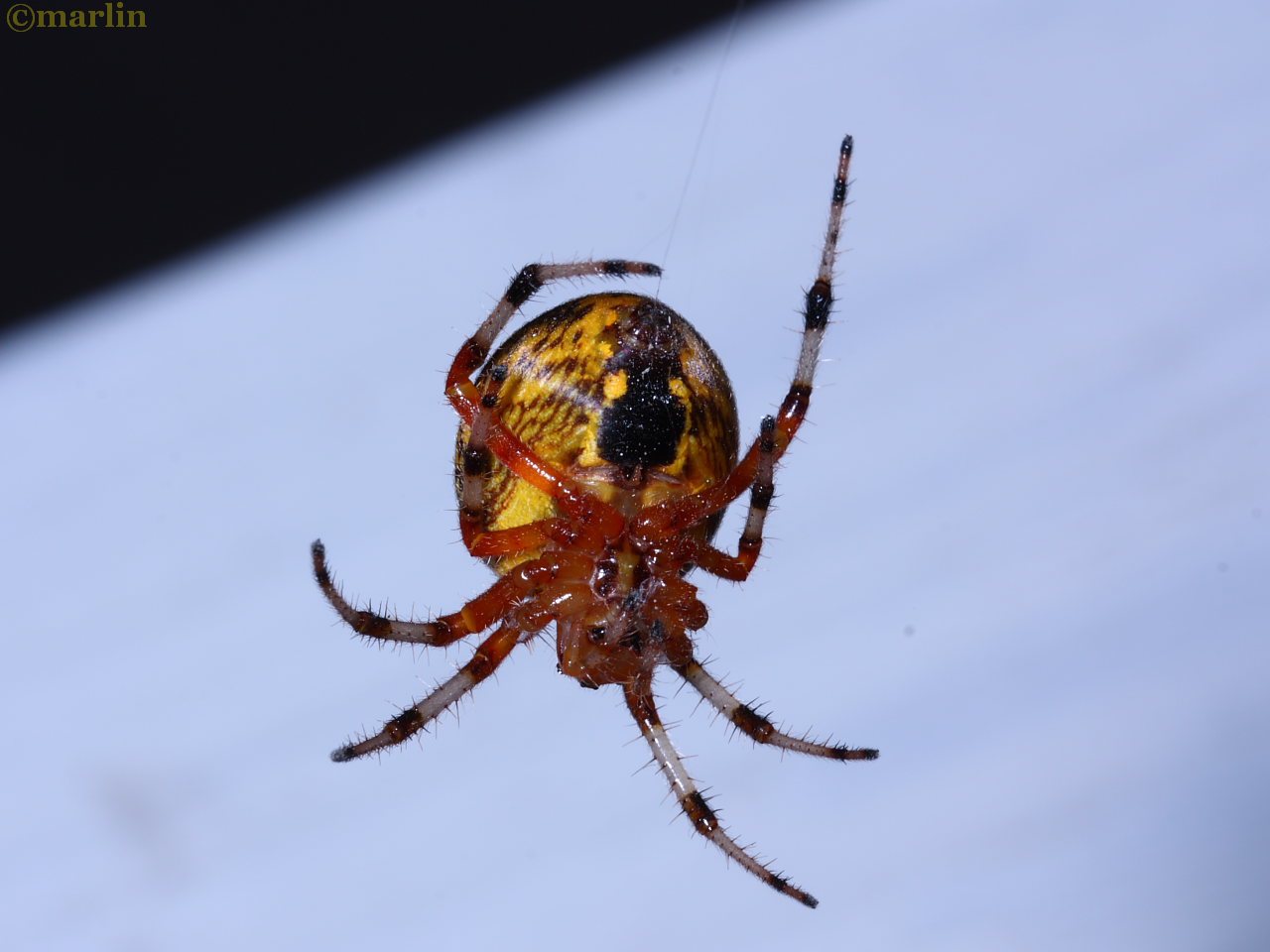
Marbled Orb Weaver Spider What can I say? The stars were aligned when I met this gal.
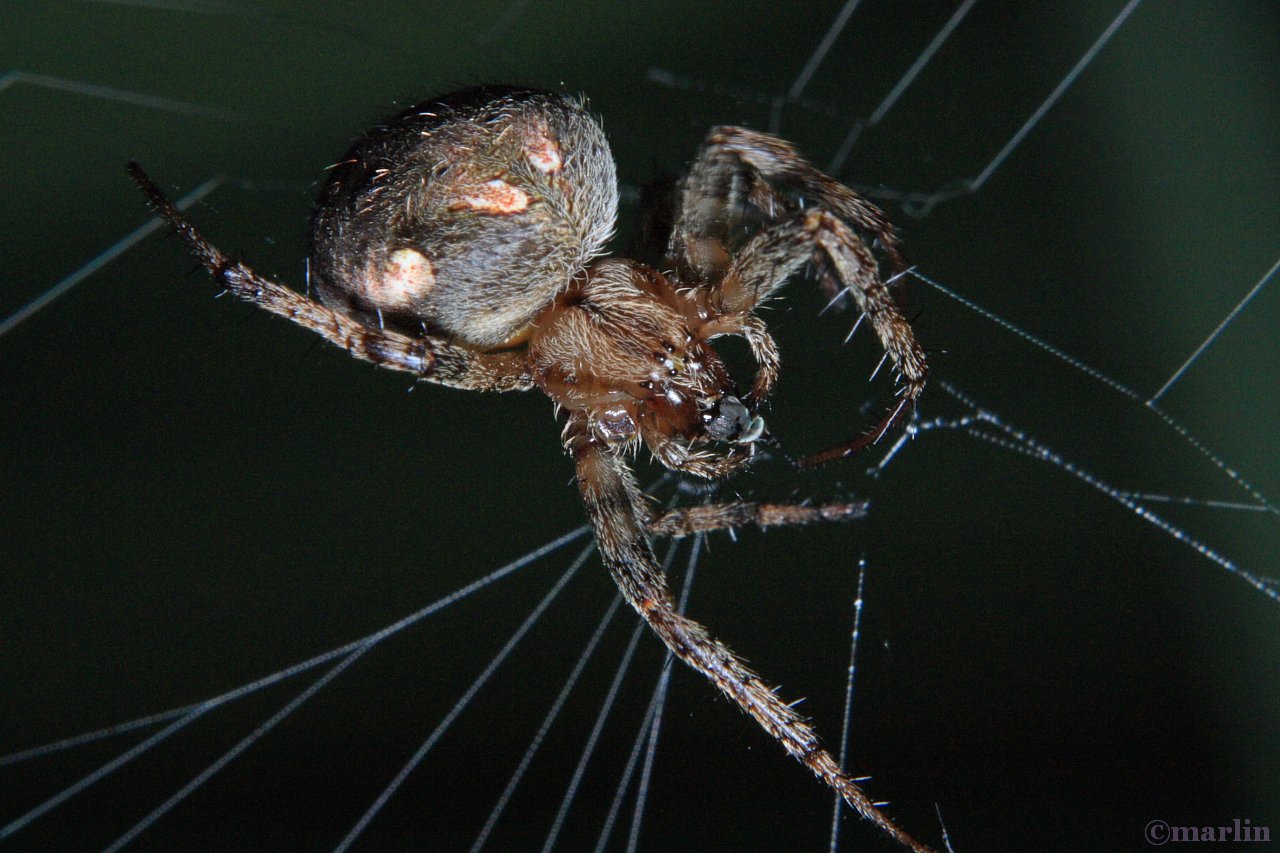
Neoscona arabesca – Arabesque orbweaver is a very common spider in yards and on structures.
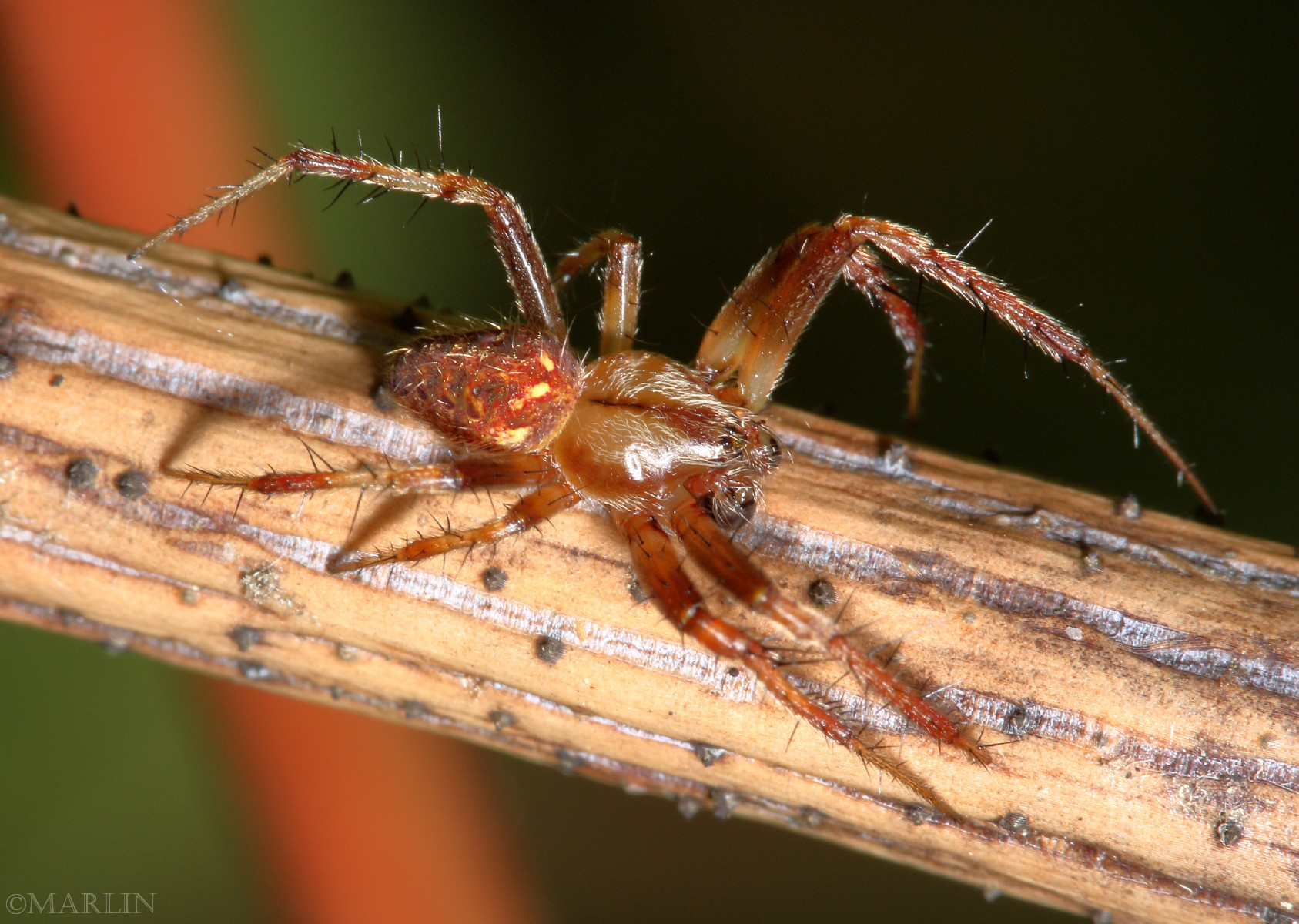
Male arabesque orb weaver out for a stroll in Pennsylvania. What is he up to? Hunting for happiness. Ain’t we all?
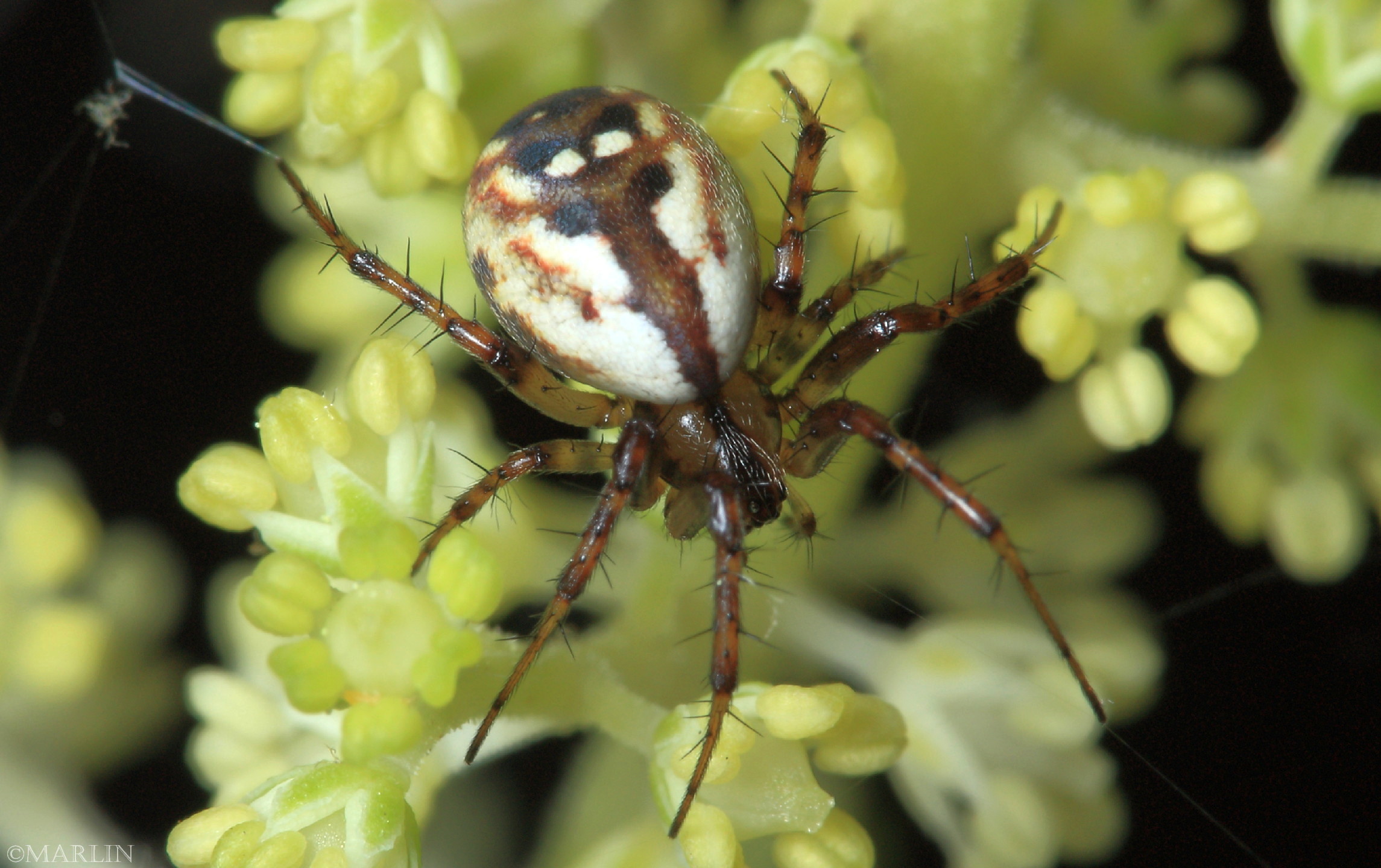
Orb Weaver Spider – Mangora placida Live adult female spiders photographed in the wild at Warrenville, Illinois. Size – 7mm. These small orb weavers seem to spend much of their time hunting in flowers.
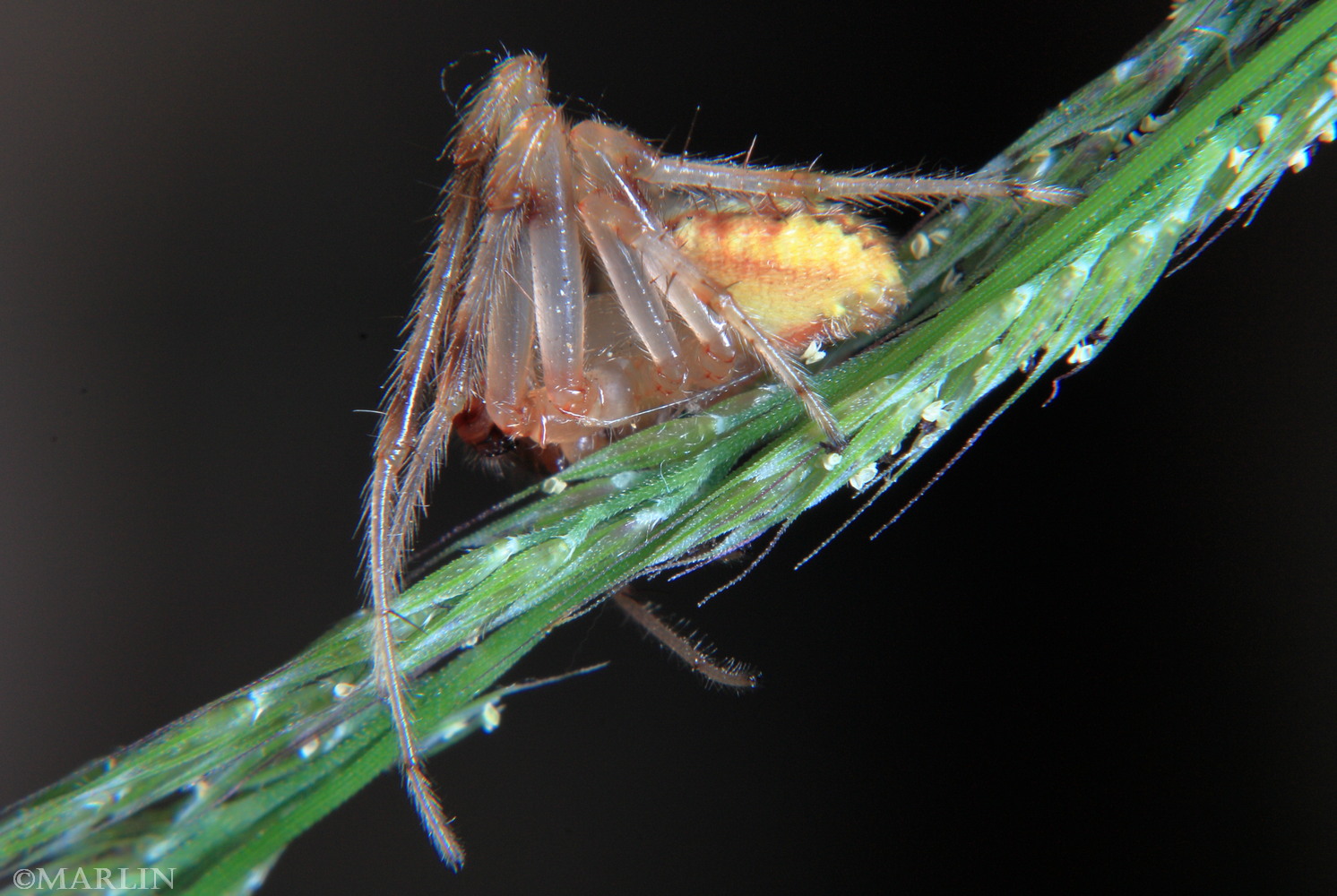
Lattice Orb Weaver – Araneus thaddeus. The common name for this species refers to their lattice-like web retreat usually constructed inside a folded-over leaf.
Jumping Spiders | Nursery Web Spiders
Tree Encyclopedia / North American Insects & Spiders
Online since 2002