Jumping Spider – Colonus sylvanus
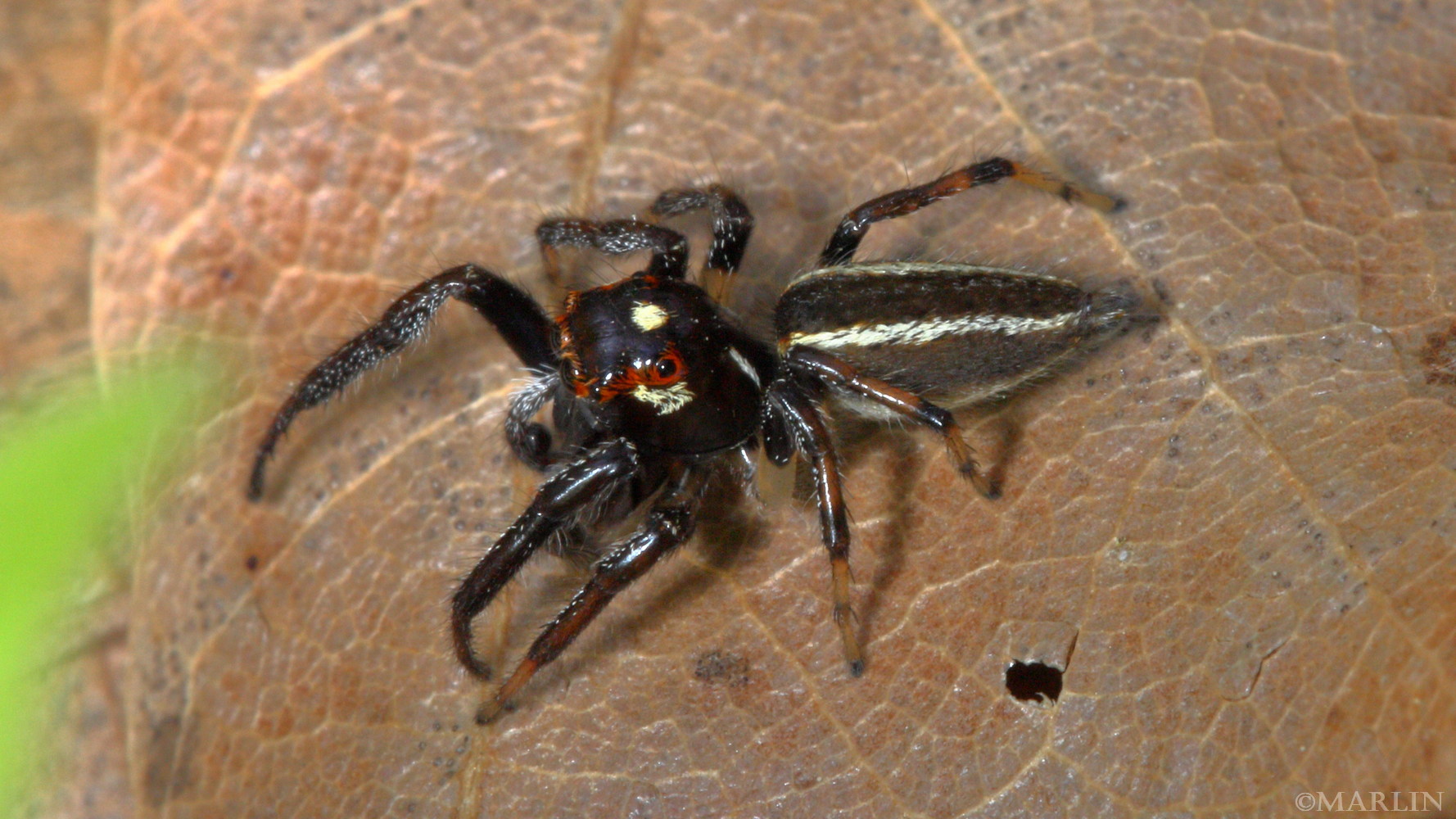
This is a large male jumping spider at 10mm
He was out hunting for prey and females in the leaf-litter on the forest floor at Castle Rock State Park in Illinois, along the banks of the Rock River. I was only able to follow him for a short while – as soon as they notice you watching, they almost always become surreptitious in their movements.
The jumping spiders forage for their prey in the daytime. They approach prey slowly and, when a short distance away, make a sudden leap onto the unfortunate animal. They are good jumpers and can leap at least 10 times their own body length.
I saw one jump off a tree stump to snatch an insect in mid-air and instantly swing back to the stump Tarzan-style via their lifeline, then hoist itself back to the starting position in a matter of seconds. I was surprised seeing it done the first time. I always thought they just dragged that single thread around so if they fell they could get back up – I wonder why I had never imagined they had an even better purpose for it?
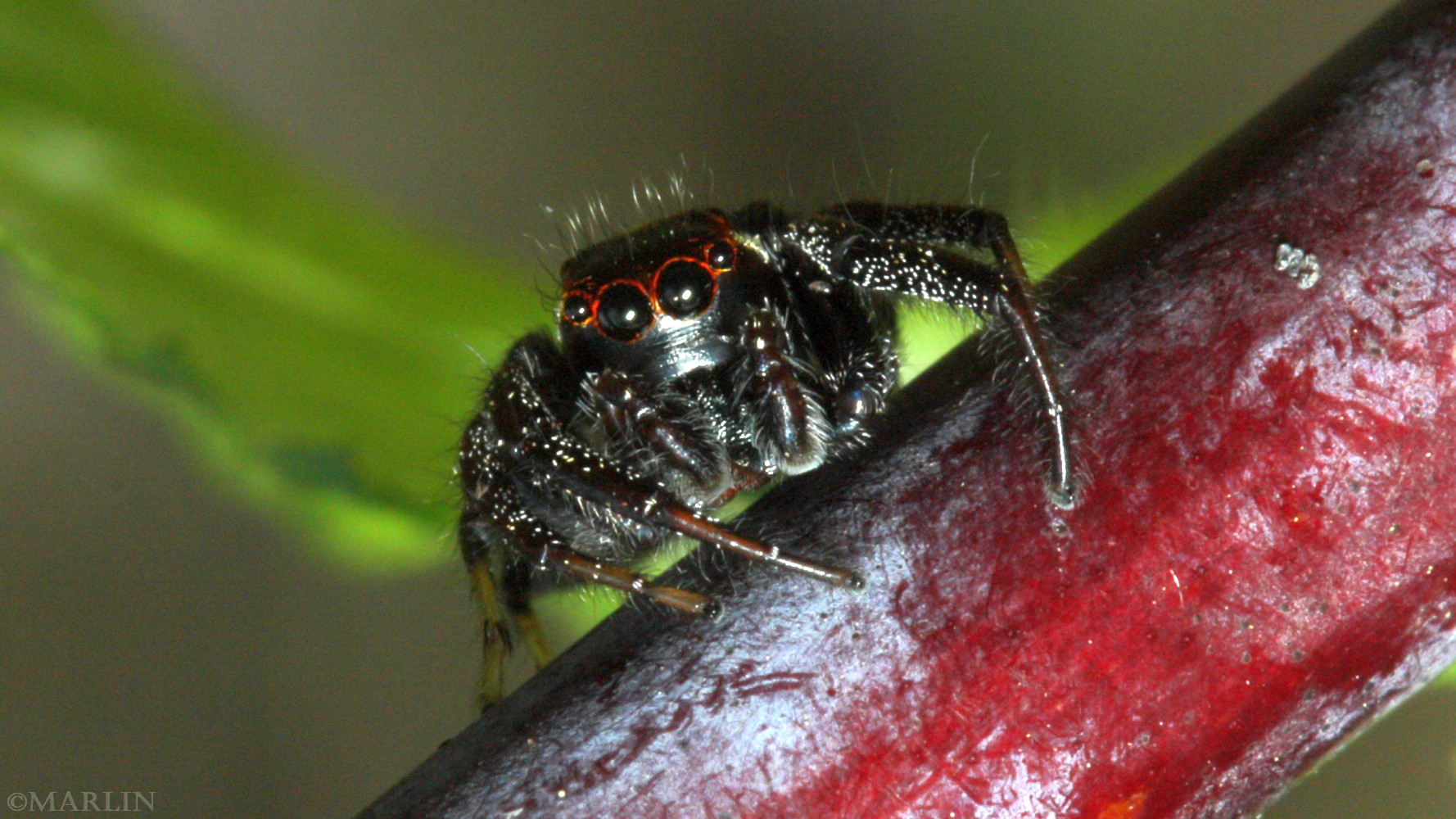
Jumping spider’s anatomical points of interest:
- Esophagus passes straight through the brain
- Portion of gut overlies the eyes and brain inside carapace
- Heart extends from abdomen into cephalothorax
- Leg muscles attached inside the carapace operate legs like marionette puppets
- Jumping spider’s brain volume to body size proportionate to human, but visual processing region is larger
- Salticids move retinas inside the eyes to look in different directions, as the lenses are fixed in the carapace
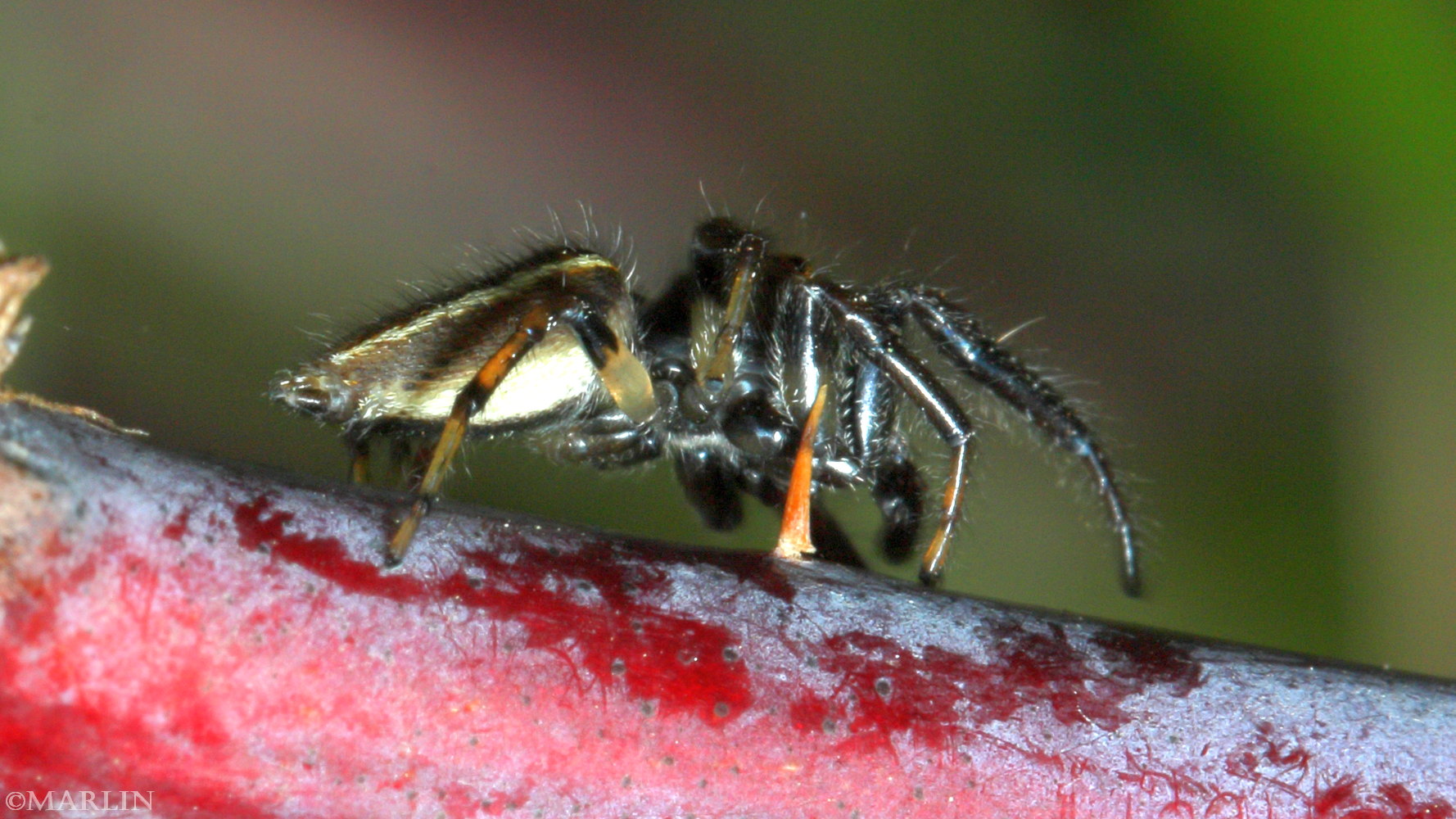
It’s a different world down here in the weeds. The colors and structures are amazing – it’s the greatest show on earth! All free, you just gotta look.
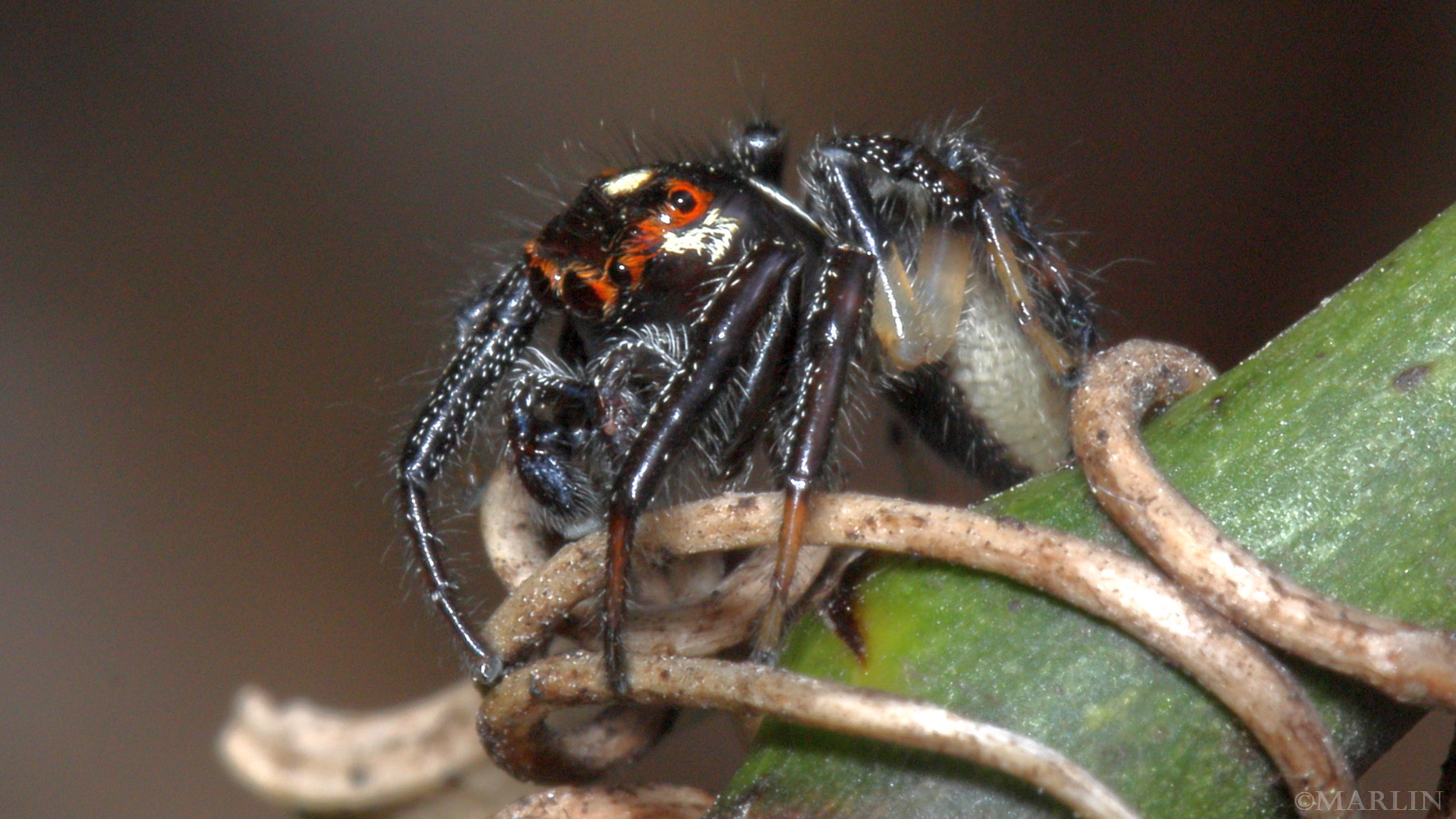
This is one wild spider. I love the jumpers. I wonder if you think I’m nuts?
Reference: Bugguide.net Colonus sylvanus
Tree Encyclopedia / North American Insects & Spiders
Online since 2002