
Jumping Spider – Tutelina elegans
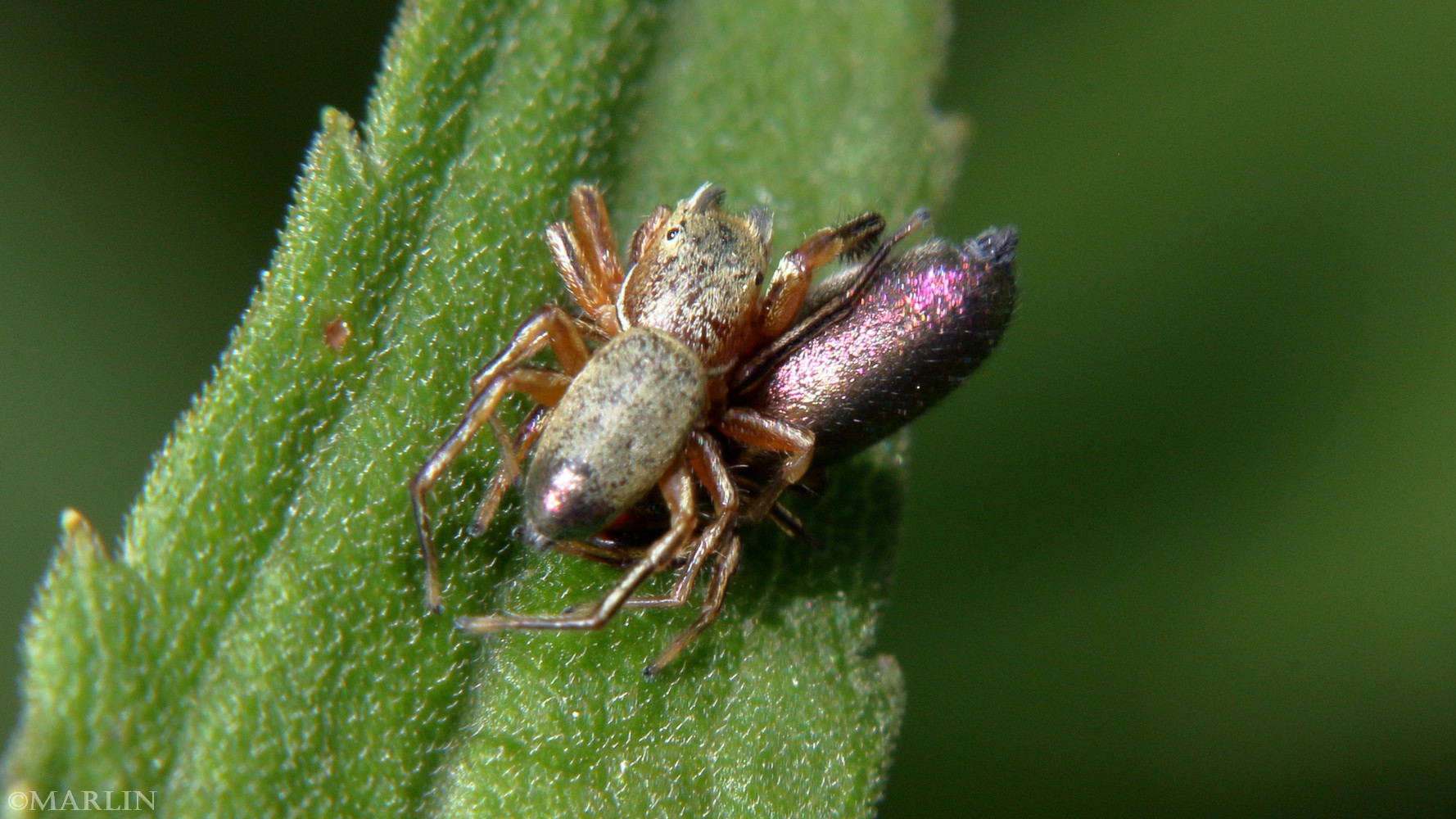
Live spiders photographed at Winfield, Illinois. Size: <5mm
One day I happened upon a pair of Tutelina jumping spiders mating – I assume they were mating. At least, the male had the female upside down, on her back, and she did not seem too concerned about it. Suddenly, an ant came out of nowhere and started attacking the male spider. She was really going at it, and began tugging the spider’s hind legs until he finally let go, and disengaged – whereupon the ant attacked the female spider and both spiders fled, disappearing almost instantly.
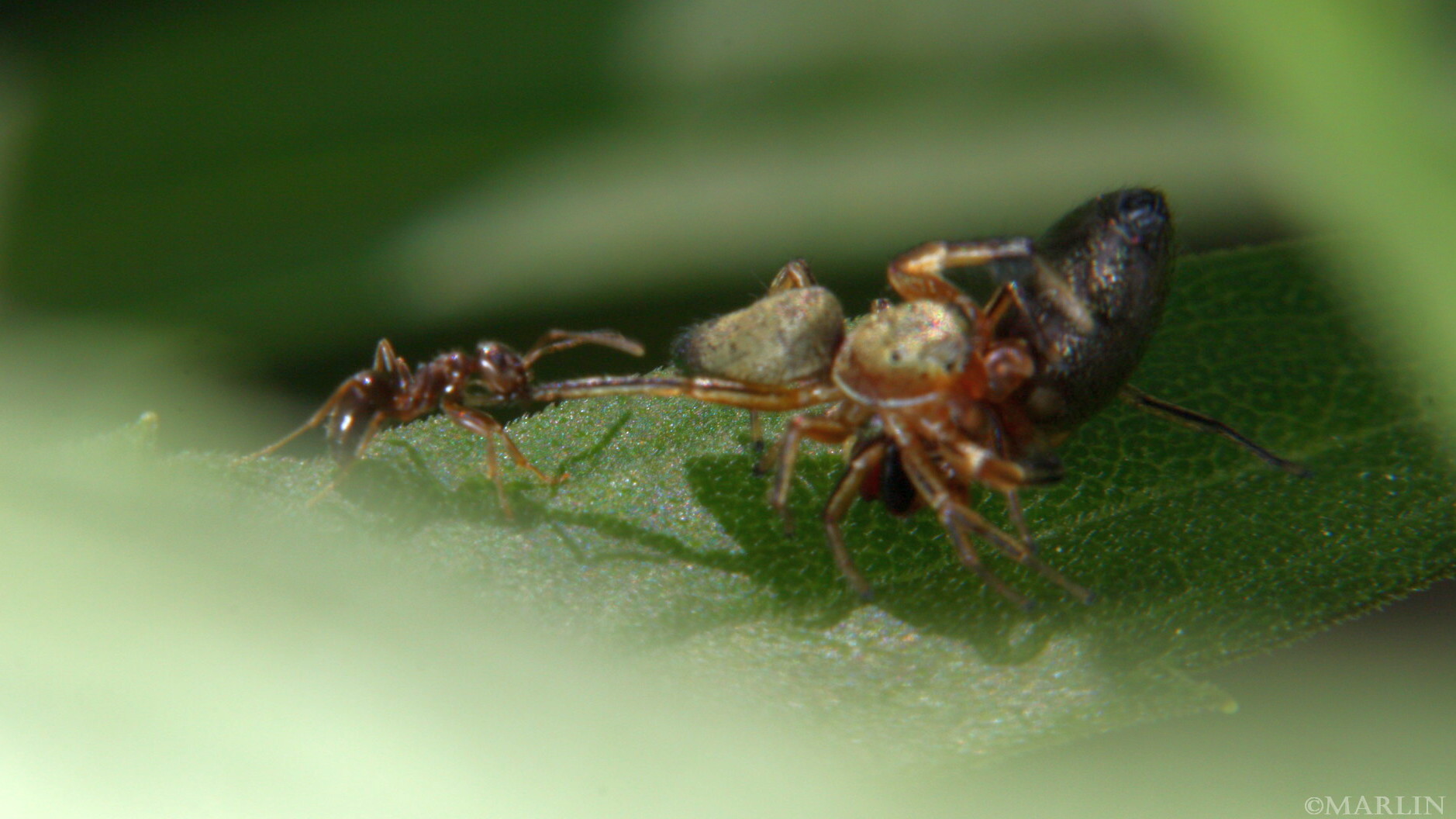
Since Tutelina spiders are fond of preying on ants, I suppose it could be said there is an evolutionary advantage to the ants running a Tutelina contraception program? Maybe the ant was just having a bad day so she decided to ruin it for everyone :(
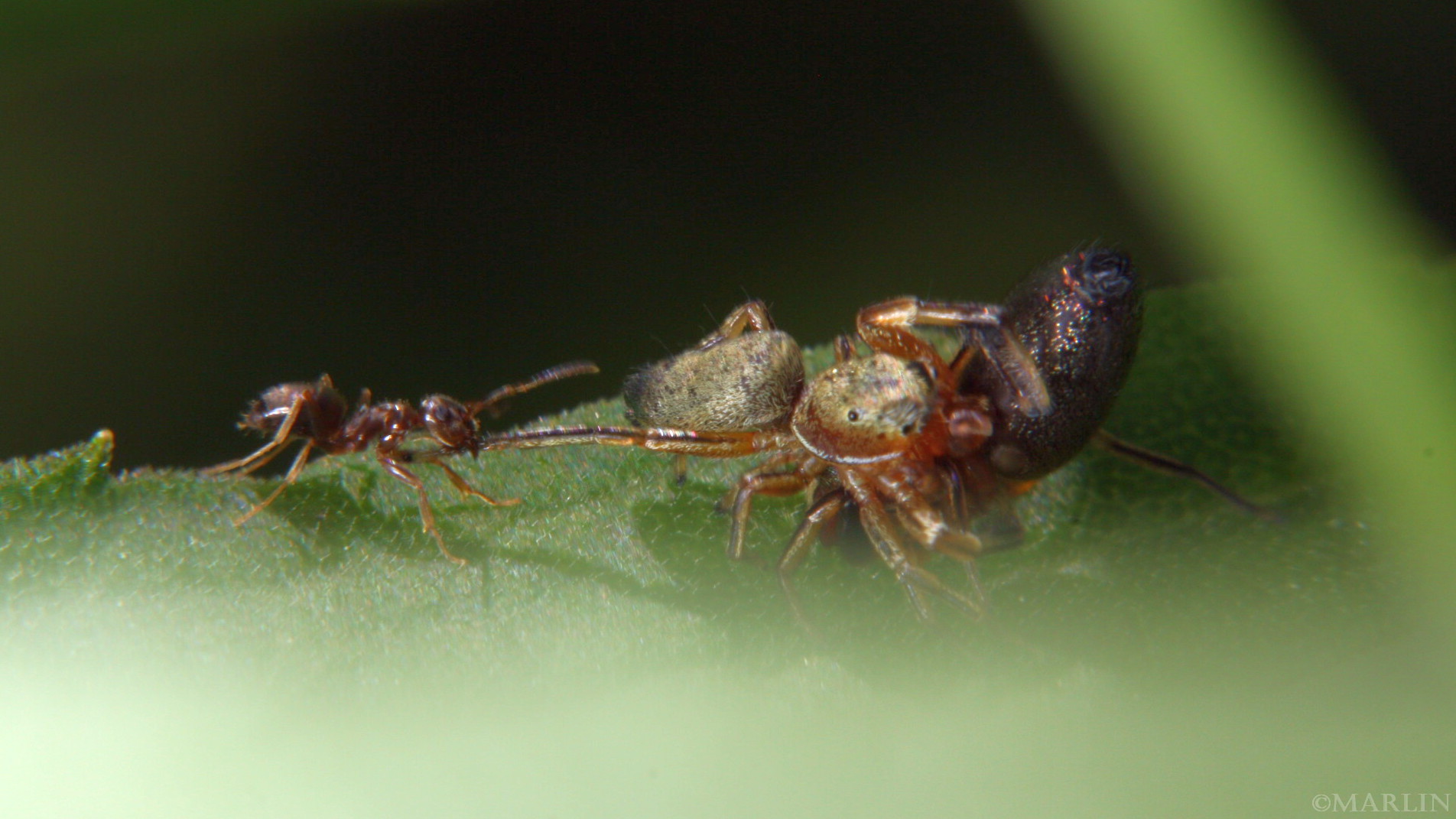
It’s tiny dramas like this that keep me coming back. This stuff has been going on for millions of years. Whatever could it mean? Does it mean anything?
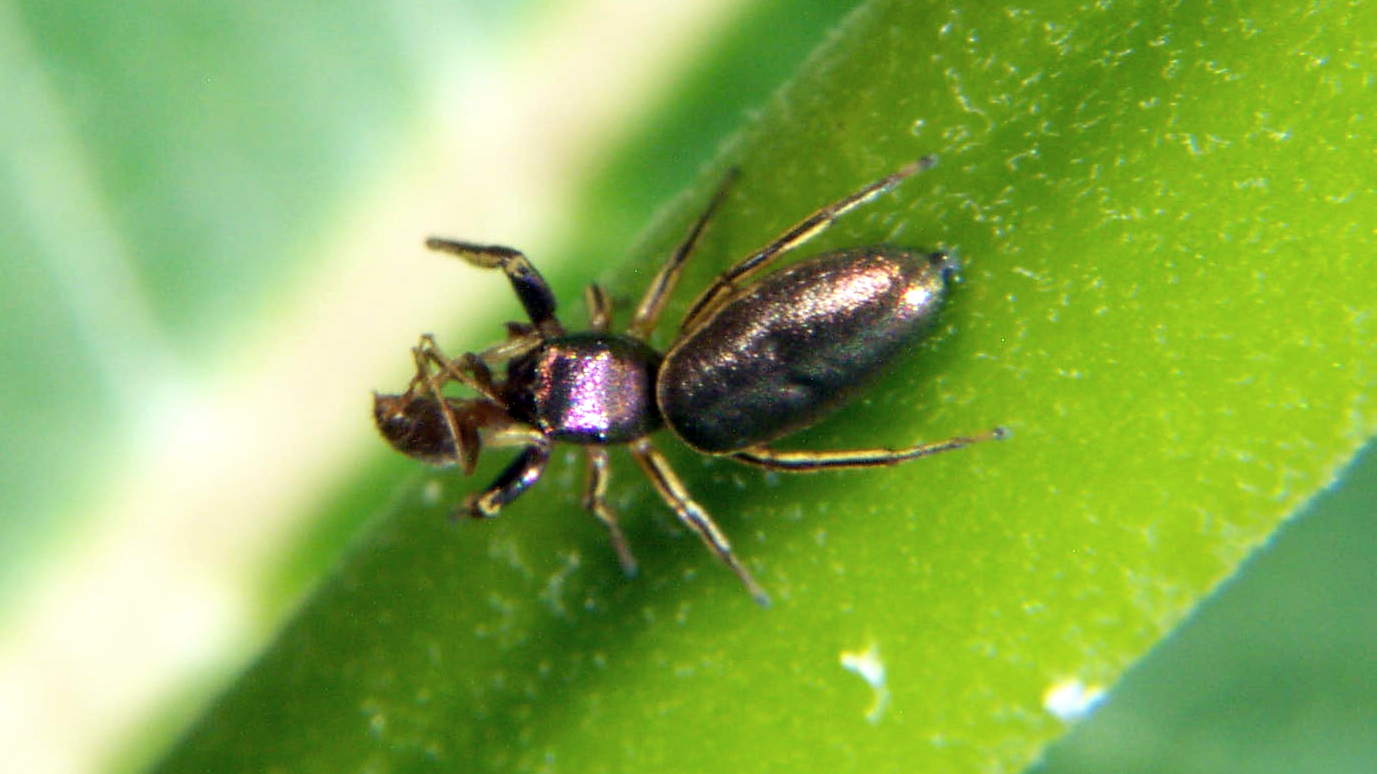 I rest my case. I took this picture nearly 20 years ago, with a Kodak point-and-shoot camera. Tutelina has killed an ant. Boo hoo!
Genus Tutelina: Dendryphantines characterized by unusual chelicerae with a very stout fang and a keel along the medial margin. Typically uniform colored, from gray or green to black, though T. harti is often mottled. Some species have a prominent V-shaped tuft of black hairs above anterior eye row.
Some species, especially Tutelina formicaria, are reasonably antlike. Probably all specialize on eating ants. I have never encountered any other jumping spiders that show any interest in attacking ants.
References
- Bugguide.net, Jumping Spider – Tutelina elegans
- Bugguide.net, Tutelina
Spiders Index | Spiders Main | Jumping Spiders | Orb Weavers | Nursery Web
Tree Encyclopedia / North American Insects & Spiders is dedicated to providing family-friendly educational
resources for our friends around the world through large images and macro photographs of flora and fauna.
Online since 2002