Sphecid Wasps – Ammophila species
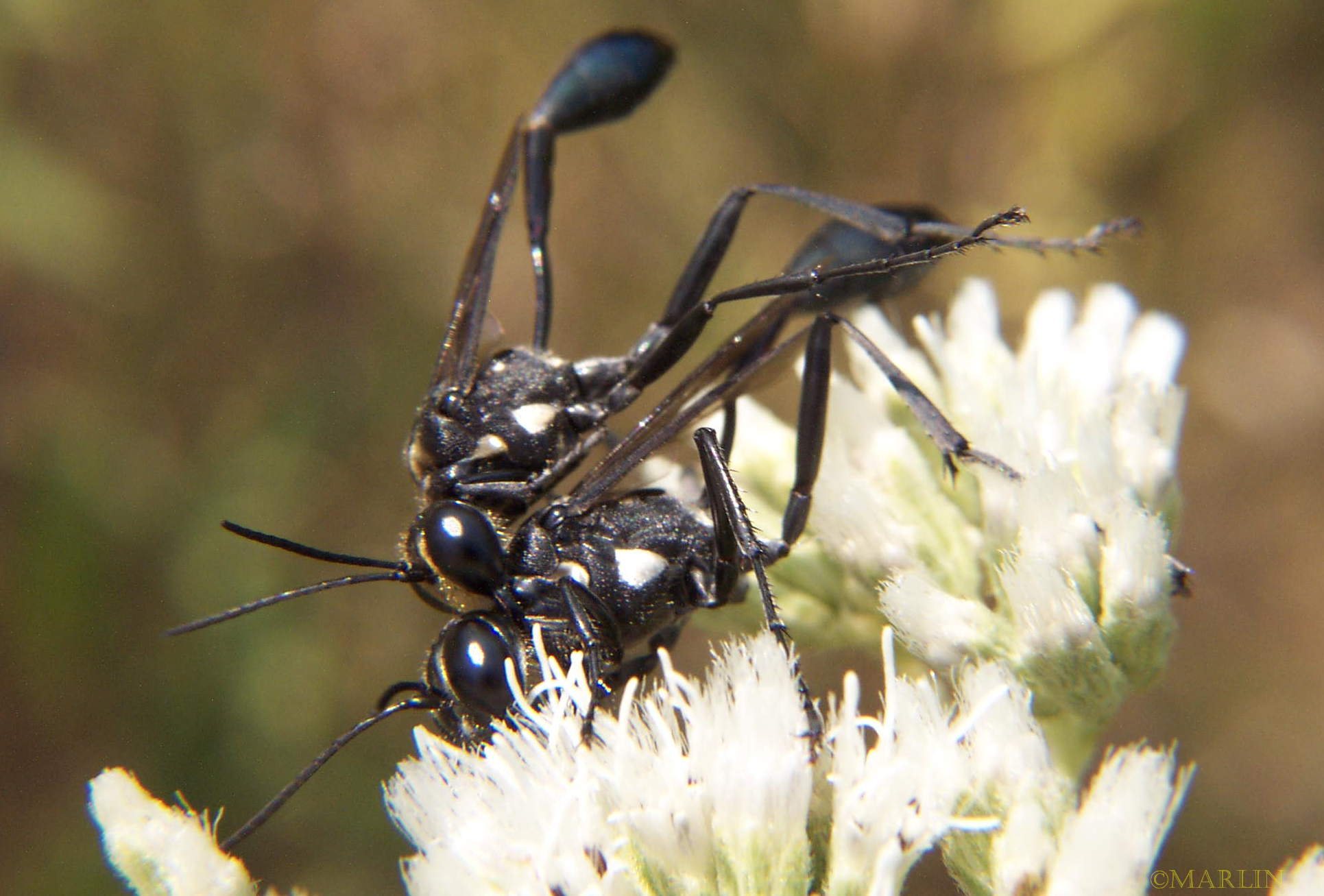
I found these male and female wasps mating on a hot summer day. The male remained aboard by clasping the female firmly behind the head with his mouthparts. I’m not sure if this is actually mating behavior or simply aggression, but the female seemed to go about her business nectaring at flowers, and the pair remained highly wary of my approach.
This is sweaty, dirty work following these rapid flyers through the weeds.
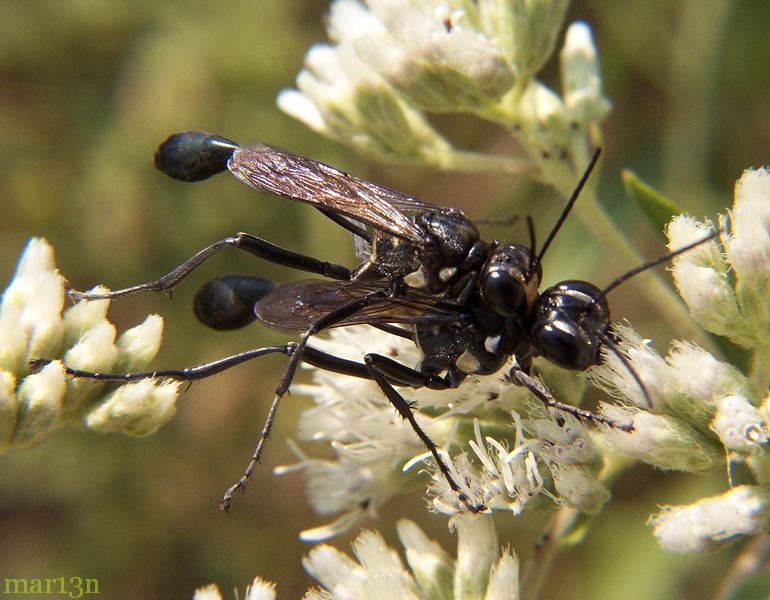
Unlike social wasps, Sphecidae wasps lead solitary lives. Each female takes on the role of architect, constructing and provisioning her own nest without the aid of a cooperative colony.
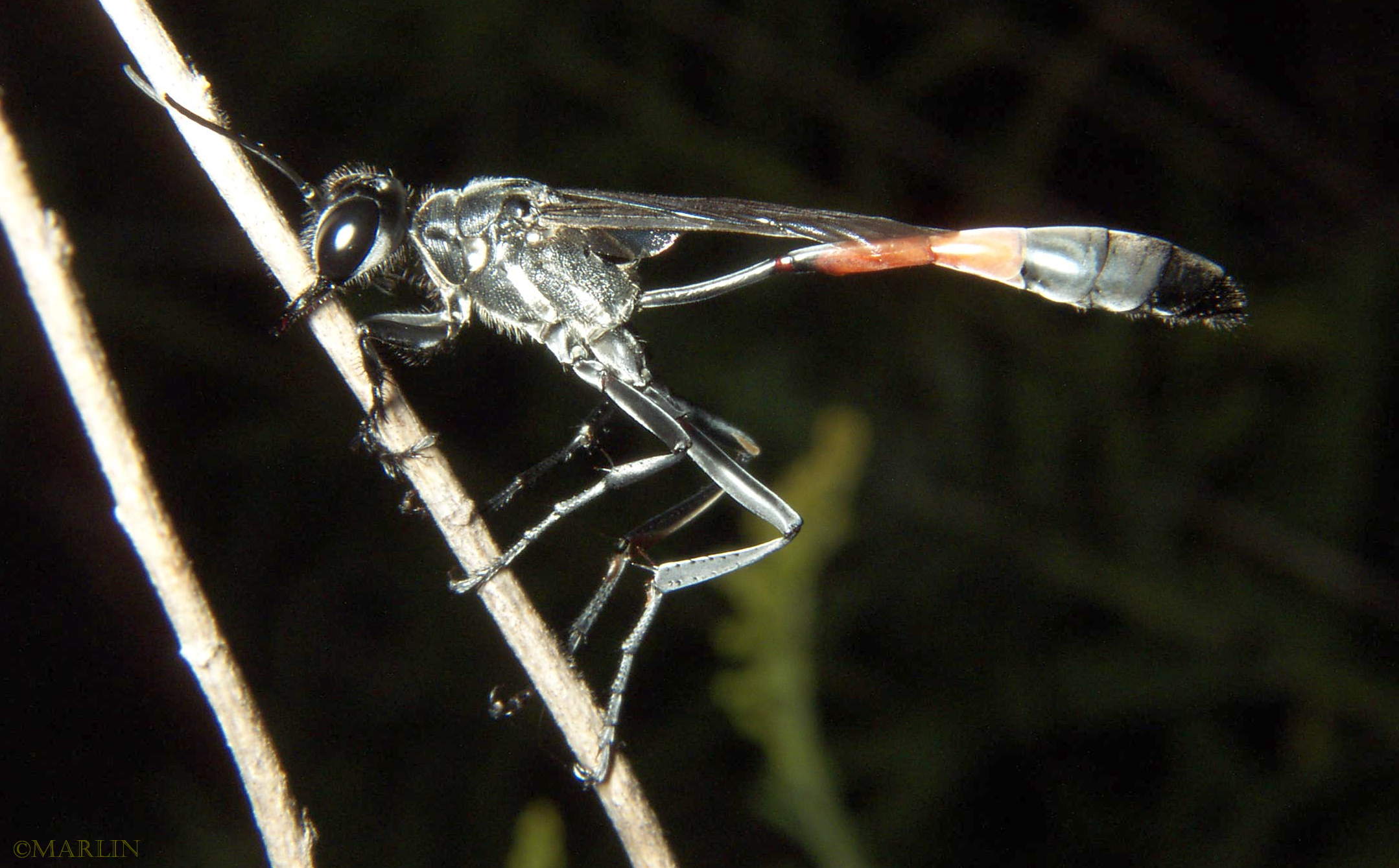
Thread-waisted Sphecid wasp in sleeping posture, Ammophila procera
During the night or when they are inactive, certain Sphecidae wasps will latch onto a vertical plant stem with their mandibles (mouthparts) and front legs, effectively clinging to the surface. They position their bodies vertically or at an angle, parallel to the stem.
The stem-grasping posture serves several purposes; it helps them remain stationary whereby they conserve energy. By hugging the stem, Sphecidae wasps become less conspicuous and semi-camouflaged. The vertical or angled orientation of their bodies helps them blend into their surroundings, making it more challenging for predators to detect them.
The stem-clasping behavior is particularly common among species that nest in pre-existing holes or cavities, as they may use this posture to secure their position while they are away from their nests.
Sphecidae females employ diverse strategies for nest construction, including digging burrows, utilizing dead wood, or repurposing existing cavities. They create chambers within the nests to protect their offspring. To ensure the survival of their young, female wasps provision their nests. They hunt arthropod prey, paralyze them with venom, and store them within the nests as food for their developing larvae.
Bees & Wasps Index | Bees & Wasps Main
Tree Encyclopedia / North American Insects & Spiders
Online since 2002